
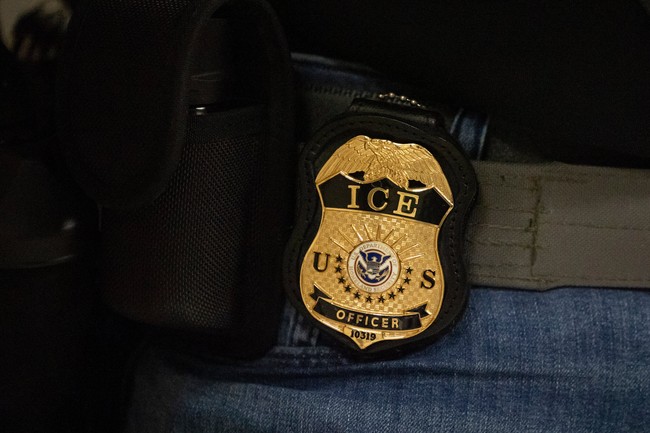
The Department of Homeland Security has instructed Immigration & Customs Enforcement to pause most vehicle stops nationwide, limiting traffic-based apprehensions to cases involving the most egregious criminal aliens; this temporary order follows two recent fatal shootings tied to traffic stops and is reportedly intended to allow time for retraining and to reduce risks to officers and the public.
New ICE Policy Pauses Most Traffic Stops Nationwide
Federal officials quietly ordered ICE agents to stop pulling over vehicles during enforcement operations except when they are pursuing what the department deems egregious criminal aliens. The directive came after two shootings connected to vehicle stops, and sources say the suspension is meant to be temporary while new guidance and training are developed.
The impact is immediate: many ICE arrests begin with traffic stops when agents follow a target and arrest them outside their homes, often avoiding warrants and the complications of entering private property. Removing that tool changes the tactical landscape for immigration enforcement and shifts the burden onto other methods and agencies to make arrests safely.
Jennie Taer originally broke the story; multiple Homeland Security sources told reporters the order amounted to “no more vehicle stops for now.” Those sources warned the change could sharply reduce ICE’s arrest numbers because vehicle stops are a preferred tactic for catching subjects in public and limiting immediate risks to officers. One unnamed agency source was quoted bluntly: “Numbers are going down, we can’t do sh**.”
Federal immigration officers across the country have been told to stop pulling over vehicles after recent shootings in Maine and Texas.
Three Homeland Security sources told The Daily Wire Tuesday that they were told “no more vehicle stops for now.” The new directive has the potential to massively impact ICE’s ability to make arrests as officers often prefer to catch targets through traffic stops where they are out of their homes, where illegal immigrants could have access to weapons and where officers generally don’t need judicial warrants.
“Numbers are going down, we can’t do sh**,” an agency source fumed.
The latest change provides limited exceptions when officers have a criminal warrant, with the agency saying that they must work with outside agencies to pull over the target.
https://x.com/BillMelugin_/status/2077041344803914083
Fox News Congressional correspondent Bill Melugin also reported the change and has been relaying details from multiple federal sources. He explained the pause covers most vehicle stops and will exclude operations aimed at the most dangerous criminal aliens. Bill’s reporting notes the policy will remain in place while ICE officers receive new training on vehicle stops and related tactics.
The Department of Homeland Security alleges at least one of the recent incidents began with what it characterized as a ramming attempt, increasing concern for officer safety during vehicle interactions. Because of those events, officials are weighing changes that could alter how agents approach stops, how they coordinate with local law enforcement, and what kinds of warrants or backup are required.
Operationally, the pause forces ICE to rely more on person-to-person arrests and joint operations where other agencies handle the traffic stop element. That creates new logistical challenges: targets will more often be mobile and not seated behind a wheel at the time of arrest, and arrests outside of vehicles can raise different safety and legal hurdles for agents.
Practically speaking, limiting vehicle stops could reduce the number of arrests ICE can make without more intrusive measures like extended surveillance or collaboration with local police. It also hands tactical control to state and local agencies in many cases, requiring more coordination and potentially slowing down enforcement activity.
Officials insist the order is temporary and tied to the rollout of revised training, but the details of that training and the criteria for exceptions remain unclear at this time. For now, ICE agents are operating under restrictive guidance and must consult with partner agencies when a stop is necessary and authorized by a warrant or specific criminal predicate.
Public safety arguments are being used to justify the order, emphasizing officer protection in light of alleged vehicle-based attacks. At the same time, critics argue that the change hampers enforcement and makes it harder to remove illegal aliens who commit crimes or pose threats to communities.
Expect more public and internal debate as DHS and ICE define the scope and duration of the pause, craft new training, and decide whether to restore vehicle stops under revised protocols. Until then, the agency’s ability to use traffic stops as a core tool in locating and apprehending suspects is significantly constrained.
Editor’s Note: Democrat politicians and their radical supporters will do everything they can to interfere with and threaten ICE agents enforcing our immigration laws.

Add comment