
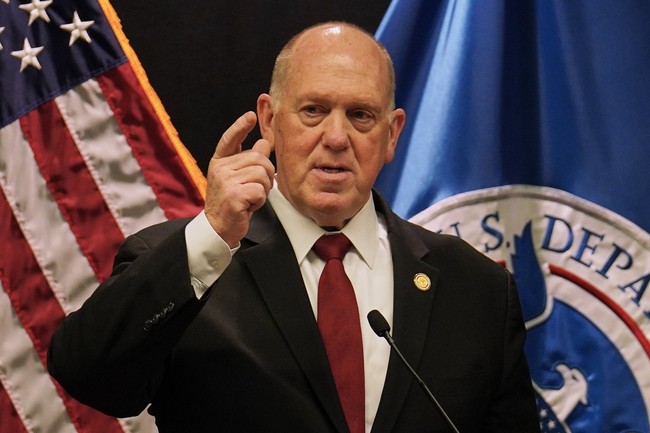
Tom Homan says the Minneapolis ICE surge is scaling back, not surrendering; hundreds of agents remain, investigations continue, cooperation with local authorities prompted the drawdown, and federal authority to re-escalate is fully intact.
Tom Homan, President Trump’s border czar, made a point that needs to be clear: the recent ICE drawdown in Minneapolis signals a shift in posture, not abandonment of enforcement. The surge configuration that drove a temporary spike in manpower is ending because operational goals were met and local cooperation improved. Hundreds of special agents will still be on the ground handling fraud and criminal investigations, so enforcement is ongoing in practical, targeted ways.
Homan spoke directly about this transition on television, pushing back against claims that the federal presence was being chased away by local activists and partisan politicians. He insisted the move was tactical and tied to investigative milestones rather than a retreat. That distinction matters because it reframes the conversation from political theater to law enforcement strategy.
Local cooperation was the trigger for the change, not pressure from opponents of ICE. Once Minnesota authorities began working with federal investigators and key objectives were achieved, the operational need for surge staffing faded. The surge had a specific job: force compliance on certain criminal priorities and accelerate fraud probes, and when that job reached its milestones, it made sense to shift into a steady investigative posture.
“Even though we’re drawing down resources, we still want to have hundreds of special agents here drawn down on the fraud here from the Somali community and others. During those fraud investigations, until they’re done, we’re going to hold people responsible.”
That quote encapsulates the current posture: fewer surge boots on the ground while investigative work continues. Surge operations are designed to be temporary, intensive, and outcome-focused, and the federal presence now looks more like a long-term investigative team than a block-by-block enforcement army. Ongoing cases and personnel remain, so the work continues even without the headline-grabbing manpower spike.
Surges have precedent. Homan pointed to past operations in cities like Los Angeles, Charlotte, and New Orleans that ended their surge phases without eliminating the underlying federal authority to act again. Those operations shifted back into maintenance mode after goals were met, and they could be re-escalated if circumstances required a renewed push. Minneapolis is following that established pattern.
“This is like any other surge operation. Los Angeles, it ended. Charlotte, it ended. New Orleans, it ended. This is ending the surge, but we’re not going away.”
The federal footprint remains intentionally present even after the surge draws down. ICE retains investigators in the area, and the Department of Homeland Security keeps the authority to scale up operations if cooperation falters or new threats emerge. That capacity to re-escalate is the operational deterrent Homan emphasized, and it’s a straightforward enforcement reality most jurisdictions understand.
Homan made the deterrent explicit with a blunt line about logistics and reach: “Over 800 flights a day land in St. Paul, Minnesota. If we need to come back, we’ll come back.” That statement is a practical reminder that federal resources and access are not limited by the temporary mechanics of a surge. Transportation hubs and federal reach make rapid redeployment feasible when investigations or public-safety needs demand it.
Minneapolis and the state of Minnesota are still within federal jurisdiction and oversight, and the presence of investigative personnel means cases continue to move forward. Fraud investigations that prompted the surge remain active, and the agents assigned to those files will press them until prosecutors and investigators close them out. That continuity is what separates a responsible, targeted strategy from a chaotic withdrawal.
The central fact is simple: surges end, but enforcement authority does not. Shifting from surge posture to a sustained investigative presence reflects achieved cooperation and completed operational milestones, not capitulation. The federal government keeps the tools and the legal authority to return in force if conditions warrant a renewed deployment.
“The surge was structured to force compliance on specific criminal enforcement priorities and accelerate ongoing fraud investigations. Once cooperation was secured and operational goals were met, federal authorities transitioned away from surge-level staffing while maintaining investigative personnel.”
That description of intent and outcome explains the logic behind the drawdown. The manpower spike may be over, but investigative momentum and federal oversight remain in place. If local partners stop cooperating or new criminal activity rises, re-escalation is an option and a demonstrated capability that will be used when necessary.
The message from Washington, as Homan framed it, is both a reassurance to agents and a warning to anyone who would obstruct enforcement: the federal government finished a phase of the operation because it worked, and it has the resources and will to resume a larger posture if the situation requires it. Enforcement authority endures beyond the headline of a drawdown.



Add comment