
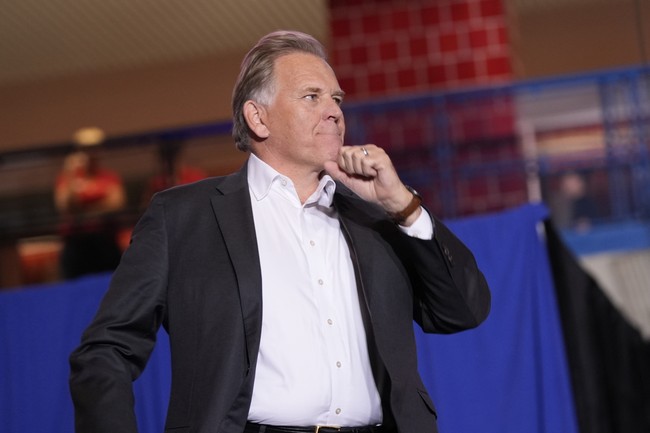
Michigan’s Senate race has suddenly gotten interesting for Republicans: a new statewide poll shows former Congressman Mike Rogers within striking distance of several Democratic contenders, and the numbers suggest this could be a real pickup opportunity this fall.
The headline is simple: Mike Rogers is in the hunt, and that matters because Michigan has been stubbornly unfriendly to GOP Senate hopefuls for decades. Voters here have shown they can swing tight, and recent results make this race winnable if Republicans organize and stay disciplined. There are still big hurdles, but the opening is real.
The Republican nominee will be chosen in August, and Rogers has advantages many other GOP hopefuls have lacked: name recognition from prior statewide exposure and a message that can resonate with voters frustrated by economic stagnation and population loss. The Democrats, by contrast, appear to be sorting through several damaged or weakened options, the one most visible being Congresswoman Haley Stevens. A fractured opposition helps when you want to flip a seat.
Republican Mike Rogers holds a narrow 2-percentage-point lead in head-to-head matchups against Democrats Haley Stevens and Mallory McMorrow, representing a statistical dead heat in a new statewide survey of 600 likely Michigan voters.
In hypothetical matchups, Rogers got 43.8% support to Stevens’ 41.5%, while Rogers got 42.8% to McMorrow’s 40.7% ― both results falling within the survey’s margin of error of plus-minus 4 percentage points.
Rogers held a wider lead of nearly 5 percentage points when facing physician Abdul El-Sayed of Ann Arbor, 44.7% to 39.8%.
Those margins are small, but in politics small margins are everything. The poll shows not just modest leads but a large pool of undecideds, which is both an opportunity and a warning. If Republicans can persuade undecided voters by emphasizing economic competence, public safety, and common-sense governance, they can close the deal. If they fail to make the case, those undecideds could drift back to the incumbent party.
Michigan is often painted as solidly blue, but the reality is more nuanced. It voted for Trump in 2016 by a razor-thin margin and again in 2024 by around 80,000 votes, proof the state can tilt with the right message. Its economy is not booming like Texas or Florida, and people are still leaving for cheaper, faster-growing states; that discontent is fertile ground for a persuasive Republican pitch.
Democrats hope their bench will carry them through, but several contenders bring baggage and vulnerability. When the opposition is divided and imperfect, a well-run Republican campaign with clear priorities can exploit those weaknesses. Rogers’ near-miss against Senator Elissa Slotkin in 2024 shows he can compete statewide; with a sharper ground game and unified support, he can close the gap.
But pollster Richard Czuba, whose Glengariff Group firm conducted the new survey, said Rogers faces a significant hurdle in the number of undecided voters remaining in each matchup with the Democratic candidates, including 14.7% undecided when he faces Stevens, 15.5% against El-Sayed and 16.5% against McMorrow, according to the poll results.
That level of undecided voters is a reality check. It tells you the race is fluid and that last-minute narratives will matter. Republicans should be realistic about the work ahead: voter outreach, crisp messaging, and sustained emphasis on issues where Michigan voters are frustrated, like taxes, crime, and job opportunities. This is not a victory by default; it requires organization.
For conservatives who have felt sidelined in Michigan, this poll offers reason to be cautiously optimistic. The state’s demographic trends and high cost of living leave room for a message that promises relief and opportunity. With strong backing and disciplined campaigning, a Republican can win here for the first time in decades.
There is still time before November, and plenty can change, but the numbers we have now are encouraging. If the Rogers campaign capitalizes on the opening and national Republicans keep the focus on practical issues that matter to Michiganders, this Senate seat is genuinely contestable. The next steps will determine whether Michigan moves from a blue hold to a competitive battleground with a chance to flip.
Editor’s Note: The 2026 Midterms will determine the fate of President Trump’s America First agenda. Republicans must maintain control of both chambers of Congress.



Add comment