
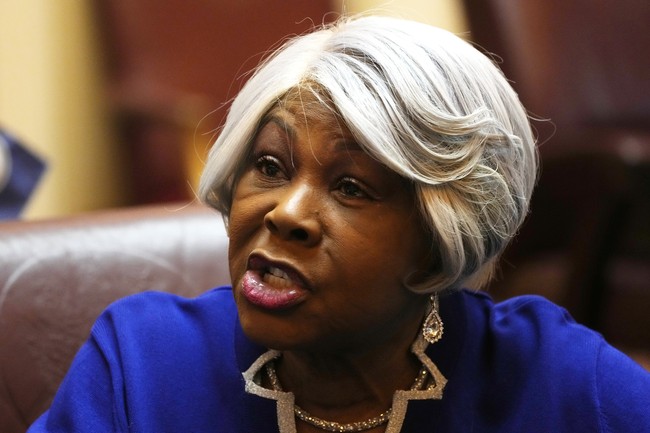
Virginia Senate President Pro Tempore Louise Lucas faced an FBI search of her Portsmouth office and related locations, including a business she co-owns, and her delayed statement raised as many questions as it answered; this account reviews what she said, what she omitted, and why those omissions matter from a Republican perspective.
The initial report of the FBI search went public on a Wednesday morning, yet Lucas—normally vocal on social media—stayed unusually quiet as details emerged. Her silence stood out because she has a long track record of rapid, inflammatory posts, so the gap between the raid and her response was notable. Observers watching her usual channels expected an immediate defensive posture, but that did not materialize.
Later that day Lucas issued a formal statement, but the content felt rehearsed and strategically sparse in key areas. She framed the raid as an attack on dissent and positioned herself as a defender of the people, a familiar move that leans on sympathetic rhetoric. What matters here are the concrete absences: specific denials, a clear legal stance, and any factual context about the scope of the investigation were missing.
Her statement includes strong language about power and intimidation, which will play well to her base. She wrote, “Today’s actions by Federal agents are about far more than one state senator; they are about power and who is allowed to use it on behalf of the people. What we saw fits a clear pattern from this administration: when challenged, they try to intimidate and silence the voices who stand up to them.” That wording shifts the focus from the conduct under investigation to a broader political narrative, which can be persuasive but avoids the immediate questions.
Today’s actions by Federal agents are about far more than one state senator; they are about power and who is allowed to use it on behalf of the people. What we saw fits a clear pattern from this administration: when challenged, they try to intimidate and silence the voices who stand up to them.
Just two weeks ago, Virginians sent a powerful message when they voted to stop Trump’s scheme to manipulate the 2026 midterm elections. Voters across this Commonwealth made clear that power belongs with the people, not with politicians who try to take power away from them. I was proud to help lead that effort and I have never been afraid to stand up to Donald Trump or anyone else that has tried to undermine our democracy.
I am deeply grateful for the love and support of my family and friends and for the many colleagues and constituents who have reached out in recent hours. I will have more to say in the days ahead, but know this:
I am not backing down, and I will keep fighting for the people of Portsmouth and the Commonwealth of Virginia.
She also invoked the recent vote on the congressional map, tying her position to a claimed victory for voters and casting prosecutors as adversaries of popular will. That rhetorical strategy is intended to rally supporters by turning a legal probe into a culture fight. For Republicans and neutral observers alike, statements like this read as deflection until the factual issues are addressed.
Of note, her statement did not include a clear denial of wrongdoing or any factual rebuttal to the search itself, which is an odd omission for a public official facing an investigation. There was no “I have done nothing wrong” or specific context about what documents or materials were taken, which some legal teams advise against but others see as an opportunity to shape the narrative. In this case, the absence left a vacuum that partisan speculation quickly filled.
Additional absences matter too: she did not mention who else might be involved, what “other locations” the report referenced, or whether investigators were looking at the cannabis business she co-owns. That lack of detail raises legitimate questions about potential conflicts of interest, business entanglements, and whether public resources were implicated. Transparency on those points could have reduced public confusion.
The timing and tone of Lucas’s response also invite scrutiny because the probe reportedly began under the current administration, not the prior one, which complicates claims that she is purely a victim of partisan targeting. Republicans will naturally ask why a long-serving Democrat would draw federal attention now, and whether political favoritism or internal misconduct prompted the investigation. If the case involves a powerful incumbent, it suggests the matter might be serious enough for federal authorities to move beyond state-level handling.
It is also worth noting how social media behavior contrasts with this episode: Lucas has been a prolific poster and a combative presence online, which makes prolonged silence all the more conspicuous. Her past posts showed eagerness to engage in political fights, so a muted public response during a high-profile raid looks calculated. That contrast strengthens the impression that legal counsel likely guided a restrained public posture.
For Republicans keeping score, the relevant takeaways are straightforward: demand specifics, push for transparency about connected business interests, and follow the factual trail rather than the rhetoric. This isn’t about partisan cheerleading so much as insisting that public officials be accountable and that investigations be allowed to proceed without premature political spin. The public deserves clear answers about what prompted the raid and how it affects the integrity of governance in Virginia.

Yep just another Black DEI democrat corrupt politicians. It’s time too stop pushing these corrupt criminal politicians up the ladder. They are just all corrupt thieves do these people ever get vetted.
No, to do would require facing the race card accusations! Which be appearing very soon!