
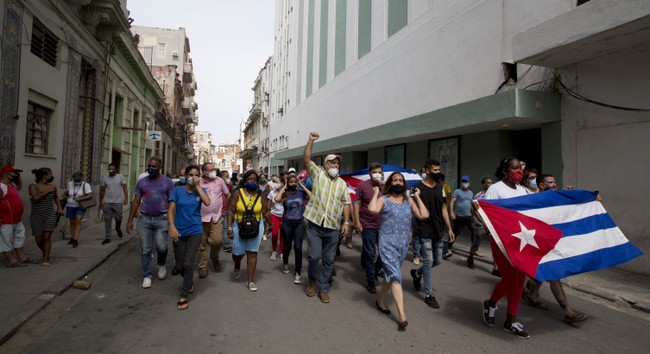
The fall of Nicolás Maduro and the U.S. operation that captured him have left Cuba facing a harsh new reality: decades of dependence on Venezuelan oil and security ties are suddenly severed, and the island’s failing economy and political repression may now collide with an even deeper crisis.
“How the mighty have fallen” is a phrase that could be aptly used in describing former Venezuelan dictator Nicolás Maduro, who was only recently and acting as if he were untouchable. Now he sits behind bars in New York City. The dramatic removal of Maduro reverberates far beyond Caracas and directly threatens the fragile lifeline Cuba has relied on for years.
Cuba’s decline has been long and steady: after 67 years of Communist rule the island struggles with frequent blackouts, chronic shortages, and a pervasive security state that stifles normal life. Those problems were softened for a time by Caracas, which provided fuel, financing, and economic breathing room in exchange for Cuban medical teams, teachers, and security personnel stationed in Venezuela.
The sudden end to that relationship raises urgent questions about how Havana will keep lights on, move goods, and pay for imports without Venezuelan oil shipments. The loss of fuel is not merely an inconvenience; it’s a systemic shock that threatens hospitals, transportation, agriculture, and industry, deepening shortages of food, medicine, and basic goods that are already common.
The Trump administration has warned outright that toppling Maduro will help advance another decades-long goal: dealing a blow to the Cuban government.
Severing Cuba from Venezuela could have disastrous consequences for its leaders, who on Saturday called for the international community to stand up to “state terrorism.”
On Saturday, Trump said the ailing Cuban economy will be further battered by Maduro’s ouster.
“It’s going down,” Trump said of Cuba. “It’s going down for the count.”
Reports emerging from Havana suggest a closer-than-expected entanglement between the two regimes, including accounts that Cuban security personnel served as bodyguards and close aides to Maduro. Cuban officials mourned thirty-two security officers they claim died during the operation that toppled Venezuela’s leader, a number that underscores how closely the two governments were tied militarily and politically.
Without Venezuela as a benefactor, Cuba faces not just economic pain but a political dilemma. The island’s ruling elite have relied on subsidized oil and outside revenue to fund domestic repression, maintain patronage networks, and prop up programs that mask deeper dysfunction. Strip those supports away, and the regime’s capacity to buy loyalty and blunt dissent shrinks rapidly.
Analysts warn that Cuba has been effectively bankrupt for years, kept afloat by a foreign patron that paid bills and supplied fuel. In the absence of that patron, energy shortfalls will worsen and the already dire logistical challenges of transporting food and medicine will intensify. Everyday life for ordinary Cubans—garbage collection, store supplies, reliable electricity—looks set to deteriorate further.
Cuban officials on Monday lowered flags before dawn to mourn 32 security officers they say were killed in the U.S. weekend strike in Venezuela, the island nation’s closest ally, as residents here wonder what the capture of President Nicolas Maduro means for their future.
The two governments are so close that Cuban soldiers and security agents were often the Venezuelan president’s bodyguards, and Venezuela’s petroleum has kept the economically ailing island limping along for years.
U.S. pressure on Venezuelan oil shipping and targeted operations against Maduro have already strained the region’s networks and supply chains. In Havana, that pressure translates quickly into visible hardship: empty shelves, rising disease from neglected sanitation, and the rolling outages that disrupt clinics and commerce. These are not theoretical risks but immediate realities facing people on the island.
Politically, the Castro-style model faces an acute test. If the regime cannot secure resources to sustain its security apparatus and public services, its ability to control the population weakens. That shifts incentives for both the leadership and those inside the system who profit from the status quo, potentially creating fractures in a system long reinforced by patronage and repression.
There is also a geopolitical angle: the collapse of Venezuela’s support could reduce Havana’s international leverage and force a reckoning about Cuba’s future partnerships. Beijing, Moscow, or other actors could fill some gaps, but ideological and logistical barriers make any quick substitution difficult, and foreign aid often comes with strings that reshape domestic priorities.
For ordinary Cubans, the immediate concern is survival: keeping the lights on, getting medicine to clinics, and feeding families when supply lines tighten. Longer term, the loss of Venezuela as a backer increases the odds of political instability, migration, and social unrest that could finally test the durability of the island’s authoritarian model.
The recent events that removed Maduro change the strategic map for Cuba almost overnight, leaving Havana with fewer options and greater exposure to economic collapse. How the island navigates this new reality will determine whether it sinks deeper into hardship or finds a pathway to a different political and economic order.
The international fallout is still unfolding, and Cuba’s leaders now confront a stark choice: adapt to a post-Venezuela world or cling to a failing system that can no longer be sustained by outside largesse.
Add comment