
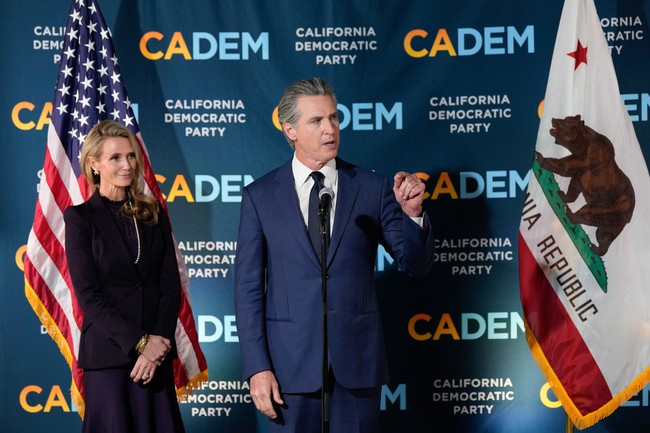
The federal report shows California received the lion’s share of child-only TANF cash assistance tied to households with immigration-status-ineligible parents, revealing a large fiscal burden on taxpayers and a sharp policy contrast between work-focused welfare rules and exceptions that allow support to continue without the usual time and work limits.
Washington is arguing over broad spending reductions while California keeps asking for more federal funds. A new federal analysis found roughly $617.5 million in cash assistance flowed into California households through child-only TANF cases in fiscal year 2024, representing more than 81 percent of national spending in that immigration-related category.
The child-only TANF structure lets benefits be issued on the child’s behalf even when the parent is disqualified from TANF because of immigration status. The federal report makes clear the payment may be in the child’s name, but “it still supports a household that includes an immigration-status-ineligible parent.” That means the household as a whole receives the economic benefit regardless of who is eligible on paper.
TANF was designed during welfare reform to emphasize work and time limits: recipients normally face work requirements and a 60-month lifetime cap on benefits. Federal officials point out that child-only cases “bypass those rules” in many instances, allowing assistance to continue from birth through age 18 in households headed by immigration-status-ineligible parents.
The report notes that federal databases do not list unlawful presence as a separate reporting category, so the immigration-status-ineligible label is broader than just illegal presence. Still, unlawful presence is identified as a principal factor driving those child-only cases. That ambiguity complicates oversight and makes it harder to measure how much of the spending goes to households with unlawfully present parents.
Nearly 60,000 California households were in this child-only immigration category in fiscal year 2024, compared with about 85,000 such households across the entire country. In other words, roughly seven out of every ten immigration-related child-only TANF cases in America were in California, concentrating the policy and fiscal impact overwhelmingly in one state.
After California’s $617.5 million, New York ranked second at $47.5 million, followed by Massachusetts at $27.3 million and Washington state at $12.2 million. Federal reviewers concluded no other state came close to California’s scale or fiscal effect, a stark outlier that raises questions for policymakers about uniform application of welfare rules and interstate equity.
The report also shows the share of California’s TANF basic-assistance budget tied to these cases was 15.8 percent in fiscal year 2024, and the average monthly benefit associated with these households has more than doubled over the past decade—from $408 in fiscal year 2013 to $875 in fiscal year 2024. Nationally, the program distributed approximately $759 million through these cases in 2025, accounting for more than 9 percent of all TANF basic-assistance spending.
Officials estimate the cumulative total tied to these child-only immigration-status-ineligible cases has reached roughly $18.3 billion since 2001. The federal numbers show that more than four out of every five of those dollars flowed through one state, the same state that continues to request additional federal assistance while remaining the dominant recipient of this specific welfare category.
Republican policymakers will point to this evidence as proof that welfare policy has loopholes that can be exploited to bypass the work and time limits central to TANF. Critics argue these child-only payments undermine the program’s purpose by enabling long-term dependency in households where the adult is ineligible for aid, while other American families must meet stricter standards.
At the same time, defenders of the current practice emphasize the need to support children in low-income families regardless of a parent’s status. But the federal analysis frames the issue as a trade-off between compassion and program integrity, noting a “striking disparity: needy American families are held to TANF’s central work and time-limit rules, while households headed by immigration-status-ineligible parents can receive child-only cash assistance under a structure that bypasses those rules and can allow support to continue from birth through age 18.”
That passage highlights the policy tension plainly: the rules meant to encourage work and limit welfare duration can be effectively sidestepped in these child-only cases, creating an uneven system across states and households. For lawmakers focused on fiscal restraint and fair application of welfare rules, the report lays out data that demand a policy response.



Add comment