
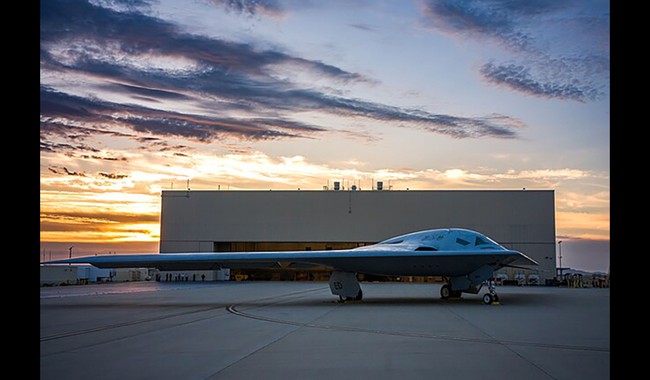
The Air Force says its next-generation platforms—the F-47 fighter and the B-21 bomber—are moving faster than planned, with flight testing and squadron timelines now ahead of schedule, raising questions about force size, readiness, and strategic balance as the service modernizes its aerial arsenal.
Air Force: F-47 Fighter, B-21 Bomber Now Ahead of Schedule
Air power has been central to American military success since World War II, and today the United States is pushing a new wave of stealthy, high-tech aircraft to maintain that edge. The Air Force reports accelerated progress on two headline programs: the B-21 Raider bomber and the F-47 next-generation fighter. Those moves are intended to keep the United States dominant in the skies against any potential adversary.
The B-21 program is in advanced flight testing and the service expects the bomber to stand up with an operational squadron soon. Production plans from the contractor aim for a steady output, and the Air Force talks about getting the first operational airplane onto an Air Force Base ramp by next year. Those milestones are being presented as clear signs the replacement for aging strategic bombers is becoming real hardware rather than just promise on paper.
Work on the B-21 Raider bomber and the F-47 sixth-generation fighter are ahead of schedule, the Air Force general in charge of development of both projects said last week.
Gen. Dale White, director of Critical Major Weapon Systems, spoke July 29 at the Life Cycle Industry Days in Dayton, Ohio.
White said that the B-21 stealth bomber, currently undergoing advanced flight testing at Edwards Air Force Base in California, would join an operational squadron next year.
The first of what the U.S. Air Force hopes will one day be a force of 100 B-21 bombers will be “on the ramp” at Ellsworth Air Force Base in South Dakota in 2027, White said.
The bomber first flew at Edwards in November 2023 and the second in September 2025. Plans call for Northrop Grumman to produce seven operational bombers per year, White said.
The F-47 program is also being touted as maturing rapidly, with program leaders describing development as unusually advanced at this stage. The Air Force plans to buy a specific fleet count to serve as the backbone of future air superiority and interception forces. A first flight date is linked to the administration’s timeline and the service’s acquisition schedule for the next decade.
White also said planning for the F-47 Next Generation Air Dominance (NGAD) fighter was in a state of “unprecedented maturity.”
“The F-47 will fly in this administration,” White said in his speech.
The Air Force plans to acquire 185 of the Boeing-built jets with a first flight scheduled for 2028. It will replace the F-22 Raptor as the Air Force’s main interceptor and air superiority fighter.
The numbers announced are notable: a planned force of about 100 B-21s and 185 F-47s. Those totals sit against the current inventory of legacy and modern aircraft that still carry the workload today. Existing fleets include under 200 F-22 Raptors and several hundred F-35s, while the bomber force relies on aging B-2, B-1B, and B-52 aircraft that are undergoing upgrades or facing retirement decisions.
Stealth and advanced systems on new platforms multiply combat effectiveness, but they do not replace the raw need for capacity. History shows that when a nation faces multiple contests or sustained high-end conflict, numbers matter as much as capability. Planners argue that fewer, more capable stealth platforms are preferable; others warn that modest quantities could strain mission coverage in a major war.
The Air Force appears to be betting on high-end technology as the force-multiplier that will let smaller fleets hold their own against peer competitors. That approach assumes continued U.S. technological superiority and the ability to keep production at forecast rates while protecting supply chains. Achieving both will require tight oversight, steady funding, and industrial base management to ensure sorties and presence match strategic needs.
Operational timelines matter because adversaries are modernizing too, and delays or shortfalls could change the risk calculus in contested regions. Getting these aircraft into squadrons on schedule would strengthen deterrence, but it will not erase the hard tradeoffs between quality and quantity. Policymakers and service leaders will have to balance procurement speed, production scale, and the broader demands of a global posture.
Editor’s Note: Thanks to President Trump and his administration’s bold leadership, we are respected on the world stage, and our enemies are being put on notice.



Add comment