
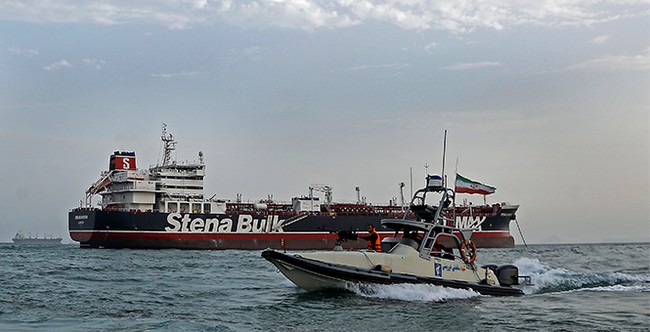
President Donald Trump celebrated a diplomatic breakthrough with Iran that he says reopened the Strait of Hormuz and allowed nearly 19–20 million barrels of oil to pass, pointed to sharply lower oil prices, and touted an agreement for long-term nuclear inspections, while Tehran offered conflicting statements about control of the waterway.
President Trump framed the recent Memorandum of Understanding with Iran as a major energy and security win, highlighting a large flow of oil through the Strait of Hormuz that he described as an all-time record. He linked the shipment numbers to falling global oil prices and argued the arrangement reduces immediate risk to shipping lanes. The tone of his comments was confident and focused on practical benefits for energy markets and U.S. leverage.
Trump’s public remarks included a precise claim about the volume of oil that passed through the strait, and he used that statistic to argue the world is safer and markets are responding. He emphasized that U.S. actions, including negotiations and continued military readiness, were instrumental in achieving that outcome. Supporters of the administration see the numbers as vindication of a tougher posture that combined diplomacy with credible force.
Alongside the oil claims, Trump said Iran had agreed to expanded nuclear inspections, a point he used to frame the talks as yielding not only energy but also security guarantees. In his message, he accused media critics of downplaying the significance of the agreement while insisting the inspections would ensure what he called “Nuclear Honesty.” This line framed the deal as both verifiable and long-lasting.
https://x.com/RapidResponse47/status/2069380906574368822
In his own words, Trump declared: “19 Millions Barrels of Oil flowed out of the Hormuz Strait yesterday, an all time RECORD. Oil prices are tumbling down, and the World is a much safer place!!! President DONALD J. TRUMP” That quote was followed by a longer passage where he stressed that Iran had accepted “highest level Nuclear inspections long into the future (Infinity!!!).” Those exact statements underscore how the president tied energy relief to nonproliferation assurances.
Trump also made clear that the U.S. would keep naval options on the table even as he allowed shipping to resume without an outright blockade. He wrote that he had agreed to let the strait remain open but said American forces were ready to return to stricter measures if necessary. That posture—opening trade while holding military leverage—was presented as a balanced approach that preserves deterrence while easing global supply concerns.
Another passage the president released explained how any sanctions relief would be handled, saying funds would go into U.S.-controlled escrow and be spent on food and medical supplies purchased from American producers. He framed that mechanism as humanitarian and tightly controlled, stressing American oversight and economic benefit to U.S. farmers. That element of the deal was positioned to address domestic concerns about releasing funds to Tehran.
Trump’s statement read in part: “The Money and/or Sanctions that the U.S. Treasury is releasing goes into escrow, controlled by the U.S.A., and will be used for the purchase of food and medical supplies, exclusively from the United States, including Corn, Wheat, and Soybeans from our great American Farmers. These are things that are desperately needed by Iran. This is a humanitarian crisis, and I feel it is necessary to help, NOW, before it is too late. Talks are going well! Thank you for your attention to this matter. President DONALD J. TRUMP” That exact wording reflects both the humanitarian rationale and the economic framing used by the administration.
Iran’s official responses undercut parts of the U.S. narrative, however, with negotiators insisting the country will retain a role administering the strait and rejecting a full return to pre-conflict conditions. Iranian officials said the strait would be managed in accordance with arrangements they establish, and they proposed mechanisms such as a center and hotline to resolve problems during the transition. Those remarks signaled Tehran’s intent to preserve influence even as traffic resumes.
Statements from Iran included: “The Strait of Hormuz will be managed by Iran, in accordance with those laws and under arrangements established by Iran.” They also added that a center and telephone hotline would be set up to solve issues quickly during a 30-day period, and expressed hope the measures would boost regional economic prosperity. Those lines show how Tehran is balancing rhetoric about control with procedural steps intended to reduce immediate friction.
The immediate market response, as the administration noted, was a drop in benchmark prices that some attributed to the renewed flow of crude. Energy markets and investors reacted to the apparent easing of supply risk, and U.S. officials highlighted that as evidence the country was reaping benefits from firm negotiating and a show of resolve. Whether the fragile calm holds will depend on follow-through from both sides and the durability of inspection and escrow arrangements.



Add comment