
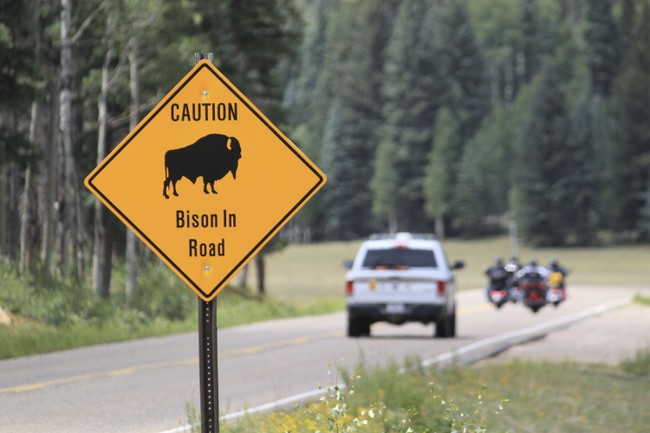
The article examines a recent Yellowstone incident where a bull bison hurled a man into the air at a campground, recounts eyewitness testimony, analyzes bison behavior during potential breeding season, and stresses the plain fact that large wild animals can be dangerous even when people think they are being careful.
Big wild animals demand respect, plain and simple. This recent episode in Yellowstone shows how quickly a routine campground stroll can turn hazardous when a massive, agitated animal decides to act. The footage and eyewitness accounts make it clear that neither recklessness nor provocation is necessary for trouble; sometimes a large animal is already keyed up and human presence is enough to trigger an attack.
A man was seriously injured Friday evening after being thrown 8 feet into the air by an angry bull bison in Yellowstone National Park.
Mike MacLeod, a professional photographer from Bozeman, Montana, said the incident happened at the Bridge Bay Campground, south of Fishing Bridge.
MacLeod said the man was walking with his grandson when the agitated bison made them the targets of its aggression.
“I was just trying to get some dramatic footage of that bison having a fit,” he told Cowboy State Daily. “It’s changed my idea of what to expect from these guys at this time of year, because I would not have predicted that happening.”
The National Park Service has not released any information on the incident.
The scene unfolded in Bridge Bay Campground, where a bull bison approached campers and at one point flipped an older man several feet into the air. Witnesses described the animal as visibly agitated, with classic aggressive body language: head carried high, tail up, and purposeful movement toward perceived targets. Even observers who believed they were at a safe distance were suddenly in danger when the bison chose to charge.
Here, watch:
Experienced people who work around large animals will often say there is no substitute for situational awareness. A mature bull bison can cover ground astonishingly fast, and their mass and horned anatomy turn even a brief contact into a serious event. The victim in this case appeared to be minding his business, walking with his grandson, which underscores that encounters like this are not always the result of foolish selfies or deliberate provocation.
Biologically speaking, timing matters. Bison rut generally centers on mid-July through late August, and that heightened hormonal state makes mature bulls far less tolerant of perceived intrusions. It may have been slightly early for full rut behavior, yet nature rarely follows the calendar to the letter. A bull can be fired up early some years, and the signs in this incident showed a bull operating on short tolerance and high aggression.
No single factor explains every attack, but a mix of seasonal hormone shifts, individual temperament, and the proximity of humans creates a hazardous cocktail. Campgrounds are especially risky because they concentrate people, children, and pets in places animals pass through or graze near. Even when people believe they are observing from a reasonable distance, a large animal’s ability to close that gap rapidly changes the odds in an instant.
MacLeod was camping in at the Bridge Bay Campground when his wife pointed out the bull bison entering the area. He grabbed his camera and started shooting from a safe distance.
“He started walking through the campground,” MacLeod said. “He was coming up to this group of kids, who were taking pictures on their cellphones from a good distance away, and then the buffalo charged these kids.”
When the bison charged, the kids safely scattered. But the bison wasn’t done yet.
The attack reportedly began after the bison redirected some energy into tearing at a small tree and then pursued the older man and his grandson. The kids scattered and escaped unhurt, while the grandfather bore the brunt of the charge. Witnesses described the bison hooking the man with a horn and flipping him, which is terrifying to picture and serious in consequence.
After the attack, the bison eventually left the scene, but the man suffered significant injuries according to family accounts. Details on his exact condition have not been released publicly, and the National Park Service had not provided an official statement at the time of the initial reporting. The incident is a stark reminder about the mismatch between human vulnerability and the power of a full-grown wild herbivore.
For anyone spending time in areas with large wildlife this season, remember that animals are not props in a nature-themed photo shoot. People are soft and squishy compared to a creature that can weigh close to a ton, and a single aggressive rush can have life-changing consequences. Keep distance, avoid interfering, and don’t assume common sense alone will keep you safe when a large mammal decides to act.
The name of the victim and the full extent of his injuries remain private for now, and the hope is for a full recovery. Communities that live and work around big wildlife understand these risks well, but many visitors do not. This episode in Yellowstone is a sobering illustration of why respect, distance, and attention matter in the backcountry and in parks where wild animals roam freely.

Add comment