
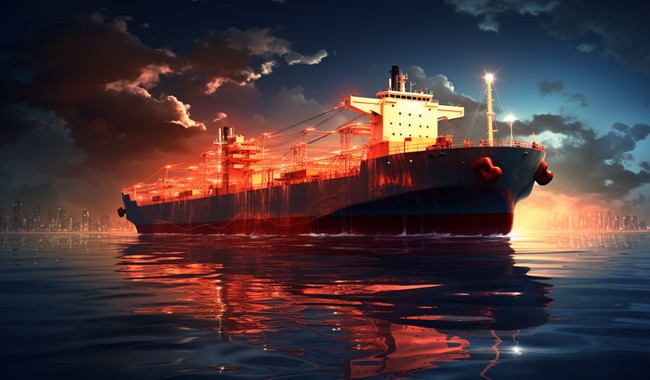
The recent Ukrainian drone and unmanned surface vehicle campaign has targeted dozens of Russian commercial and support vessels, disrupting supply lines into occupied Crimea and other occupied territories and prompting Russia to halt civilian maritime traffic through key waterways.
Over a concentrated span of days, Ukrainian forces struck 76 Russian vessels, with 28 of those attacks occurring in a single night. Those numbers point to a deliberate, sustained effort rather than sporadic incidents, and the pattern is shaping logistics and humanitarian realities in the region.
https://x.com/visegrad24/status/2075916296781254875
The strikes are the latest phase in a multipronged campaign that began months earlier and accelerated this spring. Initial operations focused on cutting land lines of communication into occupied territory by attacking bridges, railways, and highways that feed Crimea and adjacent areas of control.
That ground-focused phase intensified around April 2026 and saw a noticeable spike in bridge and rail strikes in June. Targets included crossings and logistics nodes such as the Chongar and Genichesk areas and major road arteries like the M-14 and M-18 highways, with the goal of interrupting routine resupply routes.
Previously, attacks on bridges and rail were intermittent, dependent on scarce long-range munitions or special operations. The more recent campaign substituted persistent UAV activity carrying larger warheads, making even modest infrastructure choke points untenable over time.
As land routes were degraded, the operational logic shifted toward maritime resupply, forcing Russia to rely increasingly on coastal shipping and short-haul sea corridors to move fuel, food, and military materiel into occupied zones. That shift created a new, lucrative target set for Ukrainian unmanned systems.
On the water, drone swarms and sea drones patrolled well behind the frontline, searching for anything underway and exploiting predictable shipping patterns. These systems probed engine rooms, wheelhouses, and fuel systems to disable vessels without necessarily sinking them, which maximizes disruption while complicating salvage and repair efforts.
Between July 6 and July 10, Ukrainian forces reported 48 vessel hits in 120 hours, affecting tankers, cargo ships, tugs, ferries, and other support craft. Visual footage from multiple incidents shows focused damage to propulsion and fuel-handling components, rendering ships mission-capable only after extensive repairs.
The overnight strikes that added 28 more hits on July 11 pushed the publicly reported total to at least 76 affected vessels. Rather than causing immediate sinkings, the campaign appears designed to clog ports and choke maritime throughput by producing nonoperational hulks that still occupy berths and consume repair resources.
That port congestion and fleet attrition have strategic consequences: Russia announced the suspension of all civilian sea traffic through the Kerch Strait and in the Sea of Azov, effectively freezing a major conduit for grain and other exports. The resulting export halt has immediate economic ripple effects and longer-term food-security implications abroad.
Compounding the maritime problems, the broader drone campaign has reportedly knocked roughly one third of Russia’s refinery capacity offline and disrupted ground logistics to the point where some front-line units face shortages. Whether those industrial impacts are temporary or longer lasting depends on repair timelines and Russia’s ability to reroute supplies.
The operational picture shows deliberate escalation calibrated to deny Russia easy workarounds: strike bridges and rail to shut land lines, then exploit the maritime lifeline that replaces them. Each phase constrains the next, creating a cascade of logistical dilemmas that Moscow must resolve under pressure.
From a tactical perspective, the use of unmanned air and surface systems shows how asymmetric tools can impose outsized friction on a conventional force that depends on predictable supply chains. Disabling propulsion and fuel systems on merchant and auxiliary vessels proves an efficient way to degrade throughput without the political cost of sinking multiple civilian ships outright.
Humanitarian risks are rising in occupied areas dependent on those supplies, where water, electricity, fuel, and food stocks could tighten rapidly if the maritime freeze persists. The situation puts civilian populations at risk and forces a choice between risky maritime escorts, expensive repairs, or concessions to alternative land routes that may not exist anymore.
Strategically, the campaign highlights how precision unmanned systems can reshape theater-level logistics and create leverage disproportionate to the size of the attacking force. For planners and policymakers, the central question now is how rapidly Russia can adapt its logistics posture and what measures, if any, it will take to protect commercial shipping without escalating the conflict further.


Add comment