
Checklist: Critique El-Sayed’s positions; Highlight his comments on taxes and healthcare; Preserve his quoted responses exactly; Keep a conservative viewpoint while removing links and credits; Maintain original embeds and quoted text.
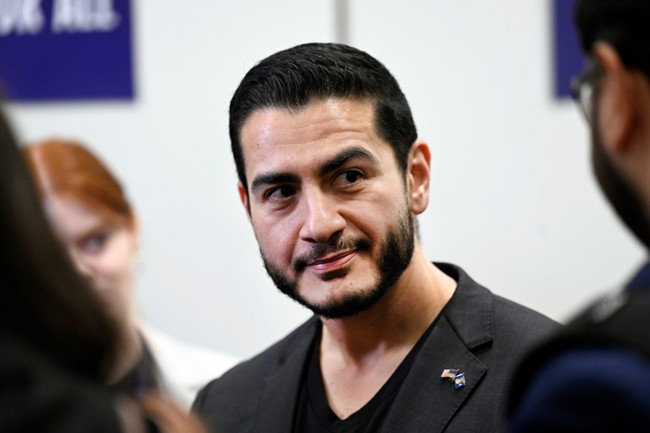
Abdul El-Sayed walked into Sunday TV knowing the cameras would ask about his alliances and policy plans, and he delivered answers that hand his critics fresh ammunition. His exchanges on Meet the Press exposed a muddled message on capitalism and a blunt willingness to shift how ordinary people pay for healthcare. What he called a trade-off came across as a vote for higher taxes on a broad set of earners, not just the ultrarich.
The candidate tried to position himself as someone who understands working people, yet his rhetoric often drifts toward ideological talking points that worry independent voters. References to cozying up with socialist figures and online personalities raised eyebrows, and his defense on national television did not reassure skeptical Michiganders. It’s easy to say you support capitalism and still sound like you want to tax and regulate people’s lives more heavily.
Kirsten Welker pressed him on whether people earning under a million dollars would see tax increases, and El-Sayed’s answer left plenty of room for interpretation. He framed the issue around payroll deductions and insurance premiums, then proposed shifting payments toward a government-funded system. That pitch might sound neat in theory, but it effectively admits the burden could move onto everyday paychecks.
https://x.com/RNCResearch/status/2086461327959101475
When he described replacing private premiums with broader public financing, El-Sayed leaned on a narrative that vilifies corporate executives while promising government guarantees. That’s a familiar script: paint CEOs as villains, offer government as the rescuer, and expect people to accept a higher tax bill as the price of security. Americans deserve clarity, not political theater, about who will actually pay more.
He also made a pointed case about the cost of employer-based insurance, arguing that a paycheck line item for coverage could instead be redirected into a government system. Here are his words exactly as he gave them on camera: “So for the average person, when you look at your W2, if you’re an employee who gets paid every two weeks or four weeks, after you pay your taxes, the next biggest check that comes off the top of your pay stub is to your health insurance company. So imagine instead of paying that to your health insurance company, whose CEO makes $20 million a year, instead you paid a little bit more in taxes for health care that you wouldn’t lose if you lost your job or turned 26 or got married or got divorced.”
Framing it as a swap so people “wouldn’t lose” coverage during life changes sounds sympathetic, but the policy mechanics remain unclear. Who absorbs the administrative costs? How are choice and access preserved? And most importantly, how much more will ordinary households send to Washington coffers each month? Voters are right to be suspicious when answers get vague.
He doubled down by arguing the public would welcome care that is “free at the point of care,” and that trade-offs toward a larger FICA-style payment are justified because of medical debt in Michigan. Again, his exact phrasing matters: “I think all of us would be a lot more interested in that kind of a system if we knew that our health care would be free at the point of care and would be free without having to worry about losing it, in general. So there’s an opportunity here, I think, to trade what we give to a big corporation, who gets to decide who we get to see and who we don’t, for a little bit more paid into FICA. And I think that’s a trade that’s worth making. I think the broader public understands that that’s a trade worth making, considering how many people are holding medical debt. A third of all Michigan households right now.”
Welker sought a clear yes-or-no: would people under $1 million face higher taxes? El-Sayed responded by contrasting paying CEOs with paying government to guarantee care, finishing with this: “I’m saying that we’d be paying for health care in a different way. Instead of paying a health insurance company, whose CEO makes $20 million, I would much rather pay for durable health care into a government, which, of course, we all know provides health care for seniors who need health care the most. So if I’m trading paying a CEO to make more money or paying a government to guarantee me health care, I’m picking the latter every time.”
The translation is blunt: yes, regular people will likely see their tax burden rise to fund the promised guarantees. It is one thing to aim at medical debt relief and another to endorse broad tax increases without spelling out the caps and safeguards. Voters deserve policies with limits, transparency, and an honest accounting of trade-offs.
This is not theoretical nitpicking. The political reality is straightforward: candidates who openly suggest shifting private costs onto public budgets have to explain who pays and how the system stays efficient. Michigan families already face cost pressures, and handing Washington new streams of revenue without clear reforms is a gamble.
El-Sayed wants a big promise: care you keep regardless of job status. That promise sounds appealing in the abstract, but it needs specifics on funding, choice, and consequences. Until he provides those, skeptical voters will see his remarks as proof that higher taxes for ordinary workers are on the table and that the government will be the arbiter of who gets care.


Add comment