
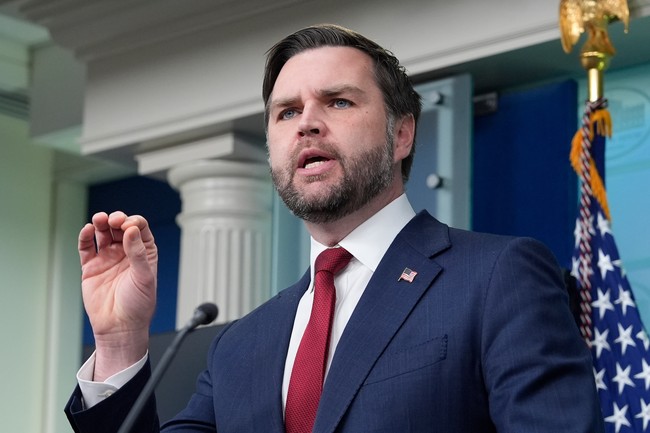
I’ll recap Vice President JD Vance filling in at the White House briefing, note his Iran deal comments, highlight his appearance on “The View,” include his quip about Joy Behar, and preserve direct quotes and the embedded media token for context.
Vice President JD Vance stepped in at the White House briefing while the press secretary is on leave, and he didn’t shy away from tough topics. He walked reporters through developments on the Iran deal, including recent oil movements through the Strait of Hormuz and how outcomes hinge on Iran’s behavior. Vance emphasized that $12.5 million in oil had moved through that waterway recently and pointed to falling oil prices as part of the broader picture. He made clear that any progress is conditional on Iran’s actions, a straightforward stance that keeps accountability front and center.
The briefing mixed policy details with a sense of humor, and Vance used both to make his points. When a reporter asked about his experience with hostile negotiations, he leaned into a clever, self-aware remark. He referenced his recent TV appearance as evidence that he can handle tense exchanges, turning a jab from critics into a punchline. The moment landed with reporters because it showed he can be both firm and disarmingly witty under pressure.
“I have seen some progressive criticisms of me, personally, saying, ‘What experience does the Vice President of the United States have with hostile, high-stakes negotiations?’ And I would point those progressive critics to the fact that just two days ago, I spent over an hour on “The View.” So, I actually have great experience in very hostile negotiations. And I’ve…Look, Joy Behar is way tougher than the Iranians, and she and I are best friends now.”
That line about Joy Behar captured the room because it was equal parts roast and reality check. Vance reminded the audience that he had taken questions and pushed back point by point during his “The View” appearance. He wasn’t looking for applause; he wanted to correct persistent falsehoods and clarify the administration’s reasoning. The goal was simple: lay out the facts and make it hard for partisan talking points to stand unchallenged.
https://x.com/townhallcom/status/2067638725983547753
The television segment itself was notable because Vance did more than trade barbs; he addressed specific claims the hosts had repeated over time. He calmly explained the administration’s positions and offered context for decisions that critics often portray one-dimensionally. That kind of direct engagement matters because it forces a public airing of evidence instead of leaving audiences with snackable soundbites. And when you take tough questions head-on, you often expose how thin some of the criticism really is.
“I’m getting a note here. You told him during the break that he should run for president because he had a good vibe,” executive producer Brian Teta said to Behar.
“For a Republican,” Behar told Teta when asked about his “good vibe.”
The exchange quoted above showed an unusual, unscripted moment from the show that undercut the idea that substance and civility can’t coexist. Even a liberal host conceding a personal impression like that underlines how outreach can soften partisan walls. Vance’s approach wasn’t about pandering; it was about demonstrating that a conservative voice can be persuasive without abandoning core principles. That kind of firmness combined with civility is exactly what voters say they want from leadership.
Back in the briefing room, Vance connected the dots between media appearances and real policy consequences, pointing out how narratives shape public perception and, ultimately, political will. He used straightforward language to explain the administration’s Iran strategy and the economic signals tied to energy flows. The clarity resonated because it avoided jargon and stuck to impactful facts: oil amounts, price trends, and conditional diplomacy. For many in the room, that clarity was welcome after months of spin and sensational headlines.
It’s also worth noting the broader media posture he called out, where hostility toward conservative leaders too often replaces objective questioning. Vance framed his “The View” stint as an example of entering a tough environment to deliver answers rather than retreating to friendly forums. That willingness to show up in adversarial settings speaks to a larger political tactic: meet the fight where it happens and win by being prepared and composed. For Republicans who want to change the narrative, it’s a pragmatic blueprint—engage directly, speak plainly, and let the facts do the heavy lifting.
The briefing ended on a note that combined policy seriousness with a wink, reinforcing that competent governance doesn’t preclude personality. Vance’s mix of detailed updates on Iran and his media-savvy response to critics offered a clear playbook for conservative communicators. Those who watched saw a vice president comfortable in both the policy arena and the rough-and-tumble of national media, using both arenas to push back against misleading narratives and make his case to the country.
Add comment