
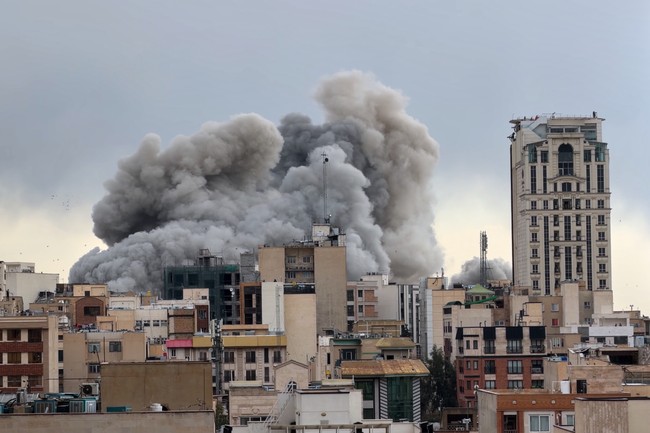
This article argues that recent U.S. strikes on Iran, labeled Operation Epic Fury, are part of a broader strategy to blunt China’s energy lifelines and roll back its influence, not merely a regional response; it links disruptions to Iran and Venezuela oil supplies, shifts in Russian “dark fleet” shipments, and diplomatic moves affecting Chinese access to ports as elements of a coordinated approach that aims to force costly adjustments in Beijing’s strategic calculus.
I never expected to write this, but recent events suggest the Trump Administration may be the first in decades to shape geopolitical outcomes rather than react to them. The strikes in Iran appear to be calibrated to impose economic pain on adversaries and to complicate Beijing’s access to cheap energy, while preserving U.S. freedom of action in multiple theaters. This piece lays out the connection between targeted military action, oil supply pressure, and broader geopolitical leverage.
The immediate economic effect of strikes on Iran hits a major customer: China. With Iran and Venezuela together supplying roughly 17 percent of China’s oil imports, any acute disruption forces Beijing to scramble for replacements and pay market rates. That pressure is amplified by a parallel decline in shipments from Russia’s shadow fleet as buyers like India pull back, making cheap, off-market barrels harder to find.
President Donald Trump’s latest attack on Iran takes a big economic bite out of one of America’s chief rivals: China.
Over the span of two months, the Trump administration has removed the leaders of two countries that both shared China as their most important crude oil customer. Although China buys oil from nations all across the Middle East, Iran was second only to Saudi Arabia as its supplier last year, according to a POLITICO analysis of data provided by market research firm Kpler.
Almost all of Iran’s exported oil, and more than half of Venezuela’s, went last year to China, which remained one of the only purchasers of goods from the two heavily sanctioned nations. The two countries combined represented some 17 percent of China’s overall oil purchases — a meaningful share for the world’s largest importer of crude oil.
The Chinese Foreign Ministry on Saturday said it was “highly concerned” by the attacks on Iran and called for an end to the war. The squeeze on China’s energy supply also comes just weeks before Trump is slated to hold a summit with Chinese leader Xi Jinping.
China’s relationship with Iran runs deep on paper — a reported 25-year cooperation program and large investment pledges — but in practice Beijing has been cautious. It has avoided direct military commitments in the current crisis and publicly denied supplying advanced weaponry, signaling reluctance to be dragged into open conflict. That restraint shows an awareness in Beijing that backing unstable partners can be costly to great power ambitions.
Iran’s ability to threaten maritime chokepoints, like the Strait of Hormuz, is limited in practice. About half of China’s oil transits those waters, but Tehran’s past attempts to disrupt shipping were met with decisive naval responses. The credibility of an effective long-term blockade is low unless another state is willing to pay a steep military and diplomatic price to enforce it.
Beyond oil itself, Iran has historically served as a distraction and a proxy network that drains U.S. attention and resources. From lethal explosive-formed penetrators to sponsored militias and maritime harassment, Tehran has been a persistent asymmetric threat. Neutralizing or degrading that capability reduces the risk of regional conflagration that could complicate U.S. operations elsewhere.
At the same time, moves against Venezuela and efforts to constrain China at strategic ports have narrowed Beijing’s options. Losing favorable, underpriced oil from client states and facing pressure on access to ports and logistics nodes forces China to pay market prices and accept greater vulnerability in seaborne supply chains. That creates leverage without requiring a direct confrontation between powers.
Russia’s shadow tanker traffic has also been squeezed as partners like India change course, and several tankers carrying Urals crude are reported in limbo across the Indian Ocean. That buildup of undelivered cargoes reflects market dislocations that reverberate through Asia. When multiple supply streams are tightened simultaneously, the cumulative effect is far larger than any single disruption.
More than a dozen tankers loaded with Russian Urals oil are sailing toward Asia or idling along the route, a sign of producers racing to get cargoes closer to China as India pulls back from the trade.
These vessels, carrying a combined 10 million to 12 million barrels of oil, are spread across the Indian Ocean, and off the coasts of Malaysia, China and Russia. Five of them are indicating ‘for orders’ or ‘China for orders’ as their status, according to data intelligence firm Kpler, a category that usually means they don’t yet have a specific buyer or discharge port.
Beijing’s public statements of concern and calls for restraint reveal a diplomatic posture that contrasts with the practical consequences of losing preferred suppliers. Complaints about unilateral strikes ring hollow coming from states with their own intervention histories, yet the rhetoric is useful for domestic and allied audiences. In many cases, China’s response has been limited to diplomatic protests rather than forceful countermeasures.
China has framed its position as calls for de-escalation, urging a return to dialogue and opposing unilateral military action in principle. Those positions are familiar in international forums, but they do little to erase the logistical and economic harm that follows from constrained energy and shipping routes. Where diplomacy cannot reverse market physics, strategic adaptation becomes necessary.
Historically, shifts from containment to more assertive rollback strategies have changed global trajectories before. Current actions mirror an approach that targets not only hostile actors but also the patrons and enablers that sustain them. If the pattern holds, the coming months may reveal whether this coordinated pressure produces the strategic effects its architects intend.


Add comment