
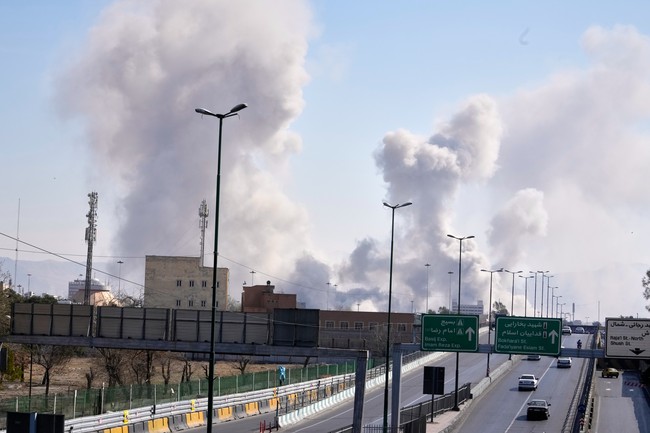
This article reports on recent strikes in Iran, a viral video shared by former President Donald Trump showing massive explosions over Isfahan, and the wider context of escalating actions against Iranian military targets. It covers reported attacks on oil infrastructure, recruitment of minors into paramilitary roles, and the likely military objectives hit in Isfahan, while preserving quoted material from available official statements. The tone is direct and frames these events as decisive measures aimed at degrading Iran’s military and nuclear capabilities.
Tensions with Iran have clearly intensified, and the regime is feeling pressure from multiple directions. Reports indicate leadership turmoil, with suggestions that Iran’s top figures are either incapacitated or otherwise out of public view. When a government starts recruiting children for “war support,” it is a sign that conventional manpower and legitimacy are under strain.
Across the Gulf, an incident involving a Kuwaiti tanker in Dubai has added urgency to regional concerns over maritime security. The tanker was reportedly struck while at anchor, causing a fire and raising fear of an oil spill in nearby waters. Early accounts suggest no casualties, but the attack strengthens the resolve of Gulf states to back firm responses to Iranian aggression.
Kuwait Petroleum Corporation (KPC) said the Al Salmi was struck in an Iranian attack while anchored at Dubai port in the United Arab Emirates, causing a fire onboard and other damage to the vessel. It warned of a possible oil spill in surrounding waters, Kuwaiti state news agency KUNA reported.
On the military front, U.S. and allied operations appear focused on crippling Iran’s ability to project power and safeguard nuclear materials. A video posted by Donald Trump of strikes over Isfahan went viral because of the scale of the explosions and the visible secondary detonations that sent huge fireballs into the sky. Those images underscore the intensity of the ordnance used and the depth of Iranian facilities targeted.
The Isfahan area houses significant military infrastructure, including Badr air base and deep underground storage for sensitive materials. Open reporting identifies facilities there tied to missile production and, reportedly, high-enriched uranium stockpiles. The combination of hardened underground storage and surface missile assembly points makes Isfahan a strategic target in any campaign intended to degrade Iran’s nuclear and missile programs.
According to officials cited in reporting, munitions capable of penetrating hardened facilities have been employed in these strikes. “A high volume of bunker busters, or penetrator munitions, was used for the strike,” one official said, noting that 2,000-pound class bunker busters were among the weapons applied. Using penetrators signals a deliberate effort to reach deeply buried or reinforced depots.
Military leaders are moving to provide explanations and context as strikes continue. The Pentagon announced a press event tied to what it called Operation Epic Fury, a name that reflects the scale and intent behind recent strikes. Senior defense figures planned to address the media to describe objectives and outcomes while operations were underway.
War Secretary Pete Hegseth and Gen. Dan Caine, the chairman of the Joint Chiefs of Staff, will hold a press conference related to Operation Epic Fury on Tuesday morning, the Pentagon announced as the strikes on Isfahan were taking place. Iran’s uranium stockpiles in Isfahan, located 270 miles south of Tehran, are believed to be housed in facilities deep underground, according to International Atomic Energy Agency Director General Rafael Grossi. [….] The city is also home to the Isfahan Missile Complex, Iran’s largest missile assembly and production site, according to the Nuclear Threat Initiative (NTI), a global security nonprofit.
From a policy perspective, decisive action is presented as necessary to remove imminent threats and to protect regional partners and global energy flows. Gulf states and allies have limited patience for attacks that threaten commercial shipping and civilian energy infrastructure. When U.S. forces and partners act to neutralize hardened military and nuclear targets, the message is meant to be clear: aggression will not go unanswered.
Domestically, this posture is framed as correcting decades of weak responses that allowed hostile regimes to expand dangerous capabilities. The argument is that strong, targeted strikes degrade the enemy’s ability to wage war or accelerate nuclearization while preserving broader stability. For those who favor robust deterrence, the recent operations represent a long-overdue shift toward action rather than empty rhetoric.
Iran’s remaining leadership faces stark choices: negotiate seriously, accept significant degradation of capability, or risk further strikes with mounting costs. The decisions they make now will determine whether the region returns to a tense but manageable balance, or slides into deeper, prolonged conflict. For now, the focus remains squarely on ensuring that Iran cannot threaten neighbors or disrupt global energy security with impunity.


Add comment