
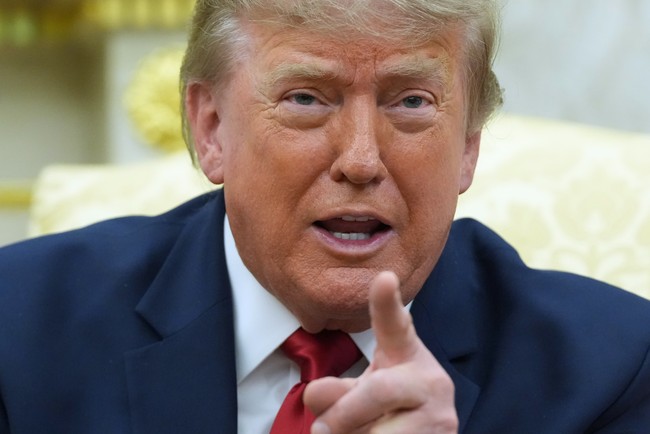
President Trump has publicly challenged Senators John Cornyn and Thom Tillis for stalling the confirmation of Todd Blanche as Attorney General because of a dispute over the $1.8 billion Anti-Weaponization Fund. Trump signaled he could keep Blanche as acting attorney general and push the anti-weaponization bill through Congress, while Cornyn and Tillis insist on written promises to terminate the fund permanently. The standoff leans on technical rules in the Federal Vacancies Reform Act and on political brinkmanship as the senators near the ends of their terms. This dispute highlights broader fights over accountability, DOJ overreach, and who will call the shots in the GOP going forward.
President Trump is blunt: he sees Cornyn and Tillis as obstructionists putting petty grudges ahead of the country’s needs. The nomination of Todd Blanche has become a proxy fight over whether the Department of Justice will be restrained from targeting political opponents. Republicans who want a tougher check on prosecutorial overreach view Blanche as a qualified, stabilizing choice for attorney general.
Trump publicly warned that he would keep Blanche in an acting capacity and press Congress on the anti-weaponization bill if the Senate refuses to act. He wrote, “If Senators Cornyn and Tillis, both upset because I wouldn’t endorse them (they lost, and quit, respectively!), aren’t going to approve Todd Blanche … to be the United States Attorney General, then I will keep Todd as Acting A.G., and push hard to get the Anti-Weaponization Bill … PASSED.” That message was meant to flip the question: are the holdouts protecting the public or protecting a political posture?
The anti-weaponization measure at the center of the row would prevent the Justice Department from targeting Americans for their political views, and it would dismantle a settlement fund critics call an incentives pool for partisan litigation. Cornyn and Tillis demand firm, written guarantees that the $1.8 billion “Anti-Weaponization Fund” will be permanently closed. They argue those assurances are necessary before advancing Blanche’s confirmation.
Republican voters looking for accountability see the fund as a dangerous precedent if left intact or resurrected in some new form. Trump countered those concerns by promising to bring the bill back to the floor and to secure its passage, framing it as a remedy for those allegedly persecuted under the current administration. “Todd Blanche was a voice of reason!” the President added. “It (the weaponization bill) will immediately be back on the table, and I will get it done.”
Legally, the standoff has wrinkles. Under the Federal Vacancies Reform Act, an acting official can generally serve for 210 days, and that clock can extend while a nomination remains pending. Because Blanche served as confirmed Deputy Attorney General, legal experts say he can likely remain acting AG for many more months if necessary, giving Trump leverage absent an actual confirmation vote.
That technical wiggle room is what the President is relying on as he calls the senators’ bluff. Cornyn and Tillis only have a few months left in the Senate, and Trump is betting that time and public pressure could force a reckoning. The real question is whether holdouts will stand by their procedural demand or yield to a strategy that keeps Blanche in an influential role long past their departure.
https://x.com/TrumpTruthOnX/status/2083516708992831595
Senator Tillis pushed back with sharp rhetoric, accusing the administration of trying to resurrect the payout pot and criticizing any move that would “inappropriately” establish another fund. He wrote on X, “Despite comments as late as yesterday that the fund is dead, President Trump clearly intends to resurrect the payout pot for punks either by inappropriately establishing another bogus fund or pushing Congress to vote for a bill that the majority of Republicans in the Senate would be against.” That language shows how heated intra-party fights can get when policy and personalities collide.
Tillis also defended his stance by calling the targets of Biden-era investigations “punks,” then lamented that Blanche’s confirmation stalled because of the reversal over the fund. “It’s unfortunate that Todd Blanche, who I consider qualified for the job, will not be confirmed because of this reversal. Hopefully, we can resolve this by Tuesday.” The back-and-forth makes clear both sides believe they are protecting principle and the party’s future.
Many conservatives view Cornyn and Tillis as playing political theater that undermines broader Republican aims. Critics argue their demands and grandstanding hurt the party and the country by blocking a potentially effective check on federal prosecutorial excess. Supporters of a tougher DOJ posture see Trump’s move as a necessary counterbalance to an administration they believe weaponizes federal power.
The stakes go beyond one nomination. This disagreement will shape who controls norms at the Justice Department and how quickly Congress acts to forbid politically motivated prosecutions. With both senators near the exits and the political calendar accelerating, the fight over Blanche and the anti-weaponization bill is a test of strategy, principle, and resolve within the Republican coalition.


Add comment