
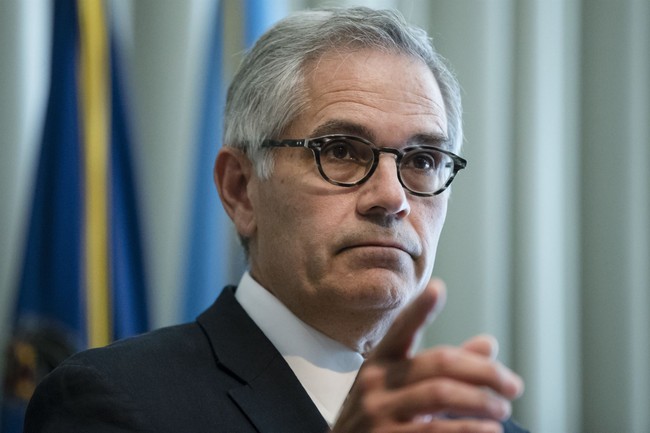
This piece examines Philadelphia District Attorney Larry Krasner’s recent remarks about President Trump’s White House ballroom, places his comments in the context of his record and rhetoric, and questions the priorities of a chief prosecutor in a city facing serious crime challenges.
Larry Krasner stood before a crowd and made a shocking declaration that quickly grabbed headlines and raised questions about judgment. Rather than focus on violent crime or public safety, the Philadelphia DA spoke of a future demolition of the White House ballroom and keeping a fragment as a trophy. The choice of words and the theatrical nature of the remarks speak louder than any policy point he offered that day.
At one point Krasner said, “In about 10 to 15 years, we are all going to be sitting here with smiles on our faces,” and followed it with, “And I’m going to have a paperweight sitting on my desk. And do you know what that paper weight’s going to be? It’s going to be a piece of the ballroom after we blow it up.” Those are explicit lines from his speech, and they landed exactly as intended: provocative and personal.
Observers were quick to note the contrast between such rhetoric and the everyday responsibilities of a district attorney. Philadelphia struggles with violent crime, open-air drug markets, and strained community relations with law enforcement, yet the DA opted for rhetoric that sounds more like a campaign stunt than a prosecutorial roadmap. Constituents deserve a DA who prioritizes solving crimes and protecting neighborhoods over dramatic promises about destroying property tied to a political opponent.
Krasner attempted to clarify the moment shortly after the initial statement, adding, “In an official — official ceremony, just so we’re clear,” and then, “In an official ceremony, we’re going to blow it up, and we’re going to get the taxpayers their money back by selling all the pieces as paperweights.” He punctuated that with “And I will have one on my desk.” Those follow-ups underscored how calculated the remark may have been, but they did little to soften its severity.
Beyond theatrical threats, Krasner has a history of incendiary language aimed at federal law enforcement and immigration officers. He once called ICE agents “Nazis” and later warned, “If we have to hunt you down … we will find you.” That is a grave escalation from political critique into direct confrontation with federal officers tasked with enforcing immigration and criminal laws.
https://x.com/WesternLensman/status/2092427738690826318
He also said, “This is how it works. You commit crimes within the jurisdiction that is the city and county of Philadelphia, I prosecute you… No, the president cannot pardon you,” and added, “Yes, I will put you in handcuffs, and I will put you in a courtroom, and if necessary, I will put you in a jail cell.” Those are forceful prosecutorial promises when applied to local defendants, but they sit oddly next to his targets being federal agents and political opponents.
Calling the president an “embodiment of hate, the embodiment of ignorance and the embodiment of depriving people of their vote and education” shows Krasner is willing to move beyond prosecutorial language into sweeping political condemnation. That blending of legal authority and partisan rhetoric creates concerns about impartiality and the proper scope of a DA’s public conduct. Prosecutors wield immense discretion; the public expects that power to be exercised with balance, not vendettas.
Critics point out another oddity: the ballroom in question has been described by administration sources as privately funded, which raises the question of who actually stands to gain from any proposed demolition and sale of fragments. Even if the remarks were symbolic, they suggest priorities that many residents of a high-crime city would find out of touch.
There is also the matter of credibility and dignity for the office. A district attorney who resorts to dramatic threats risks undermining public trust in prosecutions he brings and in the rule of law he is sworn to uphold. Citizens want clear-headed leadership focused on safety, arrests, convictions, and fair treatment in courtrooms—not performative vows to punish political foes.
For Philadelphians, the practical consequences matter: crowded jails, overwhelmed courts, and communities that need better policing and prosecutorial follow-through. When a DA appears more invested in scoring political points than in delivering results, public safety becomes the casualty. That disconnect is the central grievance many opponents are raising in response to Krasner’s remarks.
Calls for accountability will likely intensify as these comments circulate and are paired with a pattern of confrontational statements toward federal officials. Whether voters respond at the ballot box or demand reforms through oversight mechanisms, the moment highlights a broader debate about the role of prosecutors in American cities. The stakes are high, and ordinary residents will judge whether such rhetoric translates into meaningful action where it matters most.



Add comment