
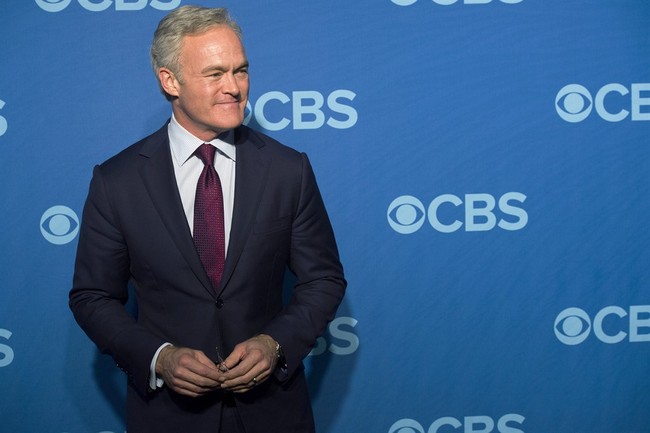
More Drama at CBS News As Scott Pelley Rages at Management and the Veteran Newsman Fractures the Facts
The fallout from a tense all-hands meeting at CBS News has sparked wide conversation about internal culture, leadership, and how journalists talk about one another in public. This piece examines what happened in the meeting, where Scott Pelley clashed with incoming executive producer Nick Bilton, how Pelley’s public posture stacked up against timelines and facts, and why the exchange mattered for perceptions of television journalism. Preserved here are key quotes and the original embed markers for readers to reference the sourcing that surfaced after the meeting.
The meeting was billed as a chance for new executive producer Nick Bilton to lay out his plans for 60 Minutes, but it turned into a public confrontation led by Scott Pelley. Many reporters framed Pelley’s remarks as a bold stand against management, but looking closely at the exchange shows a different mix of theatricality and factual missteps. Pelley repeatedly interrupted Bilton and insisted some questions be aired in front of staff, not handled privately.
NEW: In @NickBilton’s first all-hands meeting at 60 Minutes this morning, @ScottPelley told Nick he had “scant qualifications” for the job and pressed him to account for last week’s firings.
Nick suggested conversation would be better held in private, Scott countered that he’d prefer to have them in front of his colleagues.
https://x.com/DylanByers/status/2061482062058831897
Nick told Scott, “they’re my colleagues too,” to which Scott replied: “that remains to be seen.
”I’ll have much more in tonight’s In The Room: https://puck.news/newsletters/in-the-room/
@PuckNews
That block of quoted remarks captured the confrontational tone, but it also set the stage for claims that don’t line up with the timeline of events. Reports indicate Bilton only started at CBS News on Thursday, May 28, yet Pelley pressed him about recent firings that occurred before Bilton’s arrival. Those timing details matter when assigning responsibility for personnel moves. The meeting recording and subsequent reporting made clear that Bilton was not in a position to have ordered the prior dismissals.
There was also public chatter that Bari Weiss and Bilton had tried to engage Pelley privately the week before, an outreach he declined. That detail undercuts the argument that Pelley was forced to raise concerns in front of colleagues because private routes were unavailable. Instead, the sequence suggests Pelley chose the public forum to make his critique.
Worth noting amid all the coverage of Scott Pelley’s scathing criticism today: According to a person with knowledge of the matter, Bari Weiss and Nick Bilton sought out Pelley for a private meeting last week, but the longtime correspondent did not take them up on the offer to talk.
Pelley also leveled broad insults about colleagues’ experience, questioning Bilton’s and Weiss’s fit for television work. That attack leans on a narrow definition of television credentials, but journalism practice overlaps heavily across platforms: reporting, sourcing, verification, and ethics are the core activities whether the end product is a print feature, a podcast, or an on-camera segment. The elite-versus-newcomer framing ignores how reporting work is often assembled by production teams before a correspondent appears on camera.
60 Minutes pieces typically involve producers and researchers doing much of the groundwork—research, interviews, fact-checking—before the correspondent records the sit-down portions. That production reality complicates claims that only on-camera veterans deserve deference, and it raises questions about the basis for Pelley’s asserted superiority. The meeting revealed less about managerial failing and more about an old guard defending status in a changing newsroom.
When Pelley doubled down and made a dramatic claim about Bari Weiss, the remark was stark and emotional. “She is murdering ‘60 Minutes,’” the correspondent said. “She does not love this place. She was brought in to kill it, and she’s been doing exactly that.” The line landed loudly, but audience metrics for the most recent broadcast season under Weiss’s oversight showed an uptick in ratings, which complicates the narrative that the program is dying on her watch.
Given the clash and Pelley’s tone, internal consequences are tricky. Outright firing over a single public confrontation would be dramatic and carry reputational risk for the network, but repeatedly undermining incoming leadership in public rarely helps a newsroom’s cohesion. Past responses to similar behavior at other outlets suggest reassignment or reduced on-air roles are often the pragmatic choices.
The spectacle of Pelley demanding to be heard in front of colleagues and then pushing disputed claims about who was responsible for personnel moves will leave many newsroom observers debating who had the stronger case. This episode is less about decisive managerial malpractice and more about how senior journalists respond when a new production regime arrives. It also illustrates how public theatrics can obscure simple timelines and facts.
Pelley’s colleagues, the production staff, and viewers all got to hear the exchange and judge the demeanor and substance for themselves. The recording and reporting that followed gave tangible evidence to weigh against the rhetoric, and that evidence is what separates grievance from actionable claim in any workplace dispute.

Add comment