
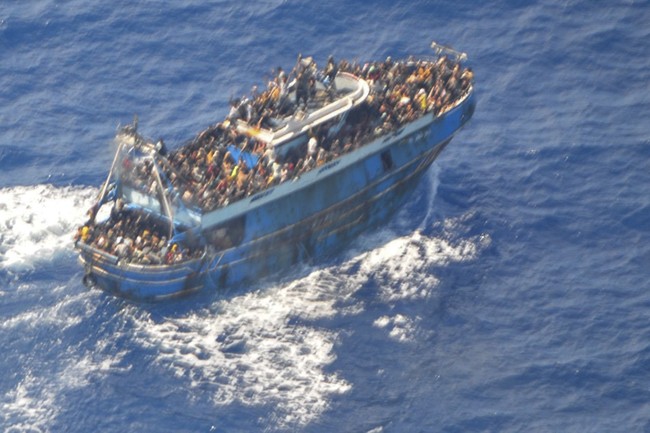
Marco Rubio has ordered U.S. embassies across the Western Hemisphere to document human rights abuses tied to mass migration, calling attention to sex trafficking, forced labor, and other brutalities that flow along transnational routes — a move framed as essential to exposing the human cost of lax migration policies in Europe and the U.S.
The political debate around immigration often drowns out the real stories of suffering, and Rubio’s directive forces diplomats to collect concrete evidence of abuses. This is a Republican push to replace vague rhetoric with documented facts so policy can follow reality. The reporting requirement aims to shine a light on criminal networks that profit from chaos and on the real victims trapped in the middle.
Across the hemisphere, criminal syndicates have turned migration corridors into business models built on exploitation, and Rubio wants the State Department to catalog those crimes. The goal is to give policymakers boots-on-the-ground data showing how mass migration correlates with trafficking and violence. For conservatives who prioritize border security, the move validates longstanding warnings about the consequences of open-door approaches.
Embassies are uniquely positioned to observe patterns of abuse because consular and diplomatic staff encounter migrants, victim testimonies, and local enforcement reports. By ordering systematic documentation, Rubio expects to convert anecdote into evidence that can be used in diplomacy and law enforcement cooperation. That data could also be cited in policy debates at home where opponents often dismiss concerns as fearmongering.
Included in the administration’s public messaging are blunt assessments that connect migration flows to transnational criminal activity and threats to national wellbeing. The following passage was published in an official post and should be preserved here exactly as stated:
“Millions of migrants and waves of deadly drugs have flowed to America’s borders on transnational routes operated by terror organizations. Mass migration has endangered American citizens, threatened the economic security of American workers, and strained America’s asylum system,” the State Department added in another post.
The department noted that “narco-terror” groups involved in facilitating mass migration also participate in egregious human rights violations.
The department’s language is intentionally stark to communicate the scale of the problem and the stakes involved. Rubio and allies argue that acknowledging the link between smuggling networks and human rights violations is not about xenophobia but about confronting criminality. Conservatives see this as part of a broader push to restore rule of law and protect citizens and migrants alike from predatory organizations.
Officials stress that narco-terror groups do more than move people and drugs; they also commit the worst abuses against vulnerable populations. This next quoted paragraph outlines those accusations and appears in the State Department materials exactly as provided here:
The narco-terror organizations that facilitate mass migration routinely engage in child trafficking, forced labor, sexual assault, and other heinous human rights abuses that threaten the citizens of nations throughout the Western Hemisphere and undermine the rule of law.
That description frames the embassy reports as essential tools to press governments in Europe and the Americas to act. Rubio’s move is designed to heap diplomatic pressure on friendly capitals that have pursued permissive migration policies. The message is plain: tolerating mass migration can enable criminal enterprises and corrode social cohesion.
The response from conservative circles has been supportive because the reporting requirement bolsters enforcement and accountability. It gives the U.S. evidence to demand partner nations clamp down on smuggling rings and to seek extraditions or joint operations. For Republicans, hard data about trafficking and exploitation strengthens the case for tighter borders and more aggressive cooperation against transnational crime.
Critics will argue that documenting abuses is political theater, but the reports themselves will show whether that claim holds up. If embassies return detailed accounts of victimization and organized criminal involvement, it becomes harder to ignore the human consequences of those migration pathways. Rubio is betting that facts can change the debate where rhetoric has failed.
Beyond immediate law enforcement uses, the reports could influence migration policy, refugee processing, and aid priorities. When diplomats file formal observations of trafficking or forced labor linked to migration routes, agencies must respond with resources, interventions, and legal strategies. Republicans see this as a pragmatic lever to protect citizens and vulnerable migrants while reclaiming control over borders.
The directive also sends a clear signal to European governments that U.S. officials are tracking the downstream effects of their migration choices. Republicans who warn of long-term demographic and cultural impacts argue that spotlighting abuses should prompt a sober reassessment overseas. Rubio’s effort is positioned as a push to align moral concern with practical steps to dismantle criminal networks.
In short, the embassy reports are intended to transform the immigration conversation from abstract values fights into an evidence-driven crackdown on criminality. That shift is central to the current Republican approach: protect borders, expose predators, and restore orderly legal processes for migration. This is a policy tactic meant to hold both smugglers and permissive governments to account.

Add comment