
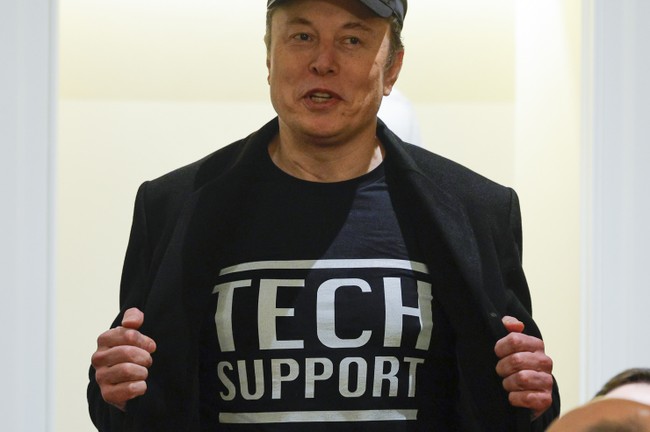
Elon Musk fired back after the European Commission slapped X with a €140 million fine, calling out what he and several U.S. officials see as overreach that threatens free speech and American tech leadership. The dispute centers on alleged failures under the EU’s Digital Services Act, but critics say the penalty is really about policing content and pressuring U.S. platforms to follow foreign rules.
The EU announced the fine in a video from regulators, accusing X of several compliance failures under the Digital Services Act. The regulator listed deceptive design around the verification mark, opaque ad transparency, and restricted researcher access as the main offenses. The framing made clear this is a DSA enforcement action, yet the fallout is being debated as a free speech issue rather than a narrow technical violation.
Today, we fined X for non-compliance with transparency obligations under the DSA [Digital Services Act].
We’re holding X accountable for:
-Deceptive design of its ‘blue checkmark.’
-Lack of transparency of its advertising repository
-Failure to provide access to public data for researchers
Musk’s public reply was short and blunt. He responded directly under the EU post with a single one-word line: “Bulls—.” That terse reaction immediately set the tone of the conversation, framing the fine as a provocation rather than a reasoned enforcement outcome in his eyes.
A follow-up message from Musk expanded on the stakes he sees at risk. He warned that heavy-handed regulatory actions can chill open discussion and limit citizens’ access to information. For him, the concern goes beyond corporate penalties and into the civic realm of what citizens can hear and say online.
Senator Marco Rubio backed Musk and framed the penalty as a direct affront to Americans and American platforms. Rubio wrote that the fine “isn’t just an attack on @X, it’s an attack on all American tech platforms and the American people by foreign governments.” He declared that the era of censoring Americans online via foreign pressure needs to end. His post went viral, drawing millions of views and amplifying the political angle of the dispute.
Federal Communications Commission Chairman Brendan Carr added his voice to the criticism, calling the fine a form of economic punishment. He said, “Once again, Europe is fining a successful U.S. tech company for being a successful U.S. tech company.” Carr argued this amounts to taxing American success to prop up a regulatory model that hobbles innovation and competition across the Atlantic.
The European executive insisted the action was about transparency, not content moderation, but reporting on the case highlights the overlap between those issues. The DSA requires platforms to tackle illegal and harmful content while also improving transparency, and regulators say X failed in those duties. Opponents counter that what counts as “harmful” can be subjective and that punishment for failing to remove certain material is effectively content control.
This clash raises deeper questions about jurisdiction and the reach of foreign law over American companies. When a non-U.S. regulator imposes sizable fines tied to content-related rules, the policy ends up shaping what Americans see and post. Lawmakers and industry leaders argue that should be decided domestically, through U.S. law and public debate, not by external bodies with different free speech norms.
The episode also spotlights the practical challenges of global platform governance. Platforms operate across borders and must navigate competing legal frameworks, but enforcement that feels punitive or political risks sparking reciprocal measures. Critics worry that regulatory tit-for-tat will fragment the internet and force platforms into a maze of conflicting obligations.
Supporters of the EU action say stronger rules are needed to curb illegal content and protect users, emphasizing that transparency and researcher access help hold platforms accountable. Skeptics respond that transparency tools can be weaponized to pressure companies into silencing legitimate speech and that enforcement can be uneven. Both sides claim public interest, but they disagree sharply on where the balance should lie.
At the center of the dispute is a broader debate about who gets to set the rules for online speech and how to balance safety, transparency, and liberty. The fine against X has become a flashpoint in that fight, drawing pronounced political reactions and forcing a conversation about American sovereignty, tech competitiveness, and the future of open discourse on major platforms.

Start now generating extra home based cash by doing very easy and simple job from home. Last month i have earned $19753 from this job in my part time. This job is just awesome and its earning are greater than 9 to 5 office job. .
Here is I started_______ EarnApp1.Com
If the E U and their leaders want to limit, instruct, and subvert American ideals and Elon Musk, why doesn’t Pres Trump simply ignore them………………by ceasing all foreign aid, ease of entry into our country, etc. Nothing shouts ” you are unimportant ” like being ignored and minimized. America First !!