
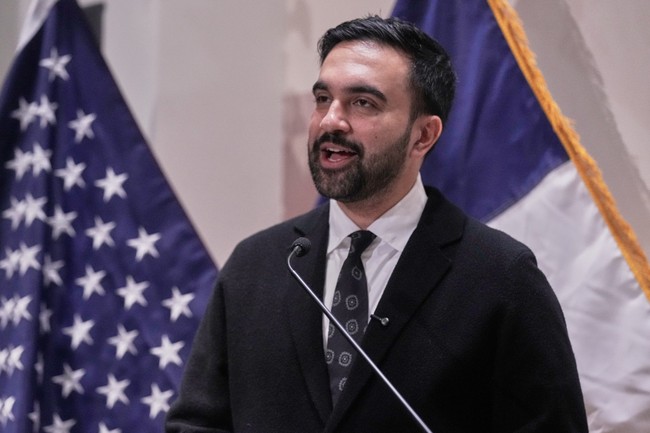
Zohran Mamdani has announced one of his first moves as New York City’s mayor will be to stop city sweeps of homeless encampments, a shift that promises to change how the city handles visible homelessness and public safety in the months ahead.
New York’s debates over homelessness have always been heated, and the incoming mayor is making clear he intends to treat encampment removal as something to end rather than refine. The announcement positions housing placement as the sole yardstick of success, not enforcement or upkeep of shared public spaces. That approach raises immediate questions about who will provide that housing and how the city will manage public health and safety in the meantime.
Mamdani framed the problem as a political choice, arguing that the city has treated homelessness as if it were inevitable instead of a policy outcome that can be changed. He said, “If you are not connecting homeless New Yorkers to the housing that they so desperately need, then you cannot deem anything you’re doing to be a success. We are going to take an approach that understands its mission is connecting those New Yorkers to housing. Whether it’s supportive housing, whether it’s rental housing, whatever kind of housing it is, because what we have seen is the treatment of homelessness as if it is a natural part of living in this city, when in fact, it’s more often a reflection of a political choice being made.” Those are ambitious words, but the details are sparse and the timeline unclear.
The history of recent encampment policy shows why residents are skeptical. Under Mayor Eric Adams, clearing tent sites was a stated priority; Adams described encampments as unsafe and unacceptable and sought to remove them from sidewalks, parks, and underpasses. He said, “We cannot tolerate these makeshift, unsafe houses on the side of highways, in trees, in front of schools, in parks. This is just not acceptable, and it’s something I’m just not going to allow to happen.” That enforcement approach pushed many into shelters or elsewhere, but follow-through on permanent placement lagged.
“We cannot tolerate these makeshift, unsafe houses on the side of highways, in trees, in front of schools, in parks. This is just not acceptable, and it’s something I’m just not going to allow to happen.”
Data from recent years underlines the scale of the challenge: tens of thousands of complaints about encampments were logged in a recent January-to-November period, and audits found very limited success turning sweeps into long-term housing placements. The city’s own numbers showed that only a tiny fraction of people affected by sweeps ended up in permanent housing, with many more remaining unsheltered or reappearing in other public spaces. That patchwork outcome explains why some voters and business owners demand stronger on-the-ground management as part of any humane policy.
What worries conservatives and many residents is the operational gap between declaring an end to sweeps and actually connecting people to homes and services. Ending enforcement without a credible, funded mechanism for placing people in permanent housing risks leaving encampments in place and shifting problems to neighborhoods and transit hubs. The visible effects can include trash, public drug use, discarded needles, and threats to residents and local businesses, which opponents point to when warning of a San Francisco–style outcome.
There is a broader economic angle to consider as well. Cities facing large, persistent encampments often experience declines in tourism, retail foot traffic, and small business investment, and those effects ripple into job security for residents who depend on local commerce. If public spaces degrade, property values and municipal revenue streams can be affected, complicating any effort to expand housing programs or supportive services. Critics say that without clear fiscal plans, well-intentioned promises can deepen fiscal strains.
Mamdani’s rhetoric centers on housing-first principles, which emphasize placing people into housing before addressing other issues like mental health or substance use. Housing-first advocates argue this reduces harm and creates stability needed for recovery. Skeptics counter that housing placement must be paired with enforceable public health measures and sufficient shelter capacity that meets standards for safety and dignity, or else the quality-of-life consequences for all residents could worsen.
The political stakes are real. Voters often measure leaders by how safe and clean their city feels on a day-to-day basis, not just by long-term program goals. Mamdani’s promise reframes the debate by placing responsibility squarely on policy choices rather than structural inevitability, but it leaves open who pays for the housing and how quickly it can be delivered. Those unanswered questions will shape whether his first initiative becomes a workable reform or a source of friction with neighborhoods and businesses.
With the mayor-elect pledging a dramatic policy shift and the previous administration criticized for only partial gains, the coming months will test whether bold promises translate into results. Residents, business owners, and public safety officials will be watching metrics like shelter placement rates, encampment counts, sanitation complaints, and crime trends. If those numbers do not improve, political backlash is likely and the debate over how to balance compassion, housing, and public order will only intensify.


Start now generating extra home based cash by doing very easy and simple job from home. Last month i have earned $19753 from this job in my part time. This job is just awesome and its earning are greater than 9 to 5 office job. .
Here is I started_______ EarnApp1.Com