
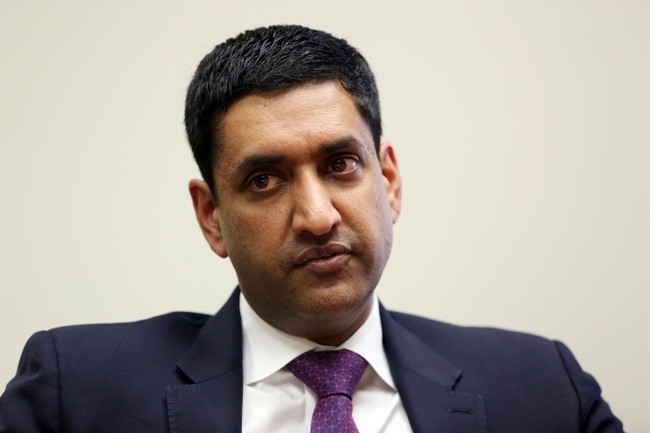
The California congressman’s account of being “detained” in the West Bank quickly unraveled under scrutiny, with video he posted failing to show the threats he described and U.S. officials disputing his version of events.
Rep. Ro Khanna painted a dramatic picture: his party trapped, threatened by “violent” settlers, held for more than an hour, and then, he said, assisted by the Israeli Defense Force. That claim landed hard in Washington because it came on the heels of an unrelated controversy he helped amplify, making the timing look worse than the incident itself. Americans watching expected clear evidence when a public figure makes such strong assertions abroad. Instead, what surfaced raised more questions than it answered.
The footage Khanna shared does not match the narrative he promoted. The video shows people waiting and talking as local authorities and security figures sort out who a visiting group is, but you do not see anyone being threatened, shoved, or detained at gunpoint. For a claim about violence and forced holding, the absence of those elements is striking. If there is another clip that substantiates his account, it has not been produced publicly.
That gap matters because U.S. diplomacy and on-the-ground coordination are delicate, especially in areas flagged for safety after attacks. The Israeli Ambassador to the United States publicly questioned Khanna’s motives, suggesting the episode could be a distraction from earlier missteps tied to another political figure. Ambassadors don’t issue statements lightly, and his sharp words signaled official skepticism rather than support for Khanna’s version.
https://x.com/FaceTheNation/status/2076348260659134490
Khanna also drew criticism for not coordinating with the U.S. embassy before entering a contested area, a lapse that officials called irresponsible at best and a “stunt” at worst. Routine embassy coordination exists so American officials and visitors can avoid misunderstandings with local forces and civilians. Skipping that step in a tense region raises the risk of an avoidable incident becoming a headline. Republicans and conservatives watching this want clear accountability when elected officials act without basic safeguards.
There was confusion over whether the site was a closed military zone, with initial reports differing from later clarifications. Leiter said it was a CMZ. Regardless of the label, the place was sensitive and would have benefited from prior coordination to prevent the kind of friction Khanna described. After recent, violent attacks in the region, any unfamiliar vehicle or visitors can prompt heightened responses from locals protecting their communities.
Ambassador Michael Leiter pushed back directly, stating, “At no point was the congressman, or any member of his party, threatened by the soldiers, or civilians bearing arms.” Those are precise words from a senior diplomat weighing in on a public claim. U.S. Ambassador to Israel Mike Huckabee also criticized Khanna’s approach and called the episode a “stunt” for failing to contact the embassy. When two U.S. envoys contradict a lawmaker’s account, the public has a right to be skeptical.
Khanna’s decision to publicize a partial clip without offering complete context or additional evidence opened him to predictable pushback. In politics, narrative control matters, but so does credibility. Launching accusations that imply deadly force or coordinated misconduct by allied forces demands not just boldness but proof. Presenting a fragmentary scene as proof instead undermines the claim and the claimant.
The optics are especially bad given Khanna’s recent misstep promoting a scandal-tainted political figure. Instead of stepping back to rebuild trust, he doubled down and doubled down poorly, inviting scrutiny from those who expect better judgment. Constituents and colleagues alike watch for patterns, and combining unvetted claims with political theater does not inspire confidence.
Observers on the right and center will keep pushing for transparency here: if there is more footage or corroboration that supports Khanna’s language of detention and threat, it should be released. If not, then a public apology and clearer coordination with diplomatic channels would be the responsible next steps. The broader point is simple: officials traveling in volatile areas owe the public honesty and a minimum of procedural care.



Add comment