
The Maine Senate race erupted after fresh allegations against Democrat nominee Graham Platner, and key Democrats scrambled to withdraw support; this piece examines the fallout, Ruben Gallego’s public stance and misstep, and the broader questions it raises about party judgment and accountability.
Democrats embraced Graham Platner despite a steady drip of troubling reports, and now many are distancing themselves as the allegations mushroom. What was predictable has happened: once more damaging claims surfaced, the party’s calculus flipped and supporters began to retreat. Voters watching this scramble are left asking why warning signs were ignored for so long.
Platner’s standing in the race plunged almost immediately as polls shifted and Sen. Susan Collins took the lead. That collapse made it easier for Democrats to publicly dissociate, but it also exposed the opportunism at work — loyalty tethered to electoral math rather than principles. This kind of sudden abandonment looks less like conscience and more like damage control.
Some high-profile Democrats who backed Platner are now facing sharp criticism for sticking with him after earlier reports emerged. Rep. Ro Khanna’s enthusiastic support drew particular heat, and others who went all-in are getting the same treatment. Accountability is overdue, and voters have every reason to be frustrated with party elites who misread or dismissed warning signs.
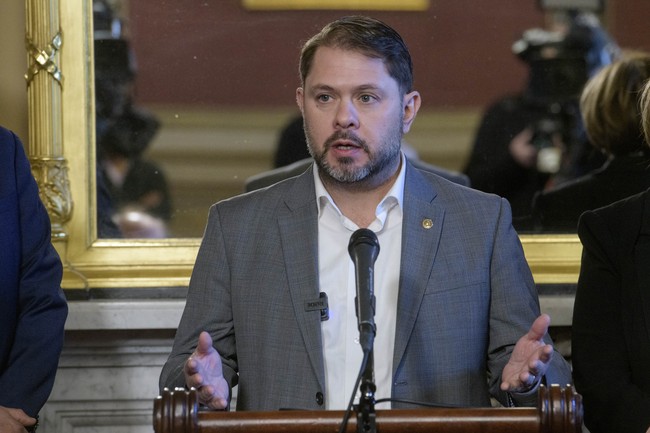
Sen. Ruben Gallego was among those who publicly withdrew his endorsement on Monday, a move that drew immediate attention and predictable backlash. His decision to step back from Platner seemed in line with the rising weight of allegations, but the timing and comments that followed complicated the story. In short, one retraction did not erase prior endorsements or the questions about why Platner stayed the party’s choice so long.
Gallego’s reaction, though, didn’t end with a simple withdrawal; he engaged on social media in a way that widened the controversy. He replied to Sen. Mike Lee’s tweet about not endorsing Platner and added language that inflamed the debate further. That exchange shifted focus from the original allegations to Gallego’s own judgment and rhetoric.
https://x.com/RubenGallego/status/2074242801953386923?ref_src=twsrc%5Etfw
When Gallego claimed Lee had endorsed Trump “who was found to have committed rape,” he crossed a line that many viewed as factually inaccurate. The precise phrasing—”who was found to have committed rape”—is a charged assertion that courts and settlements have not framed in that way. That choice of words opened Gallego to accusations of carelessness and provoked pushback from critics who said public officials should be more precise with serious claims.
There was also criticism aimed at Gallego for appearing to apply standards unevenly, since allegations against a Republican figure did not elicit the same immediate repudiation from him earlier. Lyndsey Fifield, who publicly accused Platner of abuse in June, questioned why those claims weren’t deemed “sufficiently troubling or serious” by Gallego at the time. That question is blunt and hits at a broader complaint: selective outrage undercuts credibility.
Political allies who once shrugged at allegations found it easier to pivot once the partisan cost changed, and that pattern frustrates many voters. The impression left is that principle was secondary to political expediency, which is toxic to public trust. In an environment already cynical about politicians, such moves push more people away from the ballot box.
Gallego’s social media back-and-forth amplified the story and distracted from the core issue: the allegations themselves and the need for a careful, fair process. By choosing inflammatory language, he invited a debate over his motives and accuracy rather than keeping the spotlight where it rightly belongs. Politicians who weaponize rhetoric in these moments risk turning accountability into spectacle.
For Republicans and independents watching from the sidelines, the episode is both instructive and politically useful: it showcases perceived Democratic disarray and raises questions about judgment within the party. The broader takeaway is clear — when parties back candidates despite warning signs, they create vulnerabilities that opponents can exploit. Voters will remember which side seemed to value principle and who put politics first.
Ultimately, the Platner controversy underscores how quickly a campaign can unravel and how long the reputational damage can last. Democrats who rallied around a nominee in the face of mounting questions now must answer for those choices. The fallout will play out in the court of public opinion and at the ballot box, where voters decide whether such lapses in judgment are forgivable.
Editor’s Note: Every single day, here at RedState, we will stand up and FIGHT, FIGHT, FIGHT against the radical Left and deliver the conservative reporting our readers deserve.


Add comment