
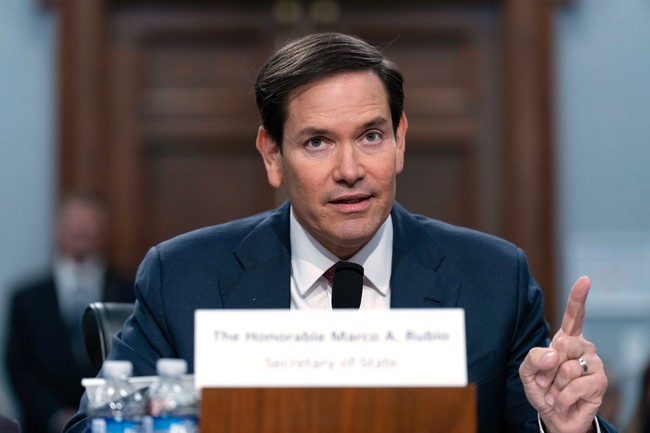
I’ll explain how Marco Rubio handled an unexpected question about FIFA reversing a red card for U.S. player Folarin Balogun, summarize his key points on fairness and sportsmanship, note the political context involving President Trump and FIFA, and keep the original quotes intact. The piece highlights Rubio’s quick, pragmatic response at a State Department event and why his take matters to supporters who value fair play and clear rules. It also points out reactions from other parties and includes the original embeds for the video and clips.
Marco Rubio was caught off guard by a reporter’s question about FIFA reversing a red card, but he turned the moment into a concise lesson on fairness and optics. He was walking into a meeting with Chilean Foreign Minister Francisco Pérez Mackenna when the question came during a reception handshake. Rubio reacted with surprise and then shifted into an explanation that framed the issue in plain terms anyone could understand.
The context mattered: President Trump had reportedly contacted FIFA President Gianni Infantino to express concern about Balogun’s red card, and there was public debate about whether outside pressure influenced the reversal. Rubio acknowledged the headlines and the drama, but he focused on practical outcomes rather than political theater. He underscored that overturning the call served the integrity of the match and spared the result from lingering doubts.
Rubio argued that slow-motion reviews create confusion and that real-time judgments should guide the sport whenever possible. He said simply, “It was a bad decision. They shouldn’t even be reviewing these things on slow motion. Right? They should review them live-action. I think it was the right decision to reverse it.” That line sums up his stance: get calls right, avoid theatrics, and let the game decide the better side.
He also made a practical point about national pride and competition: if Belgium had to beat a United States side missing its top scorer, their victory would carry asterisks in the court of public opinion. Rubio put it bluntly: “And if you’re Belgium, why would you want to play a game and win a match, and then you win this match, and then everyone will argue you didn’t really win it because their best player, leading scorer was not on the pitch during that – during the match?” He emphasized that athletes and fans want uncontested results.
Rubio didn’t pretend to be a soccer authority, but he relied on what informed people around him were saying about the incident. He noted that experts suggested the U.S. player’s movement did not look intentional and that the initial call did not hold up under scrutiny. He remarked, “So I think it was the right decision. Obviously, there’s a lot of drama around it and so forth. But I think it was the right decision to reverse it, because that decision initially – from everyone I’ve – I’m not an expert on – I don’t claim to be an expert on soccer, but from everyone I heard that knows about this, they all say that that – the guy’s head wasn’t even looking down. It wasn’t like he knew where he was stepping.”
Rubio added a touch of dry humor about the international fallout, mentioning NATO in a half-joking way when thinking about how the Belgians might view the reversal. “So look, maybe they’re trying to get an international incident. I don’t know; maybe we’ll bring it up at NATO tomorrow when we’re there with the Belgians and everybody else.” That quip framed the controversy as blown-up drama rather than a diplomatic crisis.
He closed with a straightforward call for competition to be decided on the field, not by controversy: “I just hope the match will go on, everyone will be at full strength, and the winner will be the winner. If it’s Belgium – they have a very good team – they’ll move on and they can say they beat the U.S. at full strength at home.” Rubio’s point appealed to conservatives who favor clear rules, fair contests, and merit-based outcomes.
https://x.com/EricLDaugh/status/2074199713935446054
The exchange underscores a larger Republican-leaning view that outside pressure shouldn’t corrupt institutions or processes, and that when legitimate mistakes are fixed, transparency and prompt correction are preferable. Rubio’s approach was to defuse partisan noise and insist on sporting fairness, a stance likely to resonate with voters tired of manufactured controversies. It was a short, effective moment that reminded people why leadership includes clarity and common sense.
At the time of this reporting, during the match in Seattle, Belgium held a lead over the U.S. Rubio wished both teams to compete fully and fairly so the result would be undisputed after 90 minutes. The event and Rubio’s remarks were captured on video and are preserved below as in the original coverage so readers can judge the tone and content for themselves.


Add comment