
Checklist: Report the upset result; explain who won and by how much; outline the ideological stakes and endorsements; quote the contested passage on Israel; note the implications for the Democratic factional battle.
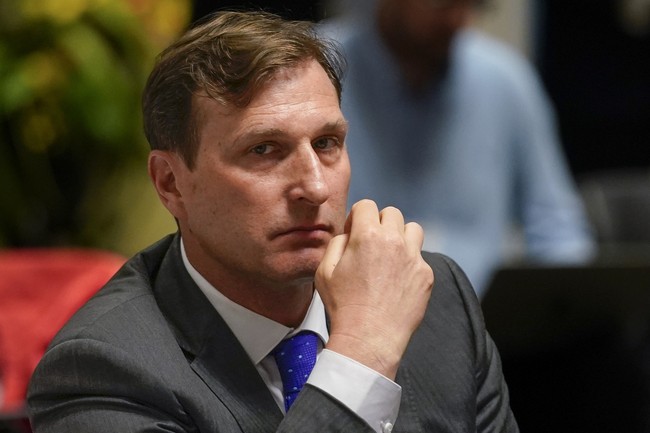
The New York Democratic primary in the 10th Congressional District produced a clear winner and a clear message about the party’s ongoing internal fight. With nearly half the vote reported, Brad Lander led decisively over incumbent Dan Goldman, flipping the expected outcome and energizing the progressive faction. The tally sitting at roughly 63 percent to 37 percent underscored a significant shift in local power. This result matters because it signals where momentum sits heading into the midterms.
Lander’s victory was not a narrow squeak; it felt like a repudiation of the establishment approach Goldman represented. Lander carried endorsements from figures like Zohran Mamdani and Sen. Bernie Sanders, and those endorsements translated into votes in a district described as among the most progressive in the country. For Republicans watching national politics, the lesson is simple: the left is still sorting itself out, and the most energized candidates are often the ones who pull the party further left. That internal struggle will affect general election dynamics in predictable ways.
The campaign became a proxy fight over foreign policy, particularly responses to the Israel-Hamas war, and over who owns the future direction of the Democratic Party in New York. Both candidates are Jewish, yet their public positioning on Israel diverged in ways that mattered to voters. Goldman tried to thread a centrist needle, aiming to appeal to both pro-Israel constituencies and those critical of Israeli policy. Lander, by contrast, leaned into critiques that many progressives have been increasingly vocal about.
One that hasn’t received as much media attention but which will also be interesting to see play out on Primary Day Tuesday is the one in the 10th Congressional District – “one of the most progressive and most Jewish districts in America” according to the New York Times – where former NYC comptroller and failed mayoral candidate Brad Lander (D) is challenging current Democrat congressman Dan Goldman, who is vying for a third term in office.
The issue of the Israel-Hamas war is front and center in this race. But though both the Mamdani-endorsed Lander and the Hochul-endorsed Goldman are Jewish, Goldman has tried to straddle the fence between being pro-Israel and appeasing its critics, while Lander has actually presented himself more or less as the anti-Israel candidate, who during a June campaign event last week promised to “join you in that fight to end occupation, and apartheid and genocide.”
That quoted passage captured the raw tenor of the debate: voters were choosing not only a representative but a stance on a deeply polarizing global conflict. For Republicans, this primary result highlights how Democratic voters prioritize issues and which voices carry weight in crowded urban districts. The outcome also shows the potency of grassroots organizing and coalition-building among progressive activists who can swing key races when they focus their energy.
Beyond ideology, the result matters for practical politics. Mamdani and his allies have been actively trying to reshape New York’s congressional delegation, and Lander’s win is a tangible gain for that strategy. Primary nights like this one offer a snapshot of where party energy is concentrated and which factions are most disciplined at the ballot box. That discipline often determines who advances to November and what choices voters will face in the general election.
Democrats will take this as a sign that progressive coalitions can carry the day in certain districts, especially where turnout favors younger, activist-minded voters. Republicans should note the implications for November: more progressive Democratic nominees often force clearer contrasts on policy and character, creating opportunities for opposition messaging. Whether that will translate into electoral gains depends on candidate quality and turnout patterns in the fall.
The primary also underscores the limits of centrist endorsements when local dynamics favor insurgent campaigns. Goldman’s bid for a third term was bolstered by establishment support, but in this case, the local electorate preferred a different brand of representation. For anyone tracking party realignments, NY-10 is a case study in how national issues and local organization intersect to produce surprising results. The ripple effects of this race will be watched closely as both parties prepare for the midterms.

Add comment