
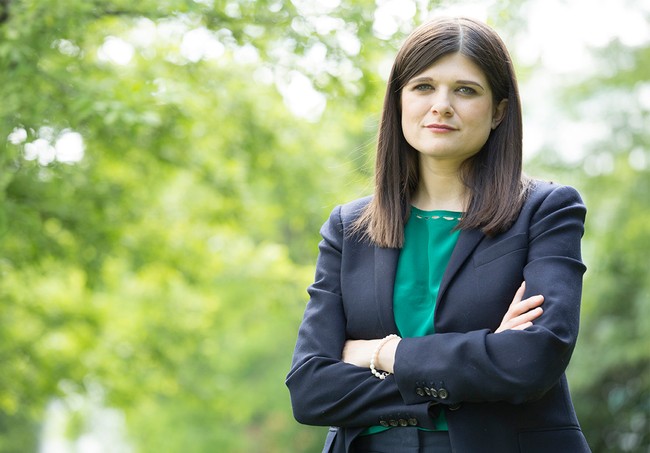
Michigan’s Democratic Senate primary has turned into a train wreck that matters for the fall, with Rep. Haley Stevens and former Wayne County health director Abdul El-Sayed fighting to replace Sen. Gary Peters, and new polling and endorsements shifting the race in ways Republicans should welcome.
The field is clear: Sen. Gary Peters opted not to run, leaving a contest between Haley Stevens and Abdul El-Sayed. Both claim progressive credentials, but the contrast between Stevens’ polished Capitol career and El-Sayed’s activist past is stark and politically consequential.
El-Sayed has a history of positions that make general-election conservatives uneasy, including past comments on policing that media outlets have flagged. Republicans see him as the type of nominee who could energize opposition and make Michigan competitive again in November.
Stevens has tried to present herself as a steadier, more electable alternative within the same party. Her recent video clip drew attention because of its odd tone and presentation, yet that strange moment may be preferable to Democrats compared with nominating someone further to the left.
https://x.com/RNCResearch/status/2076724997452677207
In the clip Stevens promises she’s “telling the stories on your behalf,” and says she will do it with “a little bit of joy, a little bit of enthusiasm, a little bit of energy, and a little bit of stick it to ’em. Because that’s the Michigan way!” The delivery was theatrical and became a talking point for critics on both sides.
Critics mocked Stevens’ performance for its affect and visual choices, noting a stagecraft that didn’t land for many viewers. Still, that oddball moment is a small liability compared with nominating a candidate who has been labeled radical on several hot-button issues.
Endorsements are already shaping perceptions. Sen. Peters backed Stevens, signaling the establishment’s preference for her as the safer choice, while Sen. Bernie Sanders endorsed El-Sayed, a move that cements his place on the party’s left flank.
Voters sometimes respond to endorsements, and the Peters nod appeared intended to blunt concerns about electability in a state Republicans hope to reclaim. On the other hand, Sanders’ backing energizes El-Sayed’s progressive base and could make the primary more polarized than it needs to be.
A recent Detroit News/Glengariff poll shows Stevens leading El-Sayed 48 to 41 percent with 10 percent undecided, a seven-point gap that suggests the establishment pick currently holds an advantage. That margin matters because it reflects unease among Democrats about picking a nominee who might hand Michigan to Republicans in November.
Beyond the headline numbers, polling reveals demographic splits that favor Stevens in key groups. She performs notably better with Black voters, a crucial constituency for Democrats in statewide contests, which could explain party leaders’ willingness to rally behind her.
From a Republican standpoint, both potential Democratic nominees present different but real opportunities. El-Sayed’s left-wing positions and past controversies could make him an easier target in a general-election environment focused on mainstream concerns like safety and the economy.
Mike Rogers, the likely Republican standard-bearer, is a formidable opponent with name recognition and a record that appeals to swing and moderate voters. Whatever Democrat emerges, the race already looks competitive and gives Republicans legitimate optimism about flipping a key seat.
The bottom line is clear: Michigan is not guaranteed to stay blue if Democrats choose a nominee who energizes opposition or looks disconnected from average voters. This primary is a test of Democratic strategy and temperament, and Republicans will be watching closely as the contest unfolds.


Add comment