
The New York Times ran a remarkable headline blunder, calling NATO the “North American Treaty Organization,” and the reaction from the media world revealed a double standard: smaller outlets get crucified for mistakes while the elite often gets off with mild apologies and hand-wringing. This piece walks through that error, the newsroom processes that should have caught it, historical examples of inconsistent media accountability, and why critics are justified to demand equal standards for all outlets.
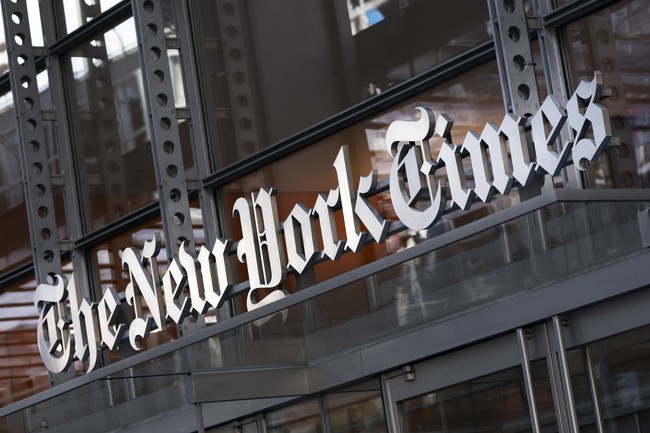
On Friday the New York Times published a headline that misspecified NATO as the “North American Treaty Organization,” an astonishing factual error for a paper that prides itself on rigorous editing. This wasn’t a simple misspelling; it was getting the name of a decades-old international alliance wrong in print. The mistake made its way into the physical edition, which undercuts any easy claim that it was merely a digital typo.
Reaction online was swift and mostly gleeful, but more important is the media reaction itself, which revealed two different playbooks. In many press circles the error was downplayed, rationalized, or treated as a forgivable slip, while right-of-center outlets would face much harsher treatment for comparable mistakes. That discrepancy is the heart of the critique: the standards touted by elite outlets are not applied evenly.
Reporters typically do not write final headlines, so Steven Erlinger should not be blamed personally for this one line. The bigger question is how the error passed through multiple layers of editing and landed in print. With the Times’ own descriptions of a multi-layer editing process, including headline review by copy editors, the slot, and even the masthead, it is reasonable to ask why no one flagged such a glaring factual error.
The paper has long touted its editing architecture as a hallmark of quality, claiming multiple editors review most stories and that copy editors write headlines. But that institutional claim makes the failure harder to excuse. If those layers exist, how did a name so central to modern geopolitics slip through? Blaming staff cuts doesn’t quite fit when the newsroom has publicly maintained or even grown its headcount in recent years.
What really sharpens the concern is how differently similar mistakes are handled depending on who makes them. When right-leaning outlets err, they are often publicly excoriated and labeled untrustworthy, while elite outlets can receive a more forgiving response. That double standard erodes trust across the board and fuels the sense that media elites police everyone else but themselves.
There are numerous examples where consequences were uneven. Fox News corrected an inaccurate report about Biden administration policy proposals after being called out, and it drew intense coverage from competitors that amplified the original mistake. At the same time, other outlets have pushed false narratives, like the horseback Border Patrol whipping story, and received more tempered internal cleanup coverage even after the truth emerged.
Some in the industry defended coverage missteps by blaming social media hysteria or presenting the errors as isolated lapses, but those defenses ring hollow when elite outlets insist on strict standards for others. If headline editors and copy desks are truly as meticulous as advertised, then glaring factual mistakes should be rare and quickly corrected with clear accountability, not shrugged off or minimized.
The Times’ recent flurry of corrections on other items makes the pattern less comforting and more puzzling. Multiple corrections after reporters attended verifiable events raise questions about basic fact-gathering and editorial verification. When corrections become routine rather than exceptional, it suggests systemic issues rather than one-off failures.
Media consumers and competitors alike are right to demand consistent application of journalistic standards. Holding outlets accountable is not about scoring partisan points; it’s about ensuring trust in institutions that shape public understanding. When the most influential outlets slip, the fallout is wider, and they should expect the same scrutiny they direct at others.
At stake is credibility. If the elite press wants to occupy a position of authority on standards, then it must accept the same standards it enforces on everyone else. Excuses and slow fixes won’t rebuild confidence; transparent processes, genuine accountability, and equal application of rules will. The public deserves nothing less than that level of rigor from every newsroom, big or small.
There was no shortage of gleeful pointing taking place across social media when this played out over the weekend, but there is a significance to this. We saw a dichotomy across the board, as we watched many Twerking on the grave of the Times’ credibility, many in the press circles — , as expected — were at least downplaying, if not defending the error, trying to explain away what happened. Selling an “acceptable level” of fake news is a losing PR effort.
The first was in describing this as a mere typo. What was on display was more than a spelling error, transposing letters in a name, or delivering a misprint. It was a functional factual error. This was getting the name of an international organization fully incorrect, one that has been in existence since the emergence of the Cold War.
That (alleged) production process is the issue in this entire matter. Now, Erlinger should not be strung up for this error. Reporters do not supply the headlines to their pieces. The question that exists is, how did this error make its way all the way to the print shop without it being flagged?! And here is where the justified condemnation of the Times rests.
THE NEW YORK TIMES has a reputation for impeccable editing. Not just because it can turn one particular story into a showpiece, but because it achieves a high level of consistency and polish across its entire report. Its editing architecture, originally constructed in the bountiful days of print, allows for multiple layers of editing that help keep copy clean and errors to a minimum. Except for breaking news, most stories are reviewed by three editors, with up to six or more if the article is headed for home page prominence or A1.
Copy editors here also write the headlines. Next comes the so-called slot, the head of the copy desk, who gives the story a quick read, maybe improving upon the headline. And it may well get a read by the masthead — the top editors — a word used by those lower down the chain with equal parts reverence and fatigue.
Anytime right-of-center news outlets have an error of this fashion, they become excoriated by those in the press gaggle. Accusations of a lack of editorial oversight and lax journalism are made, while at the same time touting their own fact-checking filters. At the Times, they have long established their own deeply strenuous editing process, declaring how this elevates their quality above all others.
Years ago, Fox News gave an inaccurate report on Joe Biden’s environmental proposals and said he was planning to issue rationing on meat consumption. Their report was based on a piece from The Daily Mail, which incorrectly cited a university study, but declared that reduction as being part of Biden’s official proposal. John Roberts issued an on-air correction to this on his very next broadcast.
Fox was lit up by the news competition to the extent that their reporting on the error far exceeded the reach of the original error. They did so while declaring the correction would not reach nearly as many viewers as the initial report, on the very same news program. This was a dogpile by the media Corgis, as they stormed a serving of artificial meat.
It was a few months later when the news industry was aflame with the story of horseback Border Patrol agents seen “whipping” aliens at the border. The hysteria over this was loud for days before the details emerged that a photograph was actually showing the riders using their reins to direct their horses, not lashing the illegal arrivals. Even after this was revealed, CNN continued with the false reporting until the then Sunday broadcast of “Reliable Sources.”
On that episode, host Brian Stelter brought on his ward at the time, Oliver Darcy, and they covered the week of weak news with mealy-mouthed explanations. The reporting was “faulty” and, as Darcy couched it, “they probably should have looked a little more into the matter.” Ya think, Ollie?? Blame was also placed on social media running the hysteria from the start, which is not any level of an acceptable excuse, as these same media “experts” routinely chided those online who do not have the same level of editorial discipline that is supposedly used at CNN.
Amazingly, Darcy concluded with the ultimate mop-up job when he said, “But it’s also good that reporters got to the truth, they got to the bottom of the story, and they accurately reflected that in the follow-up reports.” Note that this level of grace was not afforded to Fox, even as they ran their correction far sooner, and CNN was seen making the false reports even after the truth was known. Jim Acosta was STILL pushing this lie on his follow-up broadcast, after this episode supposedly putting a bow on the story.
Somehow, when the most vaunted of news sources screws up to a level well beyond the errors leading to others getting scorched, it is excused away. And this headline debacle was hardly an isolated instance from the Times. Just a week prior, the paper had to issue multiple corrections in its report on recent proposals made by Undersecretary of State Jacon Helberg. The Times valiantly worked to include proper facts only after Helberg called out the paper.
This was almost sounding like the Times bragging about how rapidly they were able to issue a number of corrections…on a speech their reporter attended, and was verifiable since it was recorded and reviewable after the fact. It is starting to look like the most stringent editing at the New York Times is seen coming from the Wordle desk.
This headline result displays the bifurcated standards in the press industry; the disapproved outlets get loudly criticized and denigrated as lesser news sources, while the approved outlets can commit worse infractions and only become celebrated for offering compulsory corrections after they committed the offense. The real amusement is found in those declaring that the peons tossing criticism at the Times and others are invalid voices who cannot grasp the complexities of the news industry.
The irony is that in holding them to their professed standards, it shows that we have absorbed their lectures just fine, and they are actually bothered that we dare enforce the standards they had insisted be put in place. The demand is simple: apply the standards equally, or stop pretending those standards matter.


Add comment