
The article examines a newly revealed biosafety incident at the National Institutes of Health’s Rocky Mountain Laboratory, highlights the potential risks of pathogen escapes or thefts, and discusses historical context and contemporary concerns about dangerous research. It conveys alarm about missing or released agents, references reporting by White Coat Waste, and notes connections to past coronavirus work. The piece emphasizes the unique threat biological agents pose compared with other weapons and raises questions about oversight and motive. It preserves direct quotes from the original reporting and keeps the three embedded tokens intact.
I served in the U.S. Army’s Nuclear, Chemical, Biological program and have academic training in biology, so I understand both the tools and the targets that worry most people. Of nukes, chemical agents, and biologicals, it’s the microbes that unsettle me the most because they can spread quietly and reproduce on their own. That makes any breach at a high-containment lab especially alarming, since the consequences can ripple well beyond a single facility.
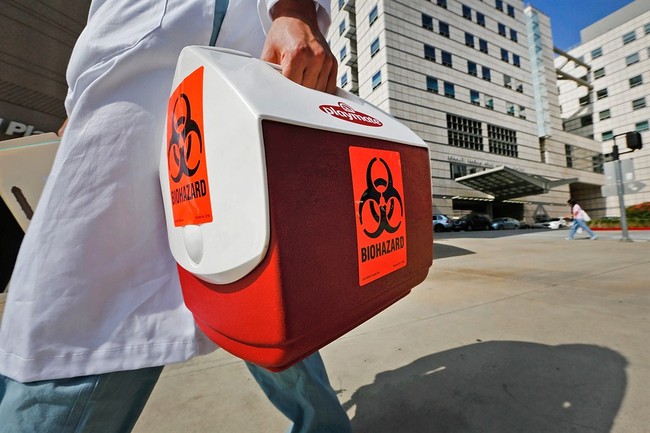
The new disclosure centers on an NIH site that has handled some of the most dangerous pathogens known. According to reporting from watchdog sources, NIH acknowledged that material was “released, lost, or stolen” from Rocky Mountain Lab in Montana, and they could not definitively say which occurred. That uncertainty — not knowing whether an agent escaped accidentally, vanished due to misplacement, or was taken deliberately — is exactly what sets off red flags for public safety professionals.
When a facility that has worked with coronaviruses, anthrax, ebola, and other high-consequence agents reports a biosafety event, the implications are serious. Coronaviruses are a broad family; about 20 percent of common cold cases come from coronaviruses, but other members of the family have caused major global problems in recent decades. Add in agents like anthrax and ebola, and you have a portfolio that demands meticulous controls and transparent reporting.
White Coat Waste’s write-up prompted a short, sharp summary that has been widely quoted. It stated: “White Coat Waste just uncovered a massive ‘biosafety breach’ at ‘one of the most dangerous biolabs in the country.’ 2 months ago, NIH quietly admitted that a deadly pathogen was ‘released, lost, or stolen’ from its Rocky Mountain Lab in Montana.” Those words are stark because they compress months of regulatory opacity into a few blunt phrases.
The report also highlighted past research ties that make this case more notable to some observers. It quoted: “Rocky Mountain Lab is where ticks were weaponized with NIH and DoD to spread Lyme and other diseases back in the ‘50s and ‘60s.” The report continued: “More recently, White Coat Waste exposed how a couple years prior to the pandemic, the Rocky Mountain Laboratory was cloning coronaviruses that Peter Daszak and the Wuhan lab were finding out in bat caves.” The same passage adds: “These are the same viruses that the Wuhan lab was doing gain-of-function with.”
Those claims reach back into Cold War-era programs and forward into controversial modern collaborations, which is why the watchdog narrative resonates with people who worry about dual-use research. Regardless of past programs, the immediate issue remains: hazardous agents are unaccounted for, and regulators have not provided a clear, public timeline or explanation. That gap breeds distrust and creates a vacuum where worst-case scenarios multiply in people’s minds.
From a risk perspective, lost or released material is one problem; the possibility of theft is another and more alarming. Theft implies intent — someone taking material for a purpose outside legitimate research — and intent changes the nature of the threat from an accident to a potential act of malice. That distinction matters because it affects how law enforcement, public health, and national security agencies must respond.
I have long argued that biology is the decisive field of modern conflict because living threats can cross borders, jump species, and evolve. The comparison is blunt: chemical and nuclear weapons are terrible, but biological agents can spread and persist in ways that make containment and attribution difficult. Proper oversight, transparency, and accountability at facilities that handle these agents are not optional; they are essential for public safety.
Public trust hinges on clear answers: what was missing, what agent was involved, who had access, and how the oversight system failed. Until those questions are answered in a way the public can evaluate, concern will persist and calls for independent review will grow louder.
There are no comfortable scenarios here, only varying degrees of danger and lapses that must be addressed. The stakes are high when a national lab works with weaponizable pathogens, so the oversight framework needs to match that reality and offer the public confidence it currently lacks.
Community discussion should focus on tightening controls and ensuring transparency without politicizing every detail. Effective policy requires clear facts and accountable institutions; without them, people will assume the worst and policy responses will be driven by fear rather than evidence.



Add comment