
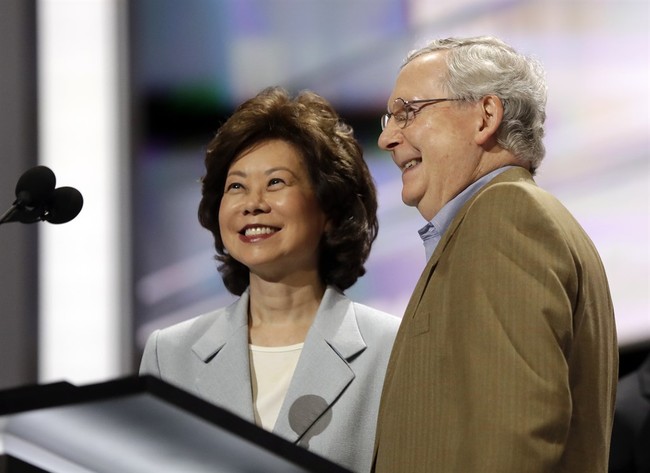
Conspiracy chatter exploded after Senate Republican leader Mitch McConnell released a statement and photo from a hospital stay, setting off an ugly debate about health, transparency, and respect amid the recent death of Senator Lindsey Graham.
Sen. Lindsey Graham (R-SC) has tragically passed, and meanwhile Senator Mitch McConnell—who was hospitalized on June 14 and kept a low public profile—issued a multi-paragraph statement and a photo to confirm he is alive and receiving care. The public reaction ranged from concerned to gleefully conspiratorial, with some people demanding proof of life and others manufacturing outrage. This episode highlights how frail moments for public figures become headlines and bait for online mobs.
https://x.com/mkraju/status/2076417819353256199
McConnell’s full explanation, released after repeated questions from across the country, addressed his absence directly and personally, and included the line many quoted: “The report of my death is greatly exaggerated.” The statement aimed to reassure constituents and colleagues that he remains engaged, even while recovering. Yet that reassurance did not calm everyone—some organizations and individuals went further, posting erroneous obituaries and dissecting a carefully staged photograph.
One outlet even posted an obituary for McConnell, and social media users immediately began tearing apart the new material for imperfections. The photo McConnell provided deliberately matched the demands of skeptics—a dated newspaper visible in the picture—but that only fed a new round of criticism. The insistence on increasingly invasive proofs reveals less about transparency and more about collective bad faith.
In his note McConnell thanked people for their “well wishes and your honest questions,” acknowledging how private health matters become public spectacles for senior officials. He reminded readers that people of his generation often avoid airing vulnerabilities, and that he has lived with mobility challenges since childhood polio. He also explained he suffered a fall that led to hospitalization.
“To my fellow Kentuckians –
“When you elected me to a seventh term and made me our Commonwealth’s longest serving Senator, you did so trusting that I’d keep showing up to fight for you every day. And over the past several weeks, Elaine and I have appreciated both your well wishes and your honest questions about what was keeping me away from the Senate.
“You all know how folks of my generation often hesitate to share the vulnerability that comes with growing older. Even in the public eye, I feel that same instinct – I can’t help it.
“But at the same time, I’ve had more than my share of experience with physical vulnerabilities. Surviving childhood polio meant spending my entire life with mobility challenges. They haven’t exactly gotten easier to manage with age. And last month, I took a fall which landed me in the hospital.”
Medical facts matter here: McConnell is 84, and his team confirmed he did not break bones in the fall, nor did he suffer a heart attack, stroke, tumors, or hemorrhages. Doctors found a mild pneumonia, which at his age is serious and was treated accordingly. Given his age and medical history, it is routine and sensible to run comprehensive tests and monitor recovery closely.
McConnell made clear he has complied with doctors and completed a range of exams: “I can assure you that I’ve been a good patient. At my age, I tend to do what my doctors tell me to do. I’ve submitted to every test they can think of to help figure out what caused this incident. And I’m continuing to do everything they ask to speed my recovery.” He also noted progress, moving from hospital care to a rehabilitation facility to regain strength.
“I can assure you that I’ve been a good patient. At my age, I tend to do what my doctors tell me to do. I’ve submitted to every test they can think of to help figure out what caused this incident. And I’m continuing to do everything they ask to speed my recovery. In fact, with signs of continued progress, I’ve been able to move from hospital care to a rehabilitation center where I’ll keep regaining my strength.”
McConnell emphasized he remains at work in meaningful ways, coordinating with staff on legislation and constituent services even while off the Senate floor. “But rest assured that, in the meantime, I’m not taking a break from the Senate business that matters to you,” he wrote, noting conversations about appropriations, political dynamics, and other priorities. That steady focus undercuts the idea that he’s out of the loop or shirking duties.
“But rest assured that, in the meantime, I’m not taking a break from the Senate business that matters to you. I’ve been working closely with my legislative staff on current issues, and with my Kentucky team who help me provide timely constituent services across our Commonwealth. I’ve also been keeping in touch with my Senate colleagues on the appropriations process, midterm politics, and everything in between.”
Some critics demanded an immediate retirement or imagined scenarios like a rushed special election, but McConnell reminded everyone he will retire at the end of his term on December 31, 2026. Until then he plans to finish the work voters elected him to do. That reality deflates several fevered theories about power grabs and manufactured vacancies.
Others picked apart why McConnell didn’t immediately comment on Senator Graham’s death, calling it suspicious. Those critiques ignore basic decency and timing: McConnell released his health statement separately and chose to address Graham on its own terms. Personal loss and personal recovery don’t always fit the timeline conspiracy forums demand.
Almost everyone in Washington has paid their respects to Lindsey Graham.
Except Mitch McConnell.
No statement from his office. No public tribute. No condolences.
And the Republicans who were talking about 20-minute calls with Mitch just last week suddenly have no message to pass on?
Very weird.
At heart this story is about how politics and social media collide with illness and mortality. There is a legitimate national conversation to be had about the age and health of elected officials, but trolling, doxxing, and theatrical doubt are not constructive. Responsible discussion is better served by facts, candor, and respect for privacy during recovery.
Online skeptics continue to demand ever-stranger proofs, sometimes expecting video or live feeds as if public life were a reality show. That expectation is corrosive to civic life and invites spectacle over substance. Public servants deserve honest scrutiny, but also basic decency when dealing with real human suffering and loss.
Some commentators who spoke to McConnell during his hospital stay reported substantive conversations about foreign policy and other pressing issues, demonstrating the senator’s continued engagement. Good-faith reporting and firsthand accounts cut through rumor more effectively than viral speculation. When officials and journalists share verified details, it helps restore trust.
The story has political edges—Republicans should be candid about leadership, succession plans, and transparency, while avoiding feeding performative outrage. Demands for constant proof of life turn serious moments into grotesque theater, and that benefits nobody. A sober, fact-based approach to senior officials’ health is the responsible path forward.
Ultimately, McConnell’s statement and photo were meant to close a chapter of uncertainty, not to satisfy every online skeptic. The real work for legislators, voters, and media is to insist on truth without descending into theatrics that exploit illness for clicks. That standard would improve public discourse and preserve respect for people who serve in stressful, high-profile roles.

Add comment