
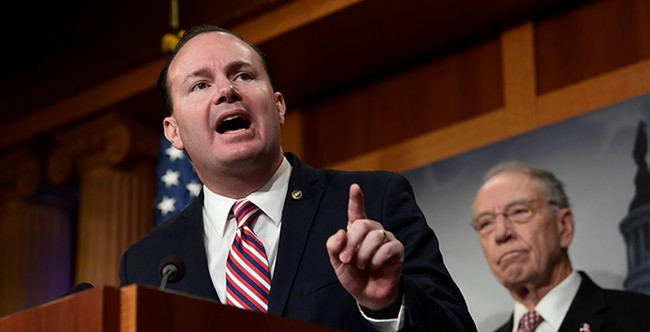
Sen. Mike Lee has publicly declared he has had enough of Senate obstruction and is urging Republicans to end the filibuster so Congress can pass bills like the SAVE America Act; this piece lays out the sparks behind that stance, the key moments in recent Senate debates over funding and voter ID, and why conservatives are rallying to force a clearer path to action.
Utah Republican Senator Mike Lee pushed a sharp message about the filibuster after weeks of stalled action in the Senate. He made clear his frustration in public comments and posts that signaled a readiness to change Senate rules if necessary. That tone matters because Lee is typically seen as a steady, constitutional conservative who picks his fights carefully.
The immediate context for Lee’s frustration was a spring debate over funding the federal government, including the Department of Homeland Security, and the effort to pass the SAVE (Safeguard American Voter Eligibility) America Act in the Senate. That bill focuses on requiring voter identification and tightening eligibility rules, which Lee and other conservatives argue protects election integrity. The failure to get votes and the appearance of procedural avoidance pushed him to speak out more forcefully than usual.
Lee has accused Democrats of resisting simple reforms like voter ID because those policies, he argues, would reduce the opportunities for fraud that benefit their candidates. He spelled out that contention during floor debate, arguing that changing definitions or legal interpretations is a way to try to justify resisting voter verification. For Lee and many Republicans, the principle is straightforward: elections should be free, fair, and based on clear eligibility rules.
Earlier in the month, the Senate chose to recess for an Easter break rather than move immediately to votes that could fund DHS and consider election-security measures. That pause angered many conservatives who saw the move as a convenient avoidance of responsibility. As one observer noted, “As you can imagine, more than a few Republicans in the House (and Senate), among others, were rubbed the wrong way by the last minute move from Leader John Thune and the caucus in the upper chamber, and they raised their voices on X to let them know it.”
Lee didn’t just complain online. He pressed colleagues and opponents directly, prompting exchanges on X with members of both parties. In those exchanges he proposed a clear sequence: get the Senate back in session, fund the Department of Homeland Security in full, and then move to passing the SAVE America Act with a process that forces senators who want to block it to speak on the record. His approach is procedural and political; he wants votes, not filibuster theater.
Conservatives rallied around single-minded remedies to the chokehold that procedural rules can impose. Lee framed the solution bluntly: if obstruction continues, change the rules to allow the majority to govern. The sentiment boiled down to, “I’ve seen enough” and a willingness to “nuke” the filibuster if that’s what it takes to move legislation. That language reflects strategic impatience from a senator who usually prefers careful constitutional argument over showy rhetoric.
Other voices on the right have echoed the call. One conservative columnist argued directly for scrapping the filibuster to clear the legislative logjam and, in doing so, urged senators to stop letting a minority dictate the agenda. That column’s core point was simple: if the majority cannot pass the policies voters expect because of an outdated procedure, then the majority should change the procedure and act.
Reconvene the Senate
Now
Fund DHS
In full
Then pass SAVE America—by making filibustering senators speak
What Lee and like-minded Republicans are arguing for is a return to accountable votes and an end to indefinite obstruction. They want senators to publicly defend their positions and to force a record of who supports what on policies about border security and election integrity. That approach appeals to voters who are tired of gridlock and want clear outcomes from elected officials.
The stakes, from a conservative perspective, are straightforward: protecting elections through voter verification and funding border and homeland security are fundamental responsibilities of Congress. If procedure prevents those outcomes, changing the rules becomes not a radical choice but a necessary one to restore effective governance. For senators like Mike Lee, it has reached that point.
Lee’s position is notable because his demeanor is usually restrained; when a cautious constitutionalist speaks with heat, other Republicans take notice. His call to end excuses and force legislative action is meant to shift the debate from procedural maneuvers to tangible policy results. That shift is exactly what many in the GOP say voters want heading into the next cycles.



Add comment