
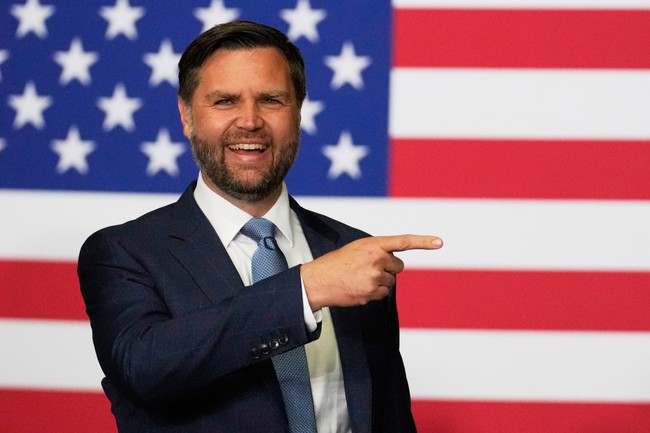
I’ll explain why the ring story was flimsy, how his wife answered it, how the left amplified the rumor, how Vance tore it down with humor, and what the reaction tells us about where politics is headed before 2028.
Vice President JD Vance is running as the clear favorite for the GOP nomination in 2028 according to polls, and that prominence makes him a target for cheap attacks. Democrats and some pundits have been trying to manufacture personal drama to distract from his political strength. One of those attempts focused on Usha Vance allegedly not wearing a ring during a speech, which quickly drew attention online. The angle felt more like political theater than real reporting.
Usha didn’t play along with that narrative and shut it down fast by explaining her life outright: “a mother of three young children, who does a lot of dishes, gives lots of baths, and forgets her ring sometimes.” Her answer was plain, human, and disarming, and it exposed how trivial the whole thing was. When the supposed scandal depends on domestic chores and a misplaced piece of jewelry, you know the critics are clutching at straws. That sort of pettiness doesn’t move voters who care about policy and leadership.
Former White House Press Secretary Jen Psaki tried to amplify the story by suggesting Usha needed to be rescued from JD, which only underscored how tone-deaf national punditry can be. That take fell flat because it treated a married couple’s normal life as political ammunition. The response from conservatives and independents was swift and mocking, because it read as opportunism rather than concern. Personal attacks like that often backfire and strengthen the target instead of weakening them.
The left then recycled a rumor claiming Vance had a loud fight with his wife in a restaurant, and they circulated a photo to support it. But the image looked off to a lot of people; the easiest explanation was that it was staged or manipulated. When a smear depends on a single questionable photo, it’s not a compelling case. Republicans and neutrals alike spotted the thinness of the claim and shrugged.
It’s worth pointing out that this pattern—taking minor, private details and inflating them into crises—is a common tactic when a political opponent is strong. Vance’s position as a leading GOP figure makes him a prime target for that playbook. But Democrats will have to do better than recycled gossip if they want to dent his support. Voters are increasingly tired of soap-opera politics and want concrete issues addressed.
Vance responded the exact way critics deserved: with sharp humor and ridicule that undercut the attack. It was Vance himself who mocked the rumor and refused to let it stick, showing how effective a punchy, confident reaction can be. Humor often deflates manufactured outrage faster than a defensive rebuttal ever could. In this case, it served both as a rebuttal and as a reminder that the left’s effort was hollow.
“I always wear an undershirt when I go out in public to have a fight loudly with my wife,” Vance said sarcastically. That line landed because it treated the rumor with the clear disdain it merited and did it in a way people could share and laugh about. Smart, concise responses like that transform attacks into advantages by exposing their absurdity. The result was instant meme fodder and a reminder that rigidity is no match for wit.
Online, the reaction was predictable: supporters amplified Vance’s line and turned it into a flood of memes that highlighted the ridiculousness of the initial claims. Political opponents who rely on viral outrage forget how quickly public attention shifts to whatever’s clever or entertaining. In this case, Vance’s humor seized the narrative and left the critics scrambling. Memes do more than mock; they crystallize how people feel about a story.
Meanwhile, Democrats have three more years before 2028 to sharpen their message, but starting with personality smears is not a promising approach. If your primary tactic is to invent domestic drama, you run the risk of appearing desperate and mean-spirited. Vance’s handling of this episode showed discipline and a knack for controlling the conversation. That ability will matter a lot as the nomination fight heats up.
The broader lesson here is simple: when an attack is weak, respond with clarity and humor and let the flimsy claim collapse under its own weight. Vance’s handling of the situation reinforced why he’s viewed as politically adept by many conservatives, and it made the left’s approach look small. Effective messaging doesn’t need to sink to personal jabs to score points.
For now, the manufactured drama around a wedding ring and an awkward photo has fizzled, and the incident mostly highlights how political discourse too often chases sensationalism. Vance’s quick, pointed reaction made the episode a footnote rather than a scandal. As 2028 approaches, expect more attempts like this, but also expect savvy politicians to meet them in stride.
What remains is the political fallout: critics will keep searching for angles, but voters will remember who handled the moment with poise and who tried to manufacture controversy. The Vance episode is a reminder that strength in politics often comes from composure, quick responses, and a bit of well-timed humor. Those traits matter when the stakes are high and the noise is loud.


Add comment