
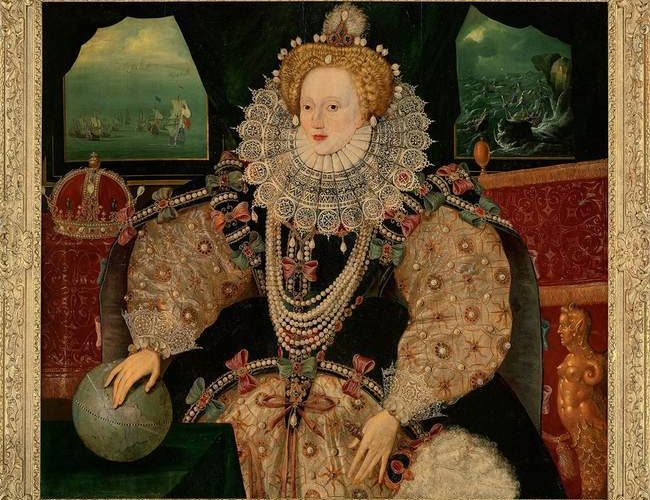
The ITV decision to portray Elizabeth I as transgender has sparked fierce debate about historical accuracy, gender theory, and cultural respect for women who broke barriers, and this article examines the claim, the evidence—or lack of it—and the broader cultural implications from a conservative viewpoint.
Elizabeth I looms large in English history as the daughter of Henry VIII who governed for 44 years and steered England toward global prominence. She earned the nickname the Virgin Queen because she never married, and her reputation is built on political skill and an assertive grasp of power. Recasting a figure like Elizabeth raises questions about motive as much as method.
The forthcoming ITV drama reportedly plans to present Elizabeth as transgender, a choice that will deepen the divide between creative license and historical fidelity. For many conservatives, this feels less like an artistic reimagining and more like an ideological rewrite aimed at retrofitting the past to fit present agendas. That instinct fuels a broader cultural pushback against what is seen as the erasure of noteworthy women.
Claims that Elizabeth might have been non-binary or otherwise outside the male-female binary have circulated in recent years, sometimes originating in academic or theatrical explorations. Those suggestions are often speculative and rooted in modern categories that did not exist in the sixteenth century. Applying contemporary identity labels to historical figures risks distorting the record and diminishing clear achievements.
Elizabeth I will be portrayed as transgender in a forthcoming ITV drama.
The Tudor queen, who never married and established England as a rising imperial power, will be shown as a biological man in the six-part series next year.
The independence of the “Virgin Queen”, who ruled from 1558 to 1603 and defeated the Spanish Armada, has given rise to improbable conspiracies that she was a man masquerading as a woman.
Claims of her being a trans woman will be a central focus of the new series, titled Majesty, in which the monarch will be played by a transgender woman, according to reports.
There is no solid historical evidence that Elizabeth was anything but a woman who chose not to marry for political reasons. Royal succession, physical expectations, eyewitness accounts, and the political context of the era all point to a female monarch who used gendered performance strategically. Turning that complex reality into a simple modern identity category flattens nuance and insults both history and the women who came before us.
Some defenders of the artistic choice argue that reimagining a famous figure can open new conversations and challenge assumptions. That may be true in fiction, but when a mainstream broadcaster frames speculative identity as plausible history it risks misleading audiences. The question is whether television should favor provocation over accuracy when dealing with iconic historical figures.
In 2022, academics working for Shakespeare’s Globe in central London said she could have been non-binary, when people believe they are neither male nor female.
Elizabeth I was presented as such in an essay published by the theatre which referred to the female monarch with the gender-neutral they/them pronouns.
Feminist thinkers have raised concerns that casting doubts on the womanhood of prominent women because they defied gender norms and did supposedly “manly” things will effectively write them out of history.
Practical objections are straightforward. Sixteenth-century practices, including examinations and legal frameworks, did not leave room for modern identity categories. Historians rely on documents, physical descriptions, and contemporary commentary; none of that supports the claim that Elizabeth was male or non-binary in any modern sense. To assert otherwise is to prioritize ideology over rigorous inquiry.
There are also cultural consequences to this trend. Suggesting that powerful women were secretly men plays into a tired narrative that denies female competence and agency. Conservatives worry that rebranding historical women as something else undermines the example they provide to real women today who want recognition for their leadership.
Maya Forstater, chief executive of Sex Matters, said the series “sounds like an April fool’s joke”.
“The news that Queen Elizabeth I is to be portrayed as transgender in a new ITV drama sounds like an April Fool’s joke, not the basis for a six part show that people will keep watching,” she told The Telegraph.
“Some in the arts sector seem to think that portraying historical female figures such as Joan of Arc as trans-identifying is edgy, but TV viewers who are already sick of gender ideology may say ‘this is too much’ and vote with their remote.
“The sexist conspiracy theory that Elizabeth I was a man because a woman couldn’t possibly have led as she did is tired enough already.”
Whatever the creative intent, producers ignore that viewers expect some relationship between dramatization and reality when dealing with real figures. Treating Elizabeth as a projective surface for modern identity politics is likely to alienate many, not just conservatives. Expect pushback from audiences who value historical truth and cultural continuity.
The larger debate here is emblematic of a cultural crossroads where storytelling collides with identity politics and historical literacy. Those who care about preserving the integrity of the past will push back against narratives that erase female leadership. The real risk is not controversy itself, but the steady redefinition of history to suit short-term cultural trends.



Add comment