
The U.S.-Iran negotiations have hit a hard wall, and Iran’s leadership may be quietly preparing escape plans rather than new compromises. This article examines reports that senior Tehran figures could seek refuge abroad, how that might mirror past exoduses, what it would mean for regional power dynamics, and why uncertainty at the top of Iran matters for U.S. interests and allies.
Talks collapsed after a period of cautious optimism, leaving both sides digging in on core demands. From a Republican viewpoint, standing firm against Iran’s nuclear ambitions is a strategic win, and the breakdown underscores that pressure, not concessions, often yields leverage. When diplomatic avenues narrow, attention turns to contingency plans and who might flee if the regime’s hold loosens.
The apparent collapse of high-stakes U.S.-Iran negotiations has intensified fears that senior figures inside Tehran’s leadership could flee to Russia, seeking refuge to “continue their insurgency and undermine any new regime,” an analyst warns.
The breakdown in talks comes as Israeli Prime Minister Benjamin Netanyahu also told CBS’ “60 Minutes” that toppling Iran’s regime could now even be a realistic outcome.
Netanyahu noted that any collapse would dismantle the “scaffolding” of Tehran’s global terror proxy network, also potentially ending Hezbollah’s influence in the region.
“The whole scaffolding of the terrorist proxy network that Iran built collapses if the regime in Iran collapses,” Netanyahu said.
Reports suggest senior Iranian officials might favor Russia as a refuge, following patterns seen elsewhere when ruling elites lose their grip. Moscow has offered sanctuary before, and the idea of a “bug-out” to Russia raises real strategic concerns about exile governments operating from foreign soil. That scenario would keep Tehran’s troublemakers active, even if they no longer control the country directly.
If the regime did collapse or fracture, regional actors would have motives and means to shape what comes next. Gulf states with deep pockets could invest in rebuilding a stable, modern Iran, and doing so would align with their long-term security and economic interests. A reborn Iran might look very different, and many neighbors would prefer a peaceful, prosperous neighbor to a hostile patron of militias.
With diplomatic options perhaps exhausted and the regime’s stability in question, an expert suggests the exit strategy any leadership may be eyeing might be similar to that of Syrian President Bashar al-Assad, who fled Syria in 2024.
“If the situation deteriorates further, some senior figures could potentially follow a path like Bashar al-Assad’s inner circle and seek refuge in Russia,” Middle East expert Saeid Golkar told Fox News Digital.
Elite flight rarely looks the same across ranks. Senior commanders and political figures have access to safe passage and international banking, while mid-level officials and operatives usually land somewhere closer and murkier. Those lower-ranking actors would likely fall back into regional networks, possibly in Iraq or Afghanistan, where existing ties and safe havens persist.
While top commanders like Parliament Speaker Mohammad-Bagher Ghalibaf might head to Moscow, lower-ranking figures would more likely seek shelter in Iraq or Afghanistan, where the IRGC maintains operational connections, he clarified.
“For the most senior figures, Russia would probably be the most likely destination, again as we saw with Bashar al-Assad,” Golkar said, noting many officials have already moved wealth into “financial networks outside Iran.”
There are persistent, unconfirmed claims about a leadership vacuum tied to the reported death of Iran’s supreme leader and the alleged injury of his successor. Those reports, if true, complicate any credible negotiating partner picture in Tehran and could accelerate factional infighting. From a U.S. perspective, uncertainty at the top creates both risk and opportunity to pressure malign networks and protect allies.
The current crisis started following the death of Ayatollah Ali Khamenei earlier in 2026 during the onset of Operation Epic Fury.
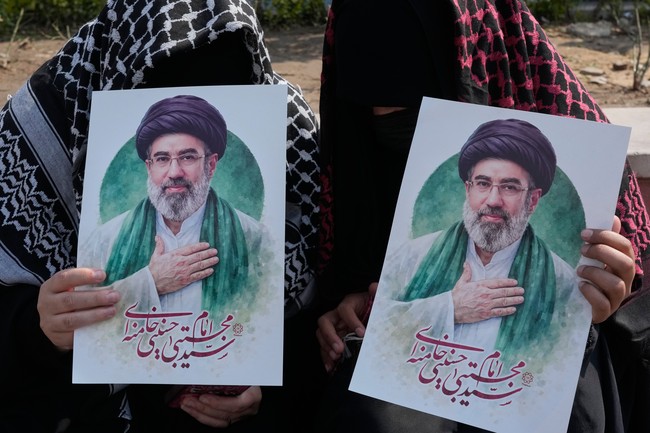
While his son, Mojtaba Khamenei, was named successor, reports continue to indicate he was severely injured in the strikes and has been absent from recent negotiations.
Public silence from supposed successors feeds speculation, and in the information age, absence is a statement. If Iran cannot provide basic proof of its leaders’ health and presence, outside observers will assume the worst and plan accordingly. Proving continuity of command would be a simple move for Tehran, but the lack of it speaks volumes.
Even if the predicted exodus never happens, the fact that analysts are discussing it tells you where things stand: pressure is up, and options for the regime are shrinking. For Americans and regional partners, preparing for a range of outcomes—diplomatic, covert, and kinetic—remains the prudent approach. The next moves by Tehran’s inner circle will matter for years to come.



Add comment