
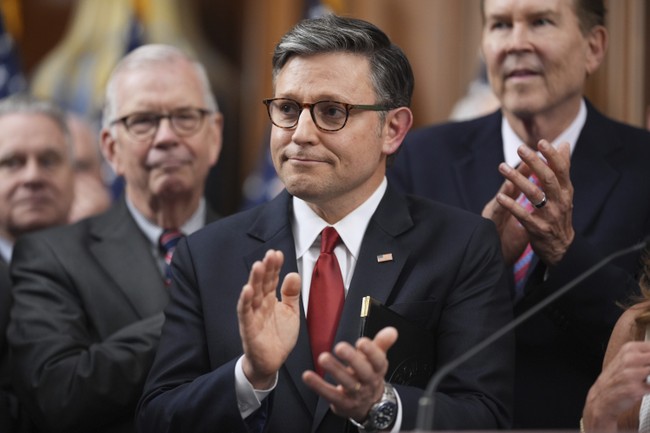
This article covers House Speaker Mike Johnson’s defense of the U.S. operation that captured Venezuelan President Nicolás Maduro, the military actions involved, the narco-terrorism charges against Maduro and his wife, and reactions from Capitol Hill and the Trump administration about next steps and constitutional authority.
House Speaker Mike Johnson framed the operation as justified accountability for a foreign leader who allegedly oversaw a criminal network that harmed Americans. Johnson stressed that Maduro had been indicted and that the arrest followed established legal steps, positioning the capture as enforcement rather than reckless intervention. His remarks underline a Republican view that leadership must act decisively to defend U.S. citizens and law enforcement of federal warrants. That framing sets the tone for how GOP leaders are describing the operation to the public and Congress.
The operation itself unfolded in the early hours of Saturday with U.S. forces striking multiple military targets across Caracas. Reports indicated explosions at significant sites, including major military complexes and airfields, as special operations units moved to seize key figures. Officials said the operation removed Maduro and his wife from Venezuela and transferred them to U.S. custody for prosecution. The Trump administration described the mission as carefully planned and executed with minimal U.S. casualties.
President Trump praised the operation and emphasized its effectiveness, saying it “could not have been better” and calling the result the product of “a lot of good planning.” He also labeled the raid “a brilliant operation, actually,” stressing competence and careful preparation. Administration officials said no U.S. personnel were killed and that those injured are expected to recover. The message coming from the White House is one of successful execution paired with legal justification tied to existing indictments.
The criminal case against Maduro dates back to charges filed in 2020 and centers on narco-terrorism and drug trafficking conspiracies. Prosecutors allege Maduro led a criminal group known as the Cártel de Los Soles and collaborated with other organizations to move cocaine into the United States. The indictment lists serious counts, including narco-terrorism conspiracy, cocaine importation conspiracy, and weapons-related offenses allegedly tied to efforts to protect drug operations. Those charges form the legal basis cited by U.S. leaders for the arrest and transfer to face federal courts.
When the indictments were first detailed, then-U.S. Attorney Geoffrey Berman stated, “Maduro and the other defendants expressly intended to flood the United States with cocaine in order to undermine the health and wellbeing of our nation.” That language has been central to Republican arguments that Maduro’s alleged actions posed a direct and ongoing threat to American communities. Using those indictments, Republican leaders argue they are enforcing U.S. law and protecting public safety by bringing leaders accused of narcotics trafficking to justice.
Senators and House leaders were briefed after the operation began, and Speaker Johnson said the administration plans fuller briefings for Congress. Some Republicans, while supportive, pressed for clarity about constitutional authority and the operational details used to secure the arrest. Senator Mike Lee of Utah reported his constitutional concerns were addressed by the Secretary of State, who framed the action as protection for personnel carrying out a lawful arrest warrant. That explanation was meant to bridge legal concerns with the operational reality.
Senator Mike Lee also wrote on X, “This action likely falls within the president’s inherent authority under Article II of the Constitution to protect U.S. personnel from an actual or imminent attack.” His statement gives a legal anchor for Republicans concerned about precedent, offering a constitutional rationale for limited, targeted kinetic actions tied to arrests. GOP leaders emphasize that this was not an open-ended war but a narrowly focused law enforcement and protective mission.
Senior Republicans in national security positions argued the interim Venezuelan authorities now face a choice: continue complicit activities with adversaries, or shift toward conventional state behavior. Senate Intelligence Chair Tom Cotton urged Venezuela’s interim government to break ties with groups and regimes that facilitate drug trafficking and hostile alignment. That pressure is meant to push local actors toward stability and normal diplomatic relations rather than criminal cooptation.
Republican strategists note a pattern of stepped-up pressure on Maduro before the capture, including strikes on suspected narcotics shipments and maritime seizures of sanctioned vessels. By late 2025 those operations reportedly targeted narcoboats and other assets tied to trafficking networks, aiming to choke supply lines and degrade operational capacity. The capture of Maduro is presented by GOP leaders as the logical culmination of sustained pressure designed to protect American lives and enforce the rule of law beyond U.S. borders.
The administration says detained leaders will face prosecution in the Southern District of New York under longstanding indictments. For Republicans, the combination of legal indictment, military precision, and executive resolve provides a template for dealing with foreign rulers who allegedly weaponize trafficking and corruption against the United States. The coming congressional briefings and court proceedings will test that approach, but for now Republican officials frame the operation as accountability in action rather than a departure from constitutional norms.
Add comment