
Checklist: explain Maduro’s removal and why it matters; outline Maria Corina Machado and Edmundo González as transitional leaders; detail immediate priorities for an interim government; note U.S. role and political context; preserve quoted statements and key facts.
Nicolás Maduro is out of power and in federal custody, and that changes the political map in Venezuela overnight. The arrest and arraignment on federal charges mark a decisive break from the decades of kleptocratic misrule that wrecked the country. With Maduro sidelined, attention turns fast to who can steer Venezuela toward stability, democracy, and real security.
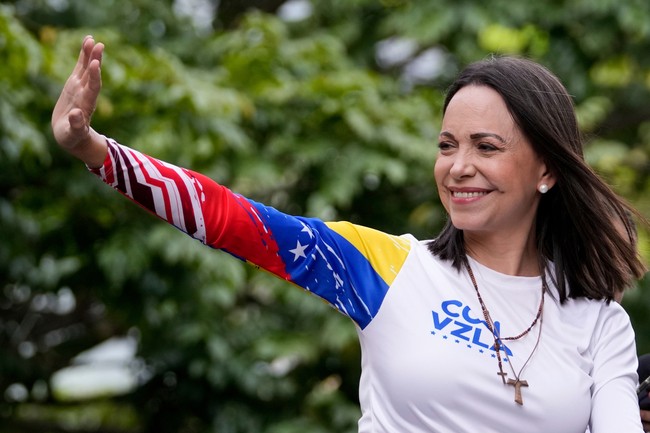
One clear figure emerging is Maria Corina Machado, the 2025 Nobel Peace Prize winner who has been a persistent opposition voice for years. Alongside her is Edmundo González, who ran in her stead in 2024 and was widely seen as the popular choice then. Both names now sit at the center of plans for a transitional government that could restore basic governance and prepare free elections.
A recent expert assessment made the point bluntly: “They have the support of 70% of Venezuelans,” Jorge Jraissati, president of the Economic Inclusion Group, told Fox News Digital. That kind of public backing matters when institutions are weak and the military’s loyalties are up for grabs. If Machado and González can translate that support into a credible interim administration, the country would stand a real chance at a peaceful reset.
There are practical reasons to favor a short-term interim government rather than a straight installation of González for the remainder of the prior term. An interim cabinet led by trusted opposition figures can oversee security, purge corrupt elements, and create the conditions for transparent elections. It would also make it harder for remnants of the old regime to claim continuity or legitimacy.
First on any interim agenda should be dismantling the cartels and the networks that propped up Maduro. The regime did more than tolerate organized crime; it actively enabled trafficking and graft. A focused crackdown, supported by international intelligence and logistics, can remove the backbone of illicit power and restore basic public safety.
Second, lifting sanctions should be on the table once clear reforms and anti-corruption measures are in place. Sanctions have been a blunt instrument, and targeted relief tied to verifiable steps would let Venezuela sell oil and re-engage economically. That economic lifeline is essential to rebuild infrastructure, attract investment, and deny rogue states easy access to Venezuelan resources.
Third, securing control of the military is nonnegotiable. Any interim authority must ensure the armed forces answer to the constitution and the state, not to a single patron or clan. Pro-Maduro officers should be removed from positions of power, replaced by commanders loyal to the republic, and subject to oversight that prevents a repeat of personalized rule.
Fourth, tracing and seizing illicit assets should be a priority to begin reparations and reconstruction. Dictatorship wealth often flows offshore into hidden accounts; the state must pursue those funds aggressively. Recovering and repatriating stolen assets will both punish thieves and provide crucial capital for public services and economic stabilization.
Politically, the United States is likely to play a major supporting role in this transition. Washington’s recent actions have signaled a willingness to back decisive moves against tyranny in the hemisphere. If an interim Venezuelan government asks for assistance, the combination of U.S. intelligence, logistics, and diplomatic support could be decisive in dismantling criminal networks and guaranteeing safer elections.
Maria Corina Machado has not issued a public statement at the moment about the U.S. operation that removed Maduro, but she previously stated, “I am absolutely grateful to President Donald Trump for every gesture, every signal and every moment that he has stood with the Venezuelan people.” That acknowledgment clarifies where her sympathies lie and how a restored Venezuelan government might realign internationally.
Venezuelan opposition leader, Maria Corina Machado, a 2025 Nobel Peace Prize winner, appears poised to take the place of ousted President Nicolas Maduro.
Corina Machado and fellow Nobel Prize winner Edmundo González could lead a transitional government in the South American country, according to an expert on Caracas.
“They have the support of 70% of Venezuelans,” Jorge Jraissati, president of the Economic Inclusion Group, told Fox News Digital. “They would lead this transition period.”
The US recognized González as the country’s legitimate leader after he defeated Maduro by a more than 2-to-1 margin in the 2024 election. González ran in place of Corina Machado after she was banned from running by the Maduro-run high court. Maduro ignored the election results and remained in power.
Corina Machado has yet to comment on Maduro’s capture by US forces, but told Fox News Digital last month that “I am absolutely grateful to President Donald Trump for every gesture, every signal and every moment that he has stood with the Venezuelan people.”
The pathway ahead will be messy but manageable if priorities are clear: secure the state, dismantle criminal power, restore economic channels, and run free elections. Strong, principled leadership from Machado, González, or a consensus interim team could reset Venezuela toward prosperity and rule of law. The region will be watching closely as this new chapter begins to take shape.

Add comment