
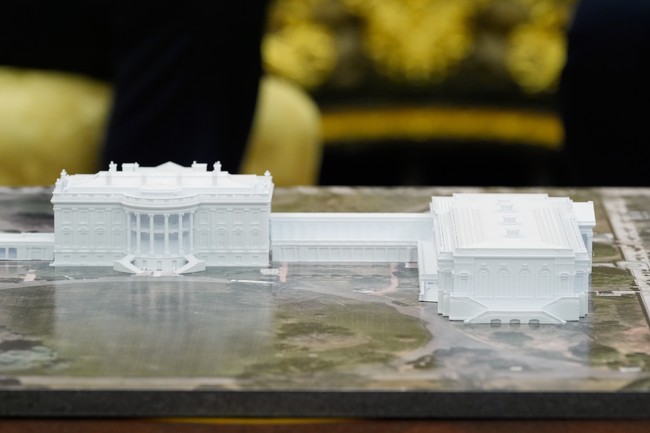
The D.C. judge who froze construction on the White House ballroom has clarified his order, allowing only limited underground security work while again blocking the above-ground ballroom, and he made clear the government’s national security claim is not a blank check to finish the entire project while litigation continues.
Earlier rulings wrapped this fight in procedural twists: the D.C. Circuit sent the case back for clarification after Judge Richard Leon issued a preliminary injunction that paused the ballroom build but carved out a safety-and-security exception. The administration pushed back, asking for a stay while it appealed, arguing the whole project was vital to presidential and national security. The appellate court said it needed more detail, and Leon responded with an amended order and a written opinion explaining what he meant.
In that amended order Leon sharply limited what the safety exception covers and refused to let above-ground construction proceed. He allowed below-ground work tied to core security needs to continue, like bunkers, waterproofing, utilities, and temporary protections, but made clear those elements do not justify completing a 90,000-square-foot ballroom while the case is unresolved. The judge plainly refused to convert a narrow safety carve-out into permission to finish the whole development.
Leon’s language leaves little doubt about his skepticism. He wrote in his opinion that the defendants’ reading of his first order was neither reasonable nor correct, and he expressed frustration that the administration treated the safety exception as an all-purpose authorization for the ballroom. The amended order keeps a seven-day stay so the administration can seek appellate review, but the substantive message is firm: no above-ground ballroom construction while the court sorts this out.
Defendants argue that the entire ballroom construction project, from tip to tail, falls within the safety-and-security exception and therefore may proceed unabated. That is neither a reasonable nor a correct reading of my Order! My Order preliminarily enjoined Defendants (excluding the President) from “taking any action in furtherance of the physical development of the proposed ballroom.” Prelim. Inj. Order at 2. The accompanying opinion stated that “the ballroom construction project must stop until Congress authorizes its completion.” Mem. Op. at 1 (emphasis added). It is, to say the least, incredible, if not disingenuous, that Defendants now argue that my Order does not stop ballroom construction because of the safety-and-security exception!
Practically speaking, the ruling draws a line between essential security infrastructure and a far broader construction project that serves other purposes. The court said national security measures that are truly necessary may continue, but the expansive claim that the entire ballroom is inseparable from security needs did not convince the judge. He refused to take on the role of construction manager and made clear he was only clarifying the scope of the injunction, not micromanaging building plans.
Leon’s tone combines legal bluntness with a touch of personality, and he uses the phrase “dragooned into the role of construction manager” to reject expectations that the court will approve every requested step. He also extended the temporary stay for seven days to give the administration time to appeal, signaling procedural fairness while holding the line on substantive limits. The administration filed notice of appeal after the amended order, so the next chapter will play out at the appellate level.
The stakes here are both symbolic and practical: a president’s plan for the White House complex faces judicial scrutiny over the proper balance between claimed security needs and statutory or constitutional limits. For Republicans concerned about executive authority and the will of voters, the ruling raises familiar questions about judicial intervention and the proper deference due to the presidency on security matters. For those focused on rule-of-law principles, the judge’s insistence on defined limits matters as a check on expansive claims of necessity.
While the judge allowed work on subterranean systems closely tied to security, he made plain that the safety exception cannot swallow the injunction. That legal line will be the likely focus if the appeals court considers whether a stay was wrongly denied, whether the injunction overreached, or whether national security arguments legitimately require faster action. Until that appeal is resolved, above-ground ballroom construction remains prohibited and the administration must decide how aggressively to press its claim.
The Court has taken Defendants’ invocation of national security and presidential security seriously throughout this case, which is why I included a safety-and-security exception in my original Order. But national security is not a blank check to proceed with otherwise unlawful activity, and belated assertions that the above-ground ballroom is “inseparable” from an array of security features, see Defs.’ Opp’n at 3, are not an occasion for this Court to reweigh the equities or reconsider the preliminary injunction! In my view, the safety-and-security exception, as clarified, permits measures critical to national and presidential security to move forward pending final resolution of this case and any appeal.
I will close by noting that I have no desire or intention to be dragooned into the role of construction manager. Contrary to Defendants’ suggestion, I have never required Defendants to “request and receive written approval” before proceeding with construction. Defs.’ Opp’n at 4. The purpose of this opinion is merely to clarify that the injunction does, in fact, stop construction of the above-ground ballroom. I trust that Defendants will be able to implement my Amended Order in good faith and with the benefit of this clarification once my Amended Order goes into effect. In recognition of Defendants’ concerns and for the reasons stated in my opinion, see Mem. Op. at 34, I will extend the temporary stay by seven (7) days after the issuance of this opinion and Amended Order.
The article originally included an editor’s note that read: Editor’s Note: Unelected federal judges are hijacking President Trump’s agenda and insulting the will of the people. That line reflects a political view held by many who see judicial intervention here as overreach that disrupts executive plans. There is no question the issue will continue to divide legal and political perspectives as the appeal moves forward.
For now, the immediate effect is clear: essential underground security work tied directly to presidential safety can continue, but the above-ground ballroom cannot be built while legal challenges remain unresolved. The appeal is filed, the clock is running on the temporary stay, and the case will test where courts draw the line between genuine security needs and broader construction projects advanced under the banner of safety.

Add comment