
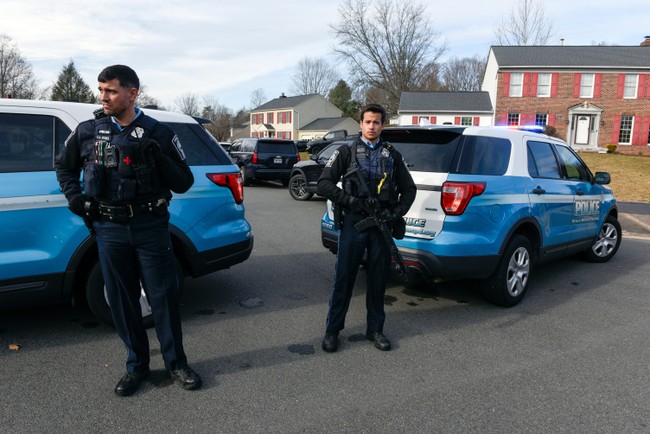
The arrest of Brian Cole Jr., accused of planting pipe bombs near the DNC and RNC on January 5, 2021, has brought fresh questions about motive, law enforcement performance, and the broader state of political violence in America; this article reviews the reported confession, court developments, statements from prosecutors, and the unresolved details that keep this case in the spotlight.
The man arrested is 30-year-old Brian Cole Jr., who federal authorities say was detained after an investigation that ended with a lengthy interview in which he reportedly admitted to the acts. Authorities say the devices were discovered on January 5, 2021, the night before the events at the U.S. Capitol, and the alleged explosives were functional and potentially lethal. He made an initial federal court appearance where he did not enter a plea and was ordered held pending a detention hearing. The charges include transporting explosives across state lines with intent to cause harm and attempted malicious destruction of property using explosive materials.
Cole made his initial appearance Friday in federal court in Washington, where he did not enter a plea and was ordered held until a detention hearing scheduled for Dec. 15.
He is charged with transporting explosives across state lines with intent to kill, injure, or cause damage, and with attempted malicious destruction of property using explosive materials.
Investigators say Cole reportedly confessed during a nearly four-hour interview with Department of Justice officials, but the motive remains clouded by contradictory statements. Reports describe him as someone who embraced claims that Trump won the 2020 election, yet law enforcement notes conflicting accounts about why he targeted both party headquarters. Social media evidence apparently showed anarchist-leaning posts as well, which muddies attempts to pin a clear political label on his actions.
Brian Cole LIVES with his MOTHER, loves “CHIHUAHUAS”, wears “SHORTS”… and has been described as “ALMOST AUTISTIC-LIKE”
SO Why didn’t BIDEN’S FBI REALLY catch THIS GUY? 🤔
Federal officials say they have found no proof that Cole coordinated with militant groups or with the crowd involved in the January 6 breach of the Capitol. A national Republican operative mentioned there was no evidence Cole was an active Trump voter, undercutting a neat partisan explanation. That ambiguity frustrates both investigators and the public, because the political context of the targets suggests a motive tied to political grievance even if the suspect’s own statements are inconsistent.
Judge Jeanine Pirro and other prosecutors have commented publicly on the arrest, emphasizing the investigative work that led to it while also criticizing how the case unfolded over time. Pirro described Cole as quiet and unassuming, a profile that surprised officials given the technical functionality of the devices. Her remarks repeatedly stressed the need to prove intent and specific plans, pointing out that the act of placing bombs at both national party offices suggests a broad anger at the system, not just at a single party.
According to the Post, Cole told investigators he had embraced claims that Trump — not Democrat Joe Biden — won the 2020 presidential election.
Despite that admission, authorities say the motive for the alleged plot remains murky, with Cole offering conflicting statements in the interview.
Investigators also uncovered social media posts suggesting that Cole harbored anarchist views. But they found no evidence he coordinated with any militant groups or with Trump supporters involved in the Jan. 6 Capitol breach, MS Now reported Friday.
A national Republican operative told the Post there was no indication that Cole was a Trump voter.
The alleged devices failed to detonate, but officials underline that their potential to kill or maim was real; that makes the charges more than symbolic. Prosecutors stress that success or failure of a device does not reduce the criminal responsibility attached to building, transporting, and placing functional explosives. Given those stakes, the case will give prosecutors a lot to prove about intent, capability, and whether the suspect ever meant to see casualties.
Public reaction has been mixed and often partisan, with critiques aimed at federal agencies for taking so long to identify and apprehend a suspect for a crime that threatened both parties’ headquarters. Republican commentators have seized on that timeline to question the Justice Department’s priorities and to argue the administration has mishandled politically sensitive threats. At the same time, some in the media have been criticized for rushed or inaccurate reporting, as debate continues over how much of the suspect’s profile and motive are being properly conveyed.
Errors in coverage have added fuel to partisan frustrations, and even small missteps have amplified suspicion that politics influence how these investigations are presented. The case has also raised questions about how law enforcement tracks domestic violent threats, how social media evidence is weighed, and whether the justice system treats politically charged incidents consistently. Those concerns are driving calls for transparency about investigative methods and for a clear public accounting of how the arrest was made.
Authorities say the investigation is ongoing and that more details will come out at pretrial hearings and as discovery is exchanged with defense counsel. Meanwhile, prosecutors must assemble evidence to prove the elements of the charges beyond a reasonable doubt, including intent to cause harm. The legal process will test whether investigators can turn reported admissions and digital traces into a courtroom case that holds up under scrutiny.
Whatever the ultimate outcome, this arrest highlights the continuing threat of politically tinged violence and the challenge of attributing motive when suspects mix contradictory beliefs and online posturing. The federal court system will now handle the technical task of sorting facts from claims, while political actors on all sides will continue to debate what this episode reveals about security, partisanship, and the boundaries of political grievance. The case is poised to stay in the headlines as prosecutors move forward with evidence and hearings in the months ahead.

Start now generating extra home based cash by doing very easy and simple job from home. Last month i have earned $19753 from this job in my part time. This job is just awesome and its earning are greater than 9 to 5 office job. .
Here is I started_______ EarnApp1.Com