
The article examines allegations that the Council on American-Islamic Relations’ California chapter provided $1,000 payments or interest-free loans to students disciplined for pro-Hamas campus actions, outlines reported fundraising totals and recipient institutions, and notes recent public reactions and official responses to the group’s activities.
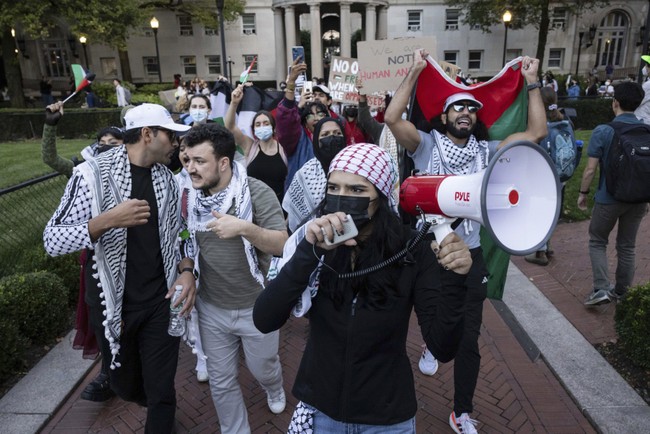
The story alleges that a major civil rights organization in California quietly set up a fund to send money to students punished by their schools for pro-Palestine protests after October 7. According to the reporting that sparked this piece, the payments were framed as loans or scholarships but functioned as direct financial support for those involved in disruptive campus demonstrations. That funding, the claim goes, helped sustain full-time activism that turned campuses into tense and sometimes threatening environments for Jewish students and others.
Investigators reportedly traced contributions and payouts to a “Champions of Justice Fund” managed by CAIR-CA, saying the fund was set up to offer “institutional endorsement” and pay out $1,000 grants or interest-free loans. The charges include that affiliates in major California cities raised more than six figures for campus activists while the umbrella group solicited significant donations for student support. These figures, if accurate, suggest a coordinated effort to bail out students facing disciplinary fallout from protests.
The mechanics described are straightforward: when students lost scholarships, housing, or other institutional support, the fund stepped in to replace the economic harm. Presenting the money as loans that were not expected to be repaid allowed the organization to say it was helping students in need, but critics argue this blurred into direct sponsorship of disruptive tactics. That framing matters because it determines whether the activity looks like private charity or organized facilitation of protest that crossed into harassment.
The cash was awarded from a “Champions of Justice Fund,” set up by the California chapter of the Council on American-Islamic Relations’ (CAIR) as “institutional endorsement,” the report claims.
In California, the largest arm of the CAIR web of nonprofits, affiliates in San Francisco and Los Angeles raised more than $100,000 in donations for campus radicals, while the main group solicited $64,000 in donations, records show.
The allegations name top Ivy League and elite institutions among those attended by recipients, including Columbia, the University of Pennsylvania, and Harvard, though individual names were not released. That detail is used to underline the reach and impact of the funding across campuses known for high-profile activism. Without recipient names, the critique rides on institutional association rather than verified individual conduct, which keeps the debate heated and evidence contested.
The narrative has political consequences beyond campus politics. Officials in some states reacted sharply, and public figures used the report to argue for tougher scrutiny of organizations accused of supporting extremism. One governor formally designated the group as a foreign terrorist organization in response to a pattern of allegations, a move supporters say is a necessary step to protect communities and universities from subsidized lawlessness. Opponents say such labels are political and risk chilling legitimate advocacy.
Supporters of the fund defend it as protecting students targeted for speech and activism, framing the payments as relief for academic penalties imposed for expressing political views. They insist the grants were meant to offset real harms like lost scholarships or housing, not to underwrite violent or illegal behavior. Critics, particularly from a conservative perspective, see the payments as money for mobs that turned protests into intimidation campaigns aimed at Jewish students and others.
Eyewitness reports and campus footage from the period following October 7 show tense scenes and confrontations that many people remember as aggressive and frightening. Those images fuel the argument that outside funding made it possible for some activists to remain on campus and escalate protests without the personal economic consequences others would face. That link between money and sustained disruption is central to why this story landed in the national conversation.
Investigations into nonprofit fundraising and grant disbursement are likely to continue as lawmakers and campus officials demand records and explanations. Questions remain about donor intent, oversight, and the line between lawful advocacy and behavior that universities must discipline to protect safety and free expression. For now, the contested facts and strong reactions keep the issue alive in policy debates and political rhetoric.
In October 2024, CAIR-CA awarded $20,000 in loans and scholarships to 20 student protestors from the “Champions of Justice Fund.”
The identities of the student recipients have never been revealed, but the institutions they attend were in CAIR’s literature, and included Columbia University, University of Pennsylvania and Harvard.
As the controversy unfolds, both defenders and critics are digging into records and statements to make their cases. Campus administrators, lawmakers, and watchdogs will be watching to see whether further documentation emerges that confirms or disproves the financial trail and the fund’s true purpose. The stakes include campus safety, donor transparency, and whether private organizations can, or should, bankroll students who cross disciplinary lines.


Add comment