
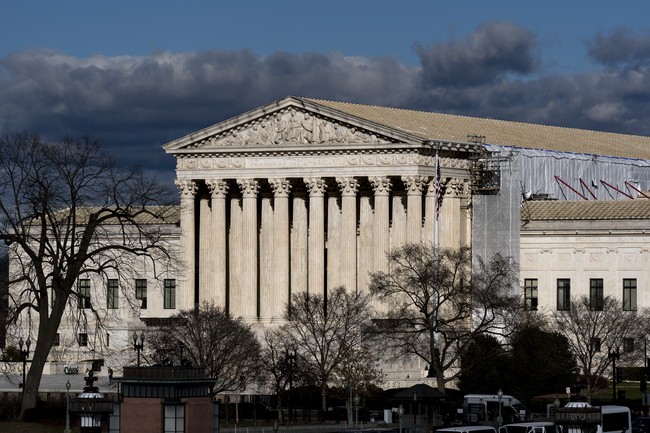
The Anchorage case of Panos Anastasiou, who is set to plead guilty for threats against Supreme Court justices and their families, highlights a troubling pattern of violent rhetoric and raises questions about plea deals, partisan violence, and consistency in how we treat threats to our institutions.
This story comes from Alaska but it matters nationwide because it involves threats against the Supreme Court, one of our core institutions. Federal filings indicate a significant volume of threatening messages and an impending guilty plea, but many details remain undisclosed. The case forces a look at how the legal system handles threats and what it says about political violence in America today.
An Anchorage man is set to plead guilty for making violent threats against U.S. Supreme Court justices and their families.
Panos Anastasiou, 77, was charged with 22 crimes in the U.S. District Court of Alaska in 2024. He was accused of sending 465 messages to the Supreme Court starting in March of 2023.
Federal prosecutors said the messages contained threats to kill six justices, alongside racist and homophobic rhetoric.
Then-U.S. Attorney General Merrick Garland alleged that Anastasiou “made repeated, heinous threats to murder and torture Supreme Court Justices and their families to retaliate against them for decisions he disagreed with.”
The immediate facts are stark: a 77-year-old Anchorage man allegedly sent hundreds of threatening messages to the Supreme Court, aimed at multiple justices and their families. Prosecutors say the content included explicit threats of murder and torture, mixed with hateful language. The scale and severity should alarm anyone who believes in the rule of law and the safety of public servants.
A guilty plea appears to be imminent, but the filings don’t spell out which charges are being admitted to or what the plea deal includes. That lack of transparency creates distrust, especially when the public is left guessing whether sentences will be meaningful or watered down. People deserve to know the terms when cases involving threats to the highest court in the land are resolved behind closed doors.
According to court documents filed this week, Anastasiou is set to change his plea from not guilty to guilty in accordance with a plea agreement. The filing does not describe which charges he is set to plead guilty to.
Anastasiou’s federal public defender and the U.S. Attorney for the District of Alaska did not immediately respond to a request for a copy of his written guilty plea agreement.
Federal court filings did not identify the justices Anastasiou allegedly threatened.
The fact that court filings omit identifying the justices and the plea’s terms sharpens concerns about fairness and deterrence. If the system is serious about protecting officials and their families, plea agreements in these matters must not result in effectively trivial penalties. The public also needs assurance that charges are pursued vigorously, not quietly reduced in ways that undermine accountability.
Partisanship is part of the story here. Public records reportedly show Anastasiou donated roughly $800 to a left-leaning fundraising platform since 2016 and is registered nonpartisan. That detail, combined with the rhetoric in his messages, points to a pattern we’ve seen before: violent language emerging from parts of the political left. Republicans have to call out threats no matter who commits them, and demand equal enforcement and consistent punishment.
Panos Anastasiou faces up to 10 years in prison for each of the 22 charges he reportedly pled out to, but sentencing depends on how the plea is structured. It’s reasonable to suspect a plea could compress potential years into concurrent sentences or other reduced terms, though we don’t know the specifics yet. The public should insist on transparency so that justice is seen to be done, not hidden behind prosecutorial discretion.
This episode also raises a broader cultural point: threats and intimidation aimed at judges are attacks on our constitutional order, not political theater. Whether the threatened justices sided with conservative or liberal outcomes is irrelevant to the criminal act. The rule of law demands proportionate responses to violent threats, and both parties must insist on consequences that deter future attacks.
At a time when political language often tips into menace, the government must draw a clear line: threatening public officials and their families will not be tolerated. Republicans will continue to press for accountability and transparency in how these cases are handled, because protecting institutions like the Supreme Court is essential to preserving liberty and order.



Add comment