
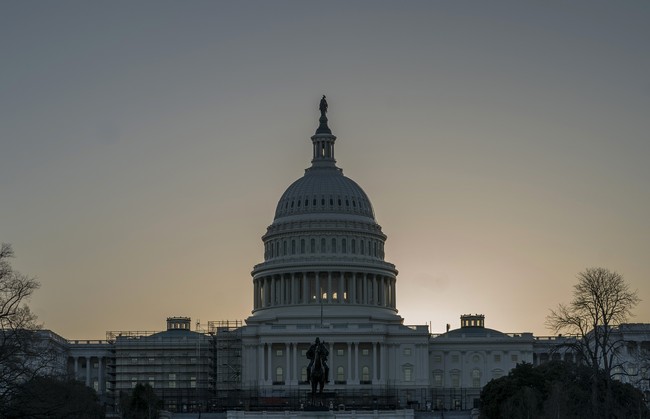
The Senate has voted unanimously to withhold senators’ pay during any federal government shutdown, a resolution led by Senator John Kennedy (R-LA) that aims to force accountability when Congress allows essential funding to lapse.
The resolution passed by voice vote after a brief floor exchange captured on video and shared widely, and it will withhold pay whenever a shutdown affects one or more agencies, releasing it only after funding is restored. Supporters frame the change as a fairness and responsibility measure meant to discourage shutdowns and encourage lawmakers to resolve disputes without weaponizing the budget. The move takes effect the day after the November general election, setting a clear timeline for implementation.
The Senate action prompts an obvious question: will the House follow suit? Until that happens, the change affects senators but not House members, leaving an inconsistency in accountability for the two chambers. Lawmakers and voters will now be watching whether House leadership adopts a similar rule or resists aligning its incentives with the Senate’s new standard.
The social post that circulated announcing the vote read as follows:
JUST IN: US Senate unanimously BANS all senators from getting a single paycheck if the federal government is shutdown, filed by Sen. Kennedy
FINALLY! This should’ve already been the case 👏🏻
Don’t give them a DIME if they defund TSA and other crucial agencies.
This is called FAIRNESS
The floor video lays out the formal voice vote in short, procedural language. It shows the presiding officer asking if there is any further debate and then calling the question, with the ayes prevailing and the resolution adopted. That exchange is the official record of how the Senate concluded the measure in a single, efficient moment of unanimous consent.
Senator at podium: “Mr. President, I know of no further debate on the measure.”
Presiding officer: “Without objection, the Senate will proceed to the measure.”
Senator at podium: “Mr. President, I know of no further debate on the measure.”
Presiding officer: “If there’s no further debate, the question is on the adoption of the resolution. All in favor say aye.”
Presiding officer: “All opposed say no.”
Presiding officer: “The ayes appear to have it. The ayes do have it. The resolution is adopted.”
Judging from the clip, not every senator was present for the voice vote, but those who attended registered unanimous support at the moment the measure was called. By Senate rules, a voice vote with the presiding officer’s declaration is sufficient to adopt the resolution, so the procedural hurdle was cleared quickly. That speed underlines how broadly unpopular prolonged shutdowns have become among lawmakers who want to avoid blame and the political fallout.
Press summaries of the resolution highlighted its bipartisan nature and the sense of frustration that has grown around recurring and extended shutdowns. The mechanics are straightforward: the secretary of the Senate would withhold pay when at least one federal agency is affected by a lapse in appropriations, and release it once funding is restored. The rule aims to create a tangible cost for failing to complete the most basic job of Congress, which is to fund the government.
Senator Kennedy explained the intent on the Senate floor, emphasizing work over defaulting to shutdowns and tying the legislative body’s rhetoric to its financial consequences. He framed the resolution as a way of “putting our money where our mouth is,” a blunt statement that makes clear this is about incentives. That plainspoken pitch appealed to members tired of the recurring spectacle and practical disruption caused by shutdowns.
That leaves the House. Speaker leadership and rank-and-file members must decide whether to mirror the Senate’s approach or maintain different rules for themselves. The House controls appropriations and often drives funding fights, so its stance on withholding pay would shape whether this new accountability standard applies across Congress. The political calculus for House leaders involves the same incentives: forceful signals to colleagues, voter expectations, and the optics of responsibility during funding stalemates.
Beyond chamber politics, supporters argue this measure protects essential government functions by discouraging brinksmanship, especially in areas tied to national security and border enforcement. Critics might note that withholding pay is a symbolic step and question whether it changes underlying bargaining dynamics or simply creates additional headlines. Either way, the Senate vote alters the incentives for at least one branch of Congress and raises pressure on the other to respond.
The debate will now shift from passage in the Senate to whether the House accepts the premise that elected officials should face immediate financial consequences for failing to keep government running. If the House adopts a matching rule, the measure becomes a true, chamber-wide reform; if it does not, the result will be a split approach with pay-forfeiture applying to senators but not representatives. Either outcome will shape how voters and members think about responsibility in future funding fights.



This has to be when a branch or a party thinks its ok to hold the People’s jobs and paycheck as hostages. Start communicating and debating again! That is what “We the People” elected Representatives to do.