
Faith communities across America are changing fast as real threats push them to trade open doors for hardened security, armed defense, and new legal protections; this piece looks at rising attacks, the professional security shift, notable incidents, and the policy responses that follow.
THE ESSEX FILES: Faith Under Fire: Why America’s Churches Are Turning Into Armed Fortresses
Households of worship are no longer casual public spaces; they are frontline targets in a volatile public square. Congregations that once relied on volunteers and goodwill are installing cameras, shatterproof glass, and hiring trained security. The mood inside many sanctuaries is now guarded, deliberate, and defensive.
Religious groups have stopped depending solely on local police for protection and are investing in specialized security firms that understand the particular risks faith communities face. Industry professionals now offer tactical coverage and defensive consulting tailored for Jewish, Catholic, and Christian institutions. Those services grew out of repeated harassment of daycares, parochial schools, and temples that left congregations feeling exposed and vulnerable.
State data show a clear trend of escalating threats, including a marked spike in antisemitic incidents in densely populated Jewish communities. Those statistics aren’t abstract; they reflect daily fear and real-world harassment that families endure. Congregation leaders say the numbers justify investing in permanent, professional protective measures.
https://x.com/OwenGregorian/status/2032435819097498078
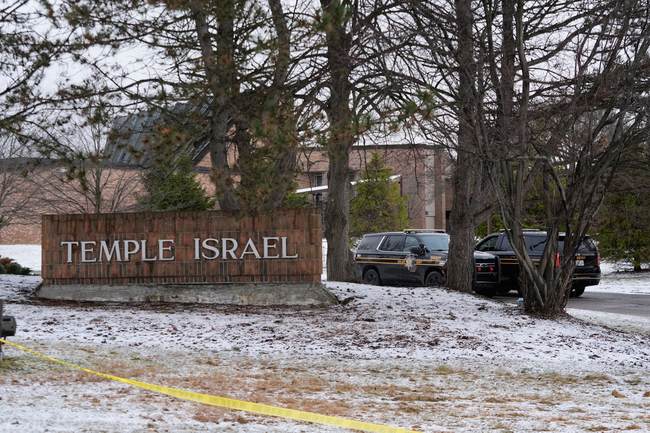
Threats have crossed into violence. In West Bloomfield, Michigan, an attacker rammed a vehicle through Temple Israel’s entrance and set a fire, and a security guard on site shot and neutralized the suspect. The guard was wounded, but staff and children were protected, and the FBI opened an investigation into the act as a targeted attack. Incidents like that underline why trained on-site defense is now indispensable for many congregations.
Federal prosecutors also disrupted a purportedly coordinated plot by an Iraqi national who allegedly planned attacks on multiple Jewish centers across the country, including a New York City synagogue and major centers in Los Angeles and Arizona. Those prosecutions underscore that some threats are part of broader, organized schemes rather than random crimes. When the stakes are this high, local improvisation isn’t enough.
It is not only synagogues under pressure; Christian and Catholic churches are increasingly targeted during protests and political confrontations. Activist mobs have stormed services and disrupted worship, treating houses of worship as stages for political theater. These confrontations leave parishioners shaken and question local officials’ willingness or ability to prosecute offenders.
One striking example took place in St. Paul, Minnesota, when anti-ICE demonstrators interrupted a Sunday service at Cities Church, frightening the congregation during worship. Local prosecutors declined to bring state charges, citing “insufficient evidence” under state law, a response that local leaders say amounted to abandonment. That kind of inaction has driven many communities to seek federal protection under laws like the FACE Act when state authorities decline to pursue justice.
In reaction to street-level lawlessness and targeted disruptions, several states are moving to protect worship services with stricter criminal penalties. Idaho, Louisiana, Oklahoma, and Kansas have passed laws that make it a specific crime to disrupt a religious service, signaling a determined state-level response. Lawmakers say these statutes put clear consequences in place to deter political agitators from turning worship into a battleground.
At the federal level, the Department of Homeland Security has expanded resources aimed at helping religious institutions harden their defenses, from grant programs to risk-assessment tools. DHS toolkits and training are being used alongside private contracting to close the gap when local resources are limited. Many congregations combine federal guidance with private firms to get both planning and on-site protection.
Religious leaders face a wrenching choice: keep doors open and risk vulnerability, or tighten security and alter the welcoming atmosphere that defines worship. Many leaders are choosing precaution, hiring trained guards and installing protective infrastructure to keep people safe. That pragmatic shift reflects a new reality where faith and security must coexist on terms that protect worshippers without surrendering the core mission of their ministries.
Communities grappling with increased threats are also watching how prosecutors and lawmakers respond, because legal accountability matters as much as physical defenses. When local authorities fail to act, congregations look to state statutes and federal law to fill the void. The result is a patchwork of protective measures, a growing private security industry, and houses of worship that now prepare for scenarios no one imagined a decade ago.


Add comment