
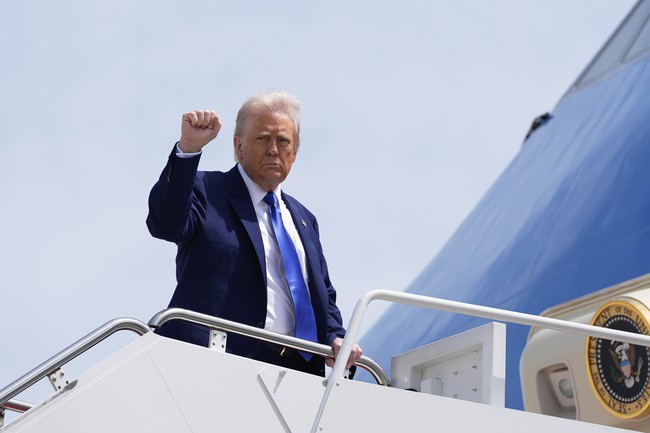
The White House fleet is about to get a bold visual reboot: the familiar Kennedy-era robin’s egg blue will give way to a red, white, and blue scheme with a gold stripe, a change long pushed by President Donald Trump and now moving forward. Several VIP aircraft, including new VC-25B jets and C-32s used by the vice president and Cabinet members, will get the new paint, and one C-32 has already been finished and is expected to be delivered soon. This update reasserts a patriotic look that allies and rivals will see whenever U.S. leadership travels, and it marks a clear break from a six-decade design tradition. The story ties together presidential preference, historical design choices, and a simple idea: the plane that carries the president should look unmistakably American.
The decision revives Trump’s push from 2018 to replace the long-standing light blue and white palette with flag colors, plus a gold accent for a touch of prestige. The Air Force has confirmed the change will apply to multiple aircraft types, not just a single jet, so the new scheme will be visible across a range of official missions. This isn’t a cosmetic tweak; it’s a visible statement about national pride and the image the presidency projects abroad. For supporters, it’s the right move — a straightforward, patriotic aesthetic that signals strength and clarity.
Aircraft involved include donated planes and newly built VC-25B models, as well as four C-32s that serve the vice president, first lady, and Cabinet secretaries. One C-32 is already painted and scheduled for delivery in the coming months, showing the program is beyond the design phase and into execution. The Air Force classifies whichever jet the president is aboard as Air Force One, so the new look will travel with the commander in chief wherever he goes. That clarity of identity matters when our nation’s leader appears on the world stage.
The robin’s egg blue scheme dates to the John F. Kennedy era and was born out of a collaboration between the Kennedys and industrial designer Raymond Loewy. The original plan at the time had actually leaned toward red and gold, but JFK and Jackie opted for a subtler look, refining the palette into what became instantly recognizable worldwide. Over decades that design became synonymous with the presidency, but familiarity does not mean permanence. A nation evolves, and so can its symbols without disrespecting history.
During his first term, President Trump unveiled a model aircraft with his preferred red, white, and blue palette, an unmistakable move to realign presidential branding with the flag. That version was later set aside during the subsequent administration, but the idea never disappeared from conservative circles. The current revival proves persistence pays off when policy and preference align. For many conservatives, adopting the flag’s colors is neither ostentatious nor petty; it’s a direct expression of pride in the United States and its institutions.
“We’re painting it red, white, and blue like the American flag, which is incredible,” Trump told Fox News’ Sean Hannity in an interview in 2025. The quote sums up the appeal: it’s simple, vivid, and easy to grasp. He also expressed a willingness to consider a larger aircraft if the mission required it, signaling that image and capability often go hand in hand. The willingness to prioritize both form and function reflects a broader conservative preference for projecting strength.
Critics who cling to the Kennedy-era look will call any change unnecessary, but the argument for updating the fleet is practical as well as symbolic. Paint schemes age, aircraft are updated, and national branding should match the posture a president wants to broadcast. A red, white, and blue livery will be instantly legible across media platforms and international airports alike, reducing ambiguity about who is aboard and reinforcing a patriotic narrative. It’s a modest, visible reform with outsized communicative value.
Design history shows presidential aesthetics are the result of individual taste meeting public symbolism, and taste shifts over time. JFK and Jackie’s hands-on role in the original scheme is a fond historical anecdote, but it does not lock the presidency into a single visual identity forever. Updating to a flag-based palette honors American symbols more directly and aligns the fleet with a broad, familiar national icon. The result will be jets that look like they belong to the country they represent, plain and simple.
The rollout of the new colors across donated planes, new VC-25Bs, and C-32s means the change won’t be fleeting or isolated. Expect to see the red, white, and blue—with a streak of gold—on official flights around the world soon. For those who value a clear, patriotic display from government institutions, this repaint is a welcome and long-overdue move. It’s a visual reset that sends a straightforward message: America’s flagship aircraft will look like America.



Add comment