
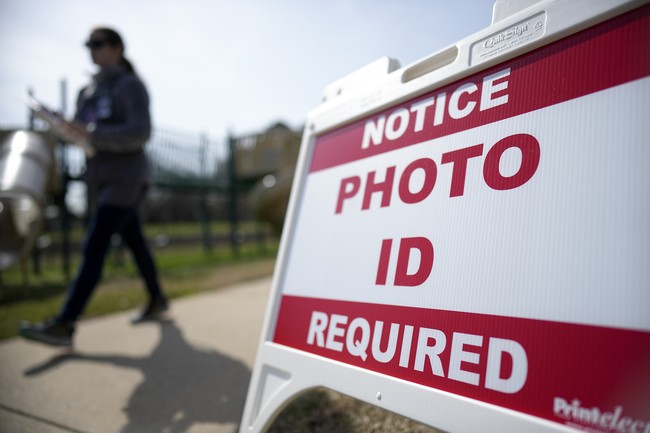
President Trump signed an executive order aimed at tightening controls on mail-in and absentee voting, directing federal agencies to verify eligible voters, limit absentee ballot distribution, and introduce tracking measures amid debate over the SAVE America Act and pending court challenges.
This executive order requires federal coordination to compile verified voter rolls and places new conditions on how absentee ballots are handled, including secure envelopes and unique barcodes for tracking. It tasks the Secretary of Homeland Security with creating lists of verified U.S. citizens eligible to vote in each state, with assistance from the Social Security Administration. The order also instructs the U.S. Postal Service to restrict absentee ballot mailings to those on each state’s approved list. States would receive their revised lists at least 60 days before federal elections under the plan.
The measure contains enforcement teeth: the order asks the U.S. Attorney General to prioritize prosecutions of those accused of sending ballots to ineligible recipients and signals potential financial consequences for states that do not comply. “Election integrity has always been a top priority for President Trump, and the American people sent him back to the White House because they overwhelmingly supported his commonsense election integrity agenda,” Abigail Jackson, a White House spokeswoman told the Caller in a statement. The order aims to make ballot distribution traceable and to tighten the chain of custody for mailed ballots.
Legal experts immediately flagged constitutional issues, noting the Constitution gives state legislatures primary authority over the times, places, and manner of federal elections while Congress may alter those regulations by law. The executive branch lacks a clear constitutional role for imposing nationwide election rules unilaterally. Quoting the Constitution is instructive here: “The Times, Places and Manner of holding Elections for Senators and Representatives, shall be prescribed in each State by the Legislature thereof; but the Congress may at any time by Law make or alter such Regulations, except as to the Places of chusing Senators.” That passage underscores the tension between federal executive actions and state control over elections.
The order’s directive that state voter lists be compiled with federal agency support and that the USPS limit absentee mailings will almost certainly prompt court challenges focused on separation of powers and federal overreach. Opponents will argue the executive order interferes with state election administration and exceeds presidential authority. Supporters will counter that the measures protect election integrity by ensuring only eligible voters receive absentee ballots and that tracking will reduce fraud and errors. The dispute will likely move quickly to federal courts as litigation timelines compress before the midterms.
Beyond legal arguments, the politics are stark and immediate. The SAVE America Act remains the legislative vehicle proponents prefer, and passage of that bill would render some executive actions unnecessary by codifying reforms through Congress. The president has emphasized the priority of that legislation and signaled readiness to use procedural mechanisms to push it forward. He has also publicly stated he will withhold support for other bills until the election reforms are enacted, calling the issue urgent and nonnegotiable.
Practical questions remain about implementation: how federal agencies will coordinate with diverse state voter registration systems, how unique barcodes and secure envelopes will be standardized, and what mechanism will enforce compliance without creating new legal vulnerabilities. States use different processes for maintaining voter rolls, and many already have safeguards; adding a federal overlay could create administrative friction or duplicate efforts. The order sets deadlines and responsibilities that will require rapid technical and bureaucratic work across agencies.
The political rhetoric is fierce on both sides. Critics dismiss voter ID and mail verification proposals as unnecessary barriers that suppress turnout, while proponents argue that modern life requires identification for many activities and that voting should meet the same basic standards. The argument over voter ID has become emblematic of a broader clash over election confidence, access, and fraud prevention. Those disagreements will play out in courtrooms, in state legislatures, and in the public square as the midterms approach.
Legal battles are only one piece of the story; public messaging and grassroots mobilization will determine how these changes affect turnout and trust in the system. Voters will watch closely to see whether the promised tracking and verification lead to clearer, more secure processes or whether they create delays and confusion at a time when election administration is already stressed. The coming weeks will show whether this executive push reshapes the national debate on how Americans cast their ballots.
Editor’s Note: The 2026 Midterms will determine the fate of President Trump’s America First agenda. Republicans must maintain control of both chambers of Congress.

Add comment