
This article examines California’s new diaper program announced by Governor Gavin Newsom, questions the cost and delivery model, highlights connections between the nonprofit partner and the first partner’s network, and lays out why conservatives see the plan as another example of wasteful government spending and insider favoritism.
Governor Gavin Newsom announced a statewide diaper distribution effort billed as the first program of its kind, promising free diapers for newborns through a partnership with Baby2Baby. The announcement was presented as a flagship affordability move, tied to the governor’s larger agenda of expanding state-provided services. Supporters called it compassionate and practical, but the rollout raises predictable conservative concerns about government spending, efficiency, and private sector displacement.
HUGE NEWS: California just became the FIRST state in America to provide FREE DIAPERS to all new parents.
Launching this summer.
Since I became Governor, we have made preschool FREE, school meals FREE, and expanded paid family leave.
Stop talking about lowering costs for families — DO IT!
The administration described the initiative as leveraging state bulk purchasing and hospital distribution to reach new parents at the point of birth. That sounds tidy on paper, but the practicalities matter: distribution through selected hospitals, production contracts, and overhead all add layers where taxpayer dollars can be diluted. Conservatives worry that a government-run procurement funnel often benefits politically connected organizations rather than the families who need help most.
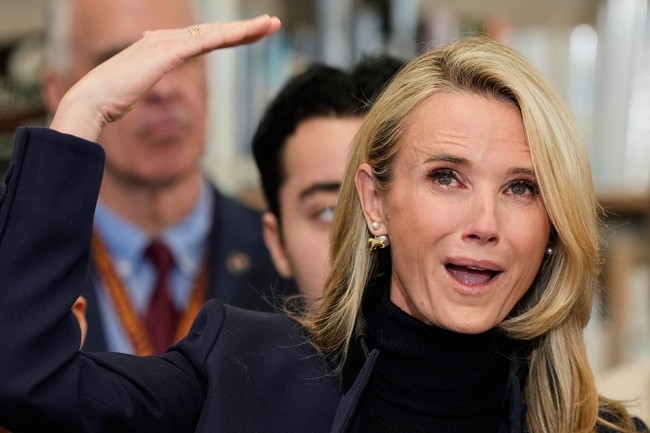
The press conference was polished and photo-ready, complete with proclamations about affordability and state leadership. Politicians love ribbon-cutting moments, and this was no different: a visible gesture with a clear public relations payoff. For critics, the photo op masks the real question—does this intervention actually help families more than simply letting them keep their own money?
WATCH:
Analysts have pointed out immediate shortcomings in the program’s design, especially the math around diaper supplies and longevity. Media Research Center broke down the allocation and estimated the impact, noting that 400 diapers per newborn equates to only a few weeks of supply for a newborn household. When a policy’s stated generosity translates into fleeting benefit at high per-unit cost, taxpayers should ask whether the program is efficient and fair to all families across the state.
This sounds cool. But wait.
400 diapers will last a family with a newborn approximately five weeks.
The program will cost the state approx. $12.4 million this year alone.
That money will be funneled through a company called Baby2Baby, which will then provide their branded diapers to 400 participating in hospitals (California has over 500 hospitals in total.)
Meaning that instead of lowering taxes and letting families keep their own money to buy essentials like diapers, California takes their money, pumps it through a “nonprofit” that has overhead and whose CEO made $240,000 in 2024, to provide a “free” service available only in certain locations, and that you could have bought yourself for much cheaper.
There is another layer to the critique: the nonprofit handling the distribution has ties to the first partner’s network. Norah Weinstein, co-CEO of Baby2Baby, serves on the board of an organization linked to the governor’s first partner. That connection invites questions about conflicts of interest and whether state contracts are steering funds toward familiar players. From a conservative viewpoint, this pattern looks like political insiders harvesting state resources rather than a neutral effort to help families.
Examples from other California programs show how funds can be rerouted through intermediaries that take significant administrative cuts before delivering services. Critics point to past instances where taxpayer money passed through 501(c)(3) intermediaries and ended up funding initiatives that aligned with the political class’s priorities. When government becomes a clearinghouse for grants and contracts, accountability often gets weakened and costs rise.
Financial scrutiny matters here: critics calculate the per-diaper price under the state plan and compare it to retail bulk prices available to consumers at warehouse stores. The discrepancy is wide enough to raise eyebrows, and fiscal conservatives argue that a direct cash benefit or tax relief would give parents more buying power and flexibility than a narrowly distributed product. Trusting parents to spend their money wisely—especially on essentials such as diapers—aligns with conservative principles of limited government and household autonomy.
Beyond accounting, there is a political calculus at play. Governor Newsom is understandably eager to showcase an affordability program that plays well on the national stage, particularly as he courts broader ambitions. For critics, that ambition fuels a tendency to favor visible, brandable programs over less glamorous but more effective policies like tax cuts or streamlined aid delivery.
This diaper initiative may sound compassionate, but the combination of limited distribution reach, questionable per-unit costs, and insider ties makes it a prime example for conservatives to criticize. The core concern is simple: taxpayer money should be spent efficiently, transparently, and in ways that respect families’ ability to decide how best to meet their needs.
Voters should demand clear accounting and independent oversight so that well-intentioned programs do not become vehicles for patronage and waste.



Add comment