
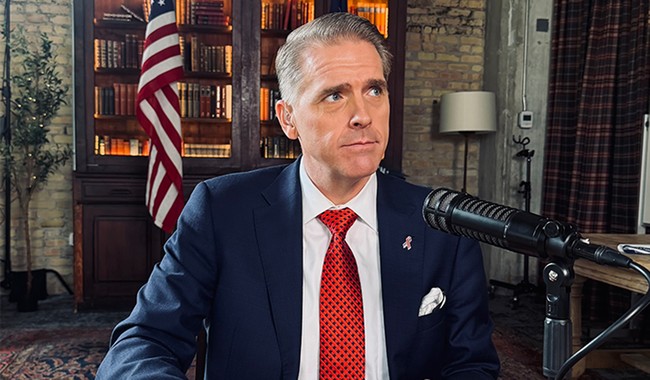
The media’s fixation on the Lincoln Memorial Reflecting Pool became a talking point after a CNN panel squabbled over algae, spending and who actually fixed the decades-long problem, and a commentator reminded viewers that past fixes under President Obama still left big issues that required further work under President Trump.
The story started with reporters and commentators treating the Reflecting Pool almost like breaking news, focusing on algae and water quality instead of the larger maintenance failures that had persisted for years. That narrow focus let critics miss the broader picture: the pool had long suffered from leaks and recurring problems despite prior investments. What mattered to many conservatives was that the Trump administration moved quickly to finish work that had lingered for too long.
On a recent panel, CNN commentator and Salem Media host Scott Jennings pressed Democratic strategist Ameshia Cross about how the Obama-era repairs compared to the current work. Cross insisted the Obama team acted with science in mind and that the problem was treated, a point that seemed persuasive until Jennings pointed to follow-up reports showing a substantial algae bloom shortly after those repairs.
The exchange felt less like a debate about solutions and more like an attempt to score political points by assigning virtue to prior spending. The reality is that even well-funded efforts can fall short if underlying structural problems are not fully resolved. Conservatives argue the Trump-era work dealt with those persistent issues more directly and more efficiently than the previous approach.
Reports and officials noted that leaks and water loss continued after the Obama projects, and that millions of gallons were still being lost annually. That ongoing problem is why the Trump administration prioritized the Reflecting Pool for a more extensive rehabilitation. The emphasis here is on completing the job rather than celebrating partial fixes that left the pool vulnerable to the same problems recurring.
https://x.com/ScottJenningsKY/status/2068312970606571719
Interior Department briefings explained the newer methods being used to address algae and water quality, including modern cleaning technologies and filtration improvements designed to be sustainable. Those involved stressed that keeping a large outdoor pool in a public park is an ongoing responsibility and not a one-time victory lap. From a Republican perspective, finishing the job faster and at lower cost matters because it shows stewardship and fiscal sense.
As Interior Secretary Doug Burgum explained in a public comment, the situation the Trump team inherited included massive daily water loss that had been ignored or under-addressed. He framed the rehabilitation as a clear, measurable improvement compared with the previous state of affairs. That statement underscored the argument that quick, decisive action produced tangible results where earlier efforts had not.
“That thing, when we took this project over, was leaking 45,000 gallons of water a day,” Burgum said. “Everybody should be celebrating Trump getting a project done 10x faster, at a fraction of the cost of a previous administration.”
The Department of the Interior also described efforts to confront algae using newer technologies such as nanobubbler systems and targeted cleaning approaches, aiming to reduce recurring blooms and make maintenance more manageable. Officials framed this as a sensible follow-up to earlier upgrades like new pilings and filtration systems that had not fully stopped leaks. The point for critics is not that prior work was useless, but that it did not finish the harder, longer-lasting repairs.
Media coverage often zeroed in on trivial angles—the theatrics of testing the pool water or the language around “investment” versus “spending”—instead of asking why monuments were left in a fragile condition in the first place. That selective spotlight lets partisan narratives shape the story more than the engineering facts. Observers on the right argue this is a pattern: when Republicans repair and restore public assets, outlets search for reasons to criticize rather than report the improvement.
The larger lesson is procedural: governments should complete durable fixes and be transparent about long-term maintenance plans, rather than treating restoration as a one-off headline. The contrast between costly, drawn-out projects and more efficient, fast-tracked work became the central contention of the panel. For many who watched, the exchange confirmed a sense that practical results matter more than who gets the political credit.
Debates over phrasing—investment versus spending, treated versus cured—miss the engineering point that public works require follow-up and accountability. The Reflecting Pool episode turned into a proxy fight over competence and priorities, with Trump-era officials emphasizing speed, cost-effectiveness and finishing what previous efforts left incomplete. That framing appealed to conservatives who want government projects done right and on budget.



A regular mom who cracked the code to recession-proof income without selling a thing!
I started (z2a1) this online work a few months ago.
At first, I was confused about where to apply.
Then I noticed the website name on the profile photo.
I clicked it and opened it in a new tab.