
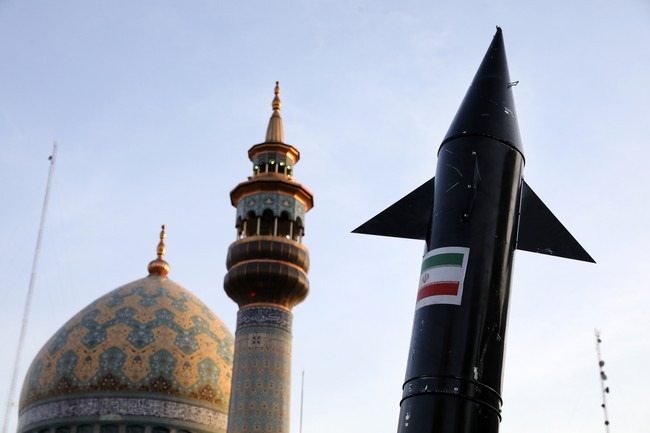
The U.S. State and Treasury Departments announced a fresh round of sanctions aimed squarely at Iran’s drone and ballistic missile supply chains, targeting people, companies, and aircraft tied to procurement networks and Mahan Air, as part of Operation Epic Fury and Economic Fury under the Trump administration.
The administration’s move puts pressure on the logistics and financing that keep Iran’s UAV and missile programs supplied. Officials framed these actions as part of a coordinated push to choke off the networks that enable attacks on American interests and allies. This is not just symbolic—designations freeze assets and make business with the named parties hazardous.
Today, the United States is imposing sanctions on eight individuals and four entities that operate multiple procurement networks supporting Iran’s UAV and ballistic missile programs and U.S.-designated Mahan Air. The United States is also identifying two aircraft as blocked property of Mahan Air, which has previously transported Islamic Revolutionary Guard Corps (IRGC) operatives, weapons, equipment, and funds.
These designations support Operation Epic Fury and President Trump’s National Security Presidential Memorandum-2 directive to counter Iran’s weapons programs. Today’s action also supports the implementation of United Nations sanctions and restrictive measures on Iran, which were reimposed as a direct result of Iran’s “significant non-performance” of its nuclear commitments.
The Treasury followed with its own slate of penalties aimed at the procurement and transport apparatus feeding Tehran’s arsenal. The department named multiple individuals, firms, and aircraft tied to transfers of weapons components across Iran, Türkiye, and the UAE. Officials warned Iran is trying to rebuild its ballistic missile capacity while relying more on Shahed-series attack drones to threaten regional targets and critical energy infrastructure.
Today, the U.S. Department of the Treasury’s Office of Foreign Assets Control (OFAC) is sanctioning 14 individuals, entities, and aircraft based in Iran, Türkiye, and the United Arab Emirates (UAE) for their involvement in procuring or transporting weapons or weapons components on behalf of the Iranian regime. As the United States continues to deplete Iran’s ballistic missile inventories, the regime is seeking to reconstitute its production capacity. Iran is increasingly relying on Shahed-series one-way attack unmanned aerial vehicles (UAVs) to target the United States and its allies, including energy infrastructure in the region. These designations support Economic Fury in response to the Iranian regime’s continued threats to global security.
“The Iranian regime must be held accountable for its extortion of global energy markets and indiscriminate targeting of civilians with missiles and drones,” said Secretary of the Treasury Scott Bessent. “Under President Trump’s leadership, as part of Economic Fury, Treasury will continue to follow the money and target the Iranian regime’s recklessness and those who enable it.”
The timing of the sanctions drew attention because they followed recent arrests tied to attempts to supply Iran with military gear and drone components. Reports noted individuals allegedly working on deals to move sonar parts and drones to Iran, and federal authorities have been pursuing suspects in those schemes. When such networks are disrupted, prosecutors often obtain cooperative witnesses, which can accelerate broader investigations.
Sanctions are a blunt but legal tool to make illicit commerce far more difficult and expensive. By blacklisting procurement operatives and aircraft, the administration aims to raise the risk for intermediaries and financial facilitators that otherwise would profit from Iranian rearmament. When banks and shippers face penalties for dealing with named parties, vendors are likelier to cut ties rather than accept exposure.
Critics argue sanctions can push illicit activity further underground or create workarounds, but the government’s approach pairs naming-and-shaming with enforcement measures designed to close those loopholes. Targeted designations that include aircraft and logistics nodes make it harder for operators to hide shipments under layers of shell companies. Taken together, the actions are meant to shrink the web of suppliers Iran relies on.
From a policy angle, this administration frames the campaign as decisive and operational, not merely rhetorical. The combination of military pressure, intelligence operations, and financial restrictions is presented as an integrated effort to degrade Tehran’s capacity to project violence. That posture is consistent with stated priorities to defend allies and protect energy markets from coercion.
There are open questions about the durability of these measures and whether they will force the regime to change behavior or simply adapt. Enforcement will require continued intelligence work, international cooperation, and the willingness to sanction additional enablers. For now, the message is direct: the procurement networks that sustain Iran’s drones and missiles are legitimate targets and will remain in the crosshairs.


Add comment