
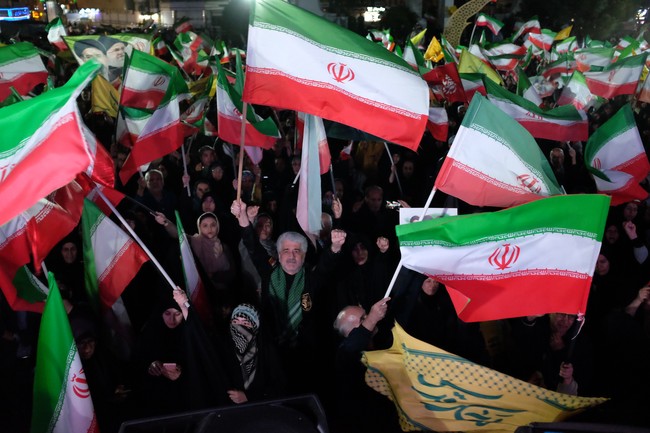
President Trump surprised observers by extending a ceasefire with Iran hours before it was set to expire, a move he says responds to requests from Pakistani leaders and reflects a fractured Iranian government; critics see it as handing the regime an unearned reprieve while the U.S. maintains a blockade and readiness to resume force if talks fail.
The announcement arrived after earlier signals that the administration would not agree to an extension, and it landed like a pivot intended to buy time rather than to seal a diplomatic victory. The White House framed the decision as tactical: keep the blockade in place, keep forces ready, and delay kinetic action until Pakistan helps assemble a unified Iranian proposal. That reading reads as cautious and conditional, not celebratory.
STATEMENT OF PRESIDENT DONALD J. TRUMP:
Based on the fact that the Government of Iran is seriously fractured, not unexpectedly so and, upon the request of Field Marshal Asim Munir, and Prime Minister Shehbaz Sharif, of Pakistan, we have been asked to hold our Attack on the Country of Iran until such time as their leaders and representatives can come up with a unified proposal. I have therefore directed our Military to continue the Blockade and, in all other respects, remain ready and able, and will therefore extend the Ceasefire until such time as their proposal is submitted, and discussions are concluded, one way or the other. President DONALD J. TRUMP
On television earlier the president expressed skepticism about prolonging the pause, telling a host, “Well, I expect to be bombing because I think that’s a better attitude to go in with. But we’re ready to go. I mean, the military is raring to go.” Those words reflect the posture driving current policy: a willingness to use overwhelming force while preferring options that avoid immediate escalation. That posture reassures allies and warns adversaries, but an unexplained retreat can also be read as weakness.
Critics argue that this extension hands Iran leverage it has not earned. The request for delay came from Pakistan, not Tehran, and there is no public evidence Iran suddenly softened its stance or asked for more time to negotiate in good faith. Allowing Tehran to avoid negotiations while the blockade continues may be intended as pressure, but it risks signaling that intransigence pays off.
That perception matters to regional partners. Gulf states that suffered from Iranian retaliation are watching closely and asking whether their cooperation has produced any meaningful protection or strategic gain. If their contributions leave them exposed and no stronger for it, their willingness to back future coalitions or intelligence-sharing efforts could fray. Stability in the Middle East depends on credible deterrence as much as diplomacy.
Meanwhile, the internal dynamics inside Iran complicate any hope that a short delay will alter Tehran’s calculus. The ruling cliques prioritize survival and control, and those incentives do not line up with concessions that might weaken the regime. With a ceasefire extension in place, the clerical establishment can use the lull to crush dissent, reorganize its security forces, and keep its narrative of resistance intact.
That domestic repression makes the idea of a negotiated deal less likely to be meaningful. The regime does not appear motivated by economic relief or humanitarian concerns if doing so risks losing power. From a realist standpoint, negotiating partners must be confident that Tehran has both the authority and the incentive to uphold any agreement; absent that, time buys the regime more than it does the world.
Extending a pause while maintaining the blockade and readiness to strike is a mixed strategy: it preserves an inducement for Pakistan to produce a unified Iranian proposal, but it also presents Iran with a low-cost way to defer conflict. If Tehran calculates that delays reduce the political appetite for sustained strikes, the next phase could favor continued shadow warfare, missile production at modest levels, and repression at home. That is a scenario neither allies nor opponents welcome.
For Republicans concerned with strength and deterrence, the key question will be whether this extension is paired with a clear, short timeline and a credible set of consequences. Holding the blockade and keeping forces poised are necessary elements, but without a visible plan that ties delay to specific diplomatic milestones, the concession risks becoming a permanent fudge. The administration faces the test of turning time bought into leverage, not a retreat from resolve.
Whatever tactical logic exists for buying time, perception shapes policy. If Tehran, and the broader region, see the United States bending without extracting concessions, that perception will influence future calculations about American commitments. Strategic clarity—what comes next, who negotiates, and what happens if talks stall—is what will determine whether the extension becomes a bridge to a deal or a breathing spell for a hostile regime.


Add comment