
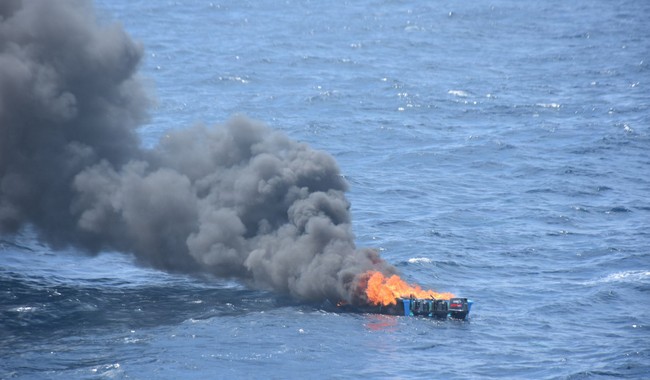
The United States Southern Command again struck a fast-moving vessel suspected of narco-trafficking in the eastern Pacific, killing two alleged smugglers in what the military called a “kinetic strike,” and officials say intelligence confirmed the boat was on known trafficking routes; the action follows a months-long campaign that has targeted dozens of suspected narco-speedboats and aimed to choke off maritime drug flows originating from the region.
Southern Command’s latest action was presented as a precise, lethal response against a vessel engaged in illegal trafficking, carried out at the direction of senior officials and without harm to U.S. forces. The report emphasizes that intelligence linked the craft to ongoing narco-trafficking operations along established routes in the eastern Pacific. From a Republican perspective, this kind of forward defense is practical and necessary to protect Americans from the havoc narcotics bring to communities back home. It also signals that the military will act decisively when enemy logistics operate in international waters.
The official post included a blunt operational summary, noting details of the engagement and the outcome. The quoted material reads exactly as released, including attribution to the chain of command and the number of casualties:
On Dec. 29, at the direction of @SecWar Pete Hegseth, Joint Task Force Southern Spear conducted a lethal kinetic strike on a vessel operated by Designated Terrorist Organizations in international waters. Intelligence confirmed the vessel was transiting along known narco-trafficking routes in the Eastern Pacific and was engaged in narco-trafficking operations. Two male narco-terrorists were killed. No U.S. military forces were harmed.
The footage and reports suggest the strike used aircraft-mounted weaponry to disable and destroy the interdicted craft, with impacts visible across the hull during a short engagement. Observers note characteristics consistent with 20mm or 30mm cannon strikes, the kind of weapons routinely carried on Navy and Air Force attack aircraft. Southern Command has rightly withheld operational specifics that could reveal tactics, techniques, or procedures, while making clear the mission succeeded without U.S. casualties.
Interdicting narco-smuggling boats at sea removes a direct route for tons of illegal narcotics and disrupts the networks that supply cartels. Since these operations resumed under the current administration, officials report a string of strikes against suspected narco-speedboats, tallying dozens of engagements and many suspected traffickers neutralized. That pattern underscores a deliberate strategy: stop the transports before drugs reach consumer markets and cartel distribution hubs.
Critics predictably condemn strikes that kill traffickers, but the choice is between letting maritime smugglers transit freely or preventing shipments that fuel addiction and criminality in American cities. The Republican view favors using all lawful means to protect citizens, and kinetic interdiction at sea is a direct, effective option when legal authorities are unable to reach ships on the high seas. These operations also send a clear deterrent signal to transnational criminal organizations and to states that tacitly enable or tolerate smuggling.
Venezuelan officials have protested the strikes, arguing the actions amount to attacks on civilians and accusing the United States of attempting to provoke broader conflict. One quote from Venezuelan leadership captured that complaint directly:
Mr. Maduro called the action “a military attack on civilians who were not at war and were not militarily threatening any country” and said the United States was trying to goad Venezuela into a “major war.”
That rhetoric ignores the operational reality: the vessels struck were on known trafficking routes and engaged in illegal activity that harms American communities. Militarily, Venezuela lacks the capability to threaten the United States, so the core issue is preventing contraband and asserting maritime security, not launching wars of conquest. Holding traffickers and the enabling networks accountable is a measured, targeted response to a transnational criminal threat.
These missions also carry strategic implications for regional security and for the administration’s posture toward malign actors who may facilitate trafficking. Maintaining pressure on smuggling corridors degrades cartel operations and complicates the logistics that make mass drug shipments possible. For those who prioritize domestic law and order, interrupting supply lines abroad is a necessary part of the toolbox.
Operational transparency is limited by necessity, but the outcomes are plain: vessels that posed a trafficking threat were disabled, those aboard were killed, and U.S. forces faced no casualties. Expect continued maritime interdictions where intelligence indicates illegal trafficking, because stopping the transport is a direct way to protect communities from drugs and the violence that follows.


About time we have a commander who is saving American civilians from all these drug traffickers. This isn’t the democrats pussy party looking the other way anymore. Can you imagine how much more drugs would be entering the US if democrats were still in control of our country. Trump’s promise Trump delivered on stopping drug dealers.