
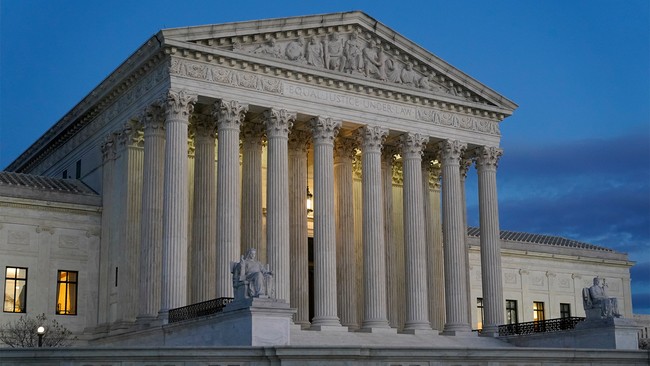
SCOTUS Tosses Out Florida’s Lawsuit on Immigrant Commercial Driver Licenses
The Supreme Court declined to take up Florida’s direct lawsuit against California and Washington over the issuance of Commercial Driver’s Licenses to people in the country without legal status. The move leaves the dispute to lower courts, state legislatures, and Congress to sort out how federal immigration policy and state licensing interact. Justices Thomas and Alito signaled they would have heard the case, but the court denied review without comment, despite support for Florida from multiple states. The core dispute raises questions about federal authority over interstate commerce and the role of state-issued CDLs when drivers cross state lines.
Florida filed an original action directly at the Supreme Court, an uncommon procedural route used only for disputes between states. The complaint grew out of a deadly crash connected to a trucker whose immigration status was later questioned, and Florida alleged that California and Washington issued commercial licenses improperly. Seventeen other states sided with Florida, arguing that lax licensing policies in Democratic-led states undermine federal immigration and safety standards. California and Washington countered that there was no proper basis for the Supreme Court to hear the case.
The Supreme Court on Tuesday threw out a long-shot lawsuit in which Florida sought to sue California and Washington for allegedly allowing people who entered the country illegally to obtain commercial truck driver’s licenses.
Florida’s claim was filed in the aftermath of a high-profile crash in the state last year in which a truck driven by an Indian man, Harjinder Singh, was involved in an accident that left three people dead. The state, which says Singh did not have legal status in the United States, alleges he was wrongly issued licenses in both California and Washington. Singh faces criminal charges over the incident.
The court denied the state’s appeal without comment.
The complaint framed the matter not just as an immigration issue but as a safety and interstate commerce concern. Florida argued that drivers without proper authorization or adequate training could obtain CDLs and then operate across state lines, creating public safety risks in other states. The suit accused the defendant states of an “open defiance” of federal immigration laws that, in Florida’s view, leads to flouting federal safety regulations. That argument was central to Florida’s attempt to bring the dispute directly before the Supreme Court.
The unusual case saw Florida Attorney General James Uthmeier, a Republican, file a claim directly at the Supreme Court instead of a lower state or federal court. The court can sometimes intervene in such disputes between states, but it rarely does so.
The lawsuit alleged that the Democratic-led states’ “open defiance” of federal immigration laws has led them to flout federal safety regulations. This has resulted in drivers obtaining licenses without “proper training or the ability to read road signs.” Those drivers cross state lines and are therefore threatening the safety of people in Florida and other states, the lawsuit says. Iowa and 16 other states filed a brief backing Florida.
Lawyers for California and Washington argued in response that there was no basis for the Supreme Court to take up the issue.
With the Supreme Court stepping aside, the legal fight will likely continue through other venues or shift to legislative solutions. The practical problem remains: states issue driver’s licenses under their own laws, but those licenses are recognized across the country. For commercial licenses, the interstate nature of trucking gives Congress a plausible role under the commerce clause that Congress has historically used to regulate transportation. That suggests federal legislation could clarify standards for CDL eligibility and cross-state recognition.
Even if federal action is logically appropriate, it is politically fraught. The partisan split over immigration policy makes national standards difficult to pass without a Congress aligned on the issue. If control of one or both chambers shifts, the appetite for sweeping federal licensing rules tied to immigration enforcement could change dramatically. Until then, disputes like Florida’s lawsuit will keep bumping into procedural and political barriers.
The Supreme Court’s refusal to take the case does not resolve the questions at hand; it merely pushes them back into the broader arena of politics and policy. State legislatures can change licensing rules, Congress can pursue federal standards, and lower courts can continue to weigh legal arguments about standing and original jurisdiction. For now, the debate over who gets to drive trucks across state lines and under what conditions remains a live and contentious policy issue.


Add comment