
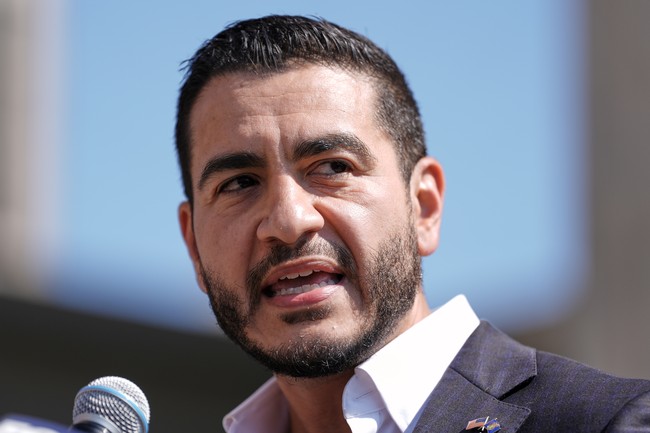
The Michigan Senate primary pushed Democrats toward a nominee who struggles with working-class and Black voter appeal, raising real chances for Republican Mike Rogers in November as polls and analysts now shift the race toward a toss-up.
Democrats narrowly selected Abdul El-Sayed as their Senate nominee, a choice that surprised many who expected a seasoned member of the caucus to prevail. That narrow victory exposed fractures in the party that could cost them in a state where Republicans have not held a U.S. Senate seat in over two decades. Voters and analysts are already dissecting where El-Sayed’s support came from and where it did not. Those patterns matter in a general election where turnout and coalition-building decide the outcome.
There is growing evidence that parts of the Democratic base are not on board with El-Sayed, and that opens a real path for Rogers. Many Democrats who preferred Rep. Haley Stevens are reluctant to transfer that loyalty to El-Sayed, and some will simply sit out or cross over. That reluctance is not hypothetical; organizers and local groups are reporting voters who plan to back Rogers instead of the party nominee.
Even activists and groups that generally back Democratic candidates have acknowledged the unease. Some community groups are hearing from voters who say El-Sayed didn’t speak to their priorities, especially in traditionally Democratic working-class districts. The practical result is a fractured coalition at a moment when unity is crucial.
https://x.com/EricLDaugh/status/2085040285973656023
The Manhattan Institute’s Jesse Arm that “We’ve seen data that suggests large numbers of Stevens voters would not necessarily support El-Sayed over Rogers in November.” He urged the Rogers campaign to capitalize on it, that if they did, “There’ll be lots of Democrats for Rogers. Probably more than any Michigan GOP Senate candidate has had since Spencer Abraham.”
That assessment matters because it comes from data-focused analysts tracking voter movement and second-choice behavior after the primary. If a substantial chunk of Stevens voters defect, Rogers benefits in a big way. Michigan’s electorate is pragmatic in many districts, and a candidate with a record like Rogers’ can appeal to voters who prioritize stability and local concerns over ideological purity. The GOP sees a real opening to build a bipartisan coalition.
CNN’s chief data analyst highlighted another trouble spot for El-Sayed: his strongest support emerged in predominantly white, college-educated areas rather than in Black and working-class communities. That imbalance suggests a limited capacity to expand beyond a specific demographic. Campaigns that can’t broaden their coalition in Michigan risk losing ground when turnout shifts and independents break differently than in a primary.
Enten’s blunt take was that the post-primary landscape dramatically lowered Democrats’ odds in the state. He used colorful language to convey how steep the shift appears, and the message was clear: the math changed for Democrats. When analysts conclude a race has moved “into Lake Michigan,” strategists take notice and recalibrate their plans.
Beyond demographics, pollsters may also have overestimated El-Sayed’s standing during the primary by roughly ten points, according to some assessments. If the same sampling issues persist into the general election, polls could again mislead about how competitive the race really is. That uncertainty benefits the campaign that can turn skepticism into concrete votes on Election Day.
Decision desks and major trackers are already adjusting their ratings, with one moving the race from “lean Democrat” to a “toss-up” and others tilting toward Rogers. When multiple independent outlets shift their outlook, fundraising and advertising priorities shift too, creating momentum for the candidate gaining ground. The Economist’s recent move to favor Rogers underscores how quickly expectations can flip when the underlying numbers tell a different story.
Michigan’s Senate contest is now more than a simple red-versus-blue tally; it’s a test of whether a nominee can unify a diverse Democratic coalition and reach undecided working-class voters. Republicans will emphasize Rogers’ record and practical solutions, while pointing to El-Sayed’s narrow primary margins and demographic limits. The result could reshape national calculations as both parties eye control of the Senate.
With the seat open and no Republican senator from Michigan in 26 years, the GOP senses opportunity. If Rogers’ team executes on the data — targeting disaffected Democrats and persuadable independents — the path to victory becomes clearer. The coming months will show whether Democrats can correct course or whether their primary choice hands Republicans a rare pickup in a state that often decides close national fights.



Add comment