
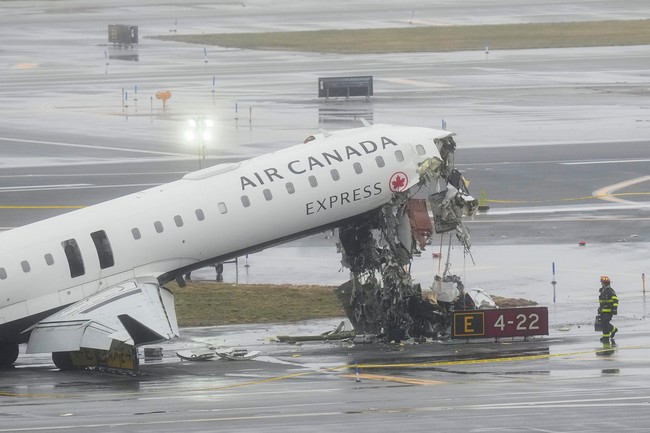
The NTSB gave an update on the LaGuardia collision, detailing cockpit and flight-data recorder recoveries, a preliminary three-minute CVR summary, the tower and vehicle radio exchanges, and early findings about surface-detection limits and transponder gaps that may have contributed to the accident sequence. Investigators on site described what the recorders show, the sequence of radio calls and control actions, and noted the lines of inquiry they will pursue next, including controller staffing, tower logs, and vehicle equipment. This account presents the facts as released at the press conference and preserves the quoted material from officials.
The NTSB team spent its first full day on scene organizing investigative groups and taking custody of the cockpit voice recorder and flight data recorder. Both devices were transported to NTSB labs in Washington, D.C., for downloading and analysis, and investigators said they already have preliminary information from the final three minutes of the CVR. Chairwoman Jennifer Homendy warned the public that early findings are preliminary and subject to change as analysis continues.
Investigator in Charge Doug Brazy, a 34-year NTSB veteran, reported that the CVR contained over 25 hours of good-quality audio across four channels and the FDR held roughly 80 hours of data capturing more than 400 parameters. A CVR Group will convene at NTSB headquarters to produce a transcript and examine the recordings in detail. Brazy presented a minute-by-minute summary of the final three minutes as captured on the CVR, using time stamps measured backward from the end of the recording.
- 3:07 – Approach controller instructed plane to contact LGA tower
- 2:45 – Flight crew lowered landing gear
- 2:22 – Flight crew checked in with LGA tower
- 2:17 – Tower cleared the plane to land on Runway 4 and advised they were No. 2 for landing
- 1:52 – Flight crew set flaps to 30 degrees
- 1:33 – Flight crew set flaps to 45 degrees
- 1:26 – EGPWS 1,000-foot callout
- 1:12 – Flight crew confirmed landing checklist complete
- 1:03 – An airport vehicle radio transmission was stepped on by another transmission
- :54 – Flight crew acknowledged 500 feet and a stable approach
- :40 – Tower asked which vehicle needed to cross a runway
- :28 – Truck 1 made a radio transmission
- :26 – Tower acknowledged transmission
- :25 – Truck 1 requested to cross R4 at Taxiway Delta
- :20 – Tower cleared Truck 1 and company to cross R4 at TD
- :19 – EGPWS 100 callout
- :17 – Truck 1 read back runway crossing clearance
- :14 – EGPWS 50 callout
- :12 – EGPWS 30 callout and tower instructed a Frontier flight to hold position
- :11 – EGPWS 20 callout
- :10 – EGPWS 10 callout
- :9 – Tower instructed Truck 1 to stop
- :8 – Sound consistent with landing gear touchdown
- :6 – Pilot transfer of controls
- :4 – Tower again instructed Truck 1 to stop
- :0 – Recording ended
Homendy clarified that the first officer was flying prior to a transfer of control to the captain during the final seconds captured on the CVR. She said ARFF vehicles were responding to United Airlines Flight 2384 at the gate following abortive takeoffs and reports of fumes or smoke in the cabin. Truck 1 led the movement, with other vehicles behind it that did not begin to cross the runway; investigators are still verifying how many followed and how those vehicle movements were coordinated.
Investigators confirmed Truck 1 did not have a transponder, and Homendy emphasized that none of the airport trucks at LGA carry transponders, though some other airports do equip theirs. The absence of transponder returns complicates surface detection by ASDE-X, making it harder for the system to track noncooperative vehicles near active runways. That equipment gap is a clear focus of NTSB inquiries into how surface surveillance and vehicle identification intersected with the approaching aircraft.
The NTSB requested the ASDE-X replay of the tower cab display and the Tech Center analysis concluded that “ASDE-X did not generate an alert due to the close proximity of vehicles merging and unmerging near the runway, resulting in the inability to create a track of high confidence.” Homendy described the replay as showing two radar-return targets on Taxiway Delta that appeared as indistinct blobs and added, “We don’t see any of them go in front of the plane on the runway.” Those observations are being cross-checked with audio, radar, and witness statements.
There are unresolved questions about controller staffing and shift handover. Records show two people in the tower cab at the time: a local controller who signed in at 10:45 PM and the controller in charge who signed in at 10:30 PM, and positions were combined into two roles consistent with midnight shift procedures. The NTSB noted conflicting information in facility logs and will conduct interviews with air traffic personnel to resolve discrepancies about who else was present and how relief procedures were handled that night.
Homendy reminded listeners that major accidents rarely stem from a single failure and that aviation safety depends on multiple layers of defense. Investigators are reviewing the interaction of human performance, procedures, surface surveillance limitations, vehicle equipment, and communications to understand how these layers did or did not function. The NTSB continues to gather records, interview personnel, and analyze recorder data as the investigation proceeds toward a fuller reconstruction of events.
Add comment